 Whalesbook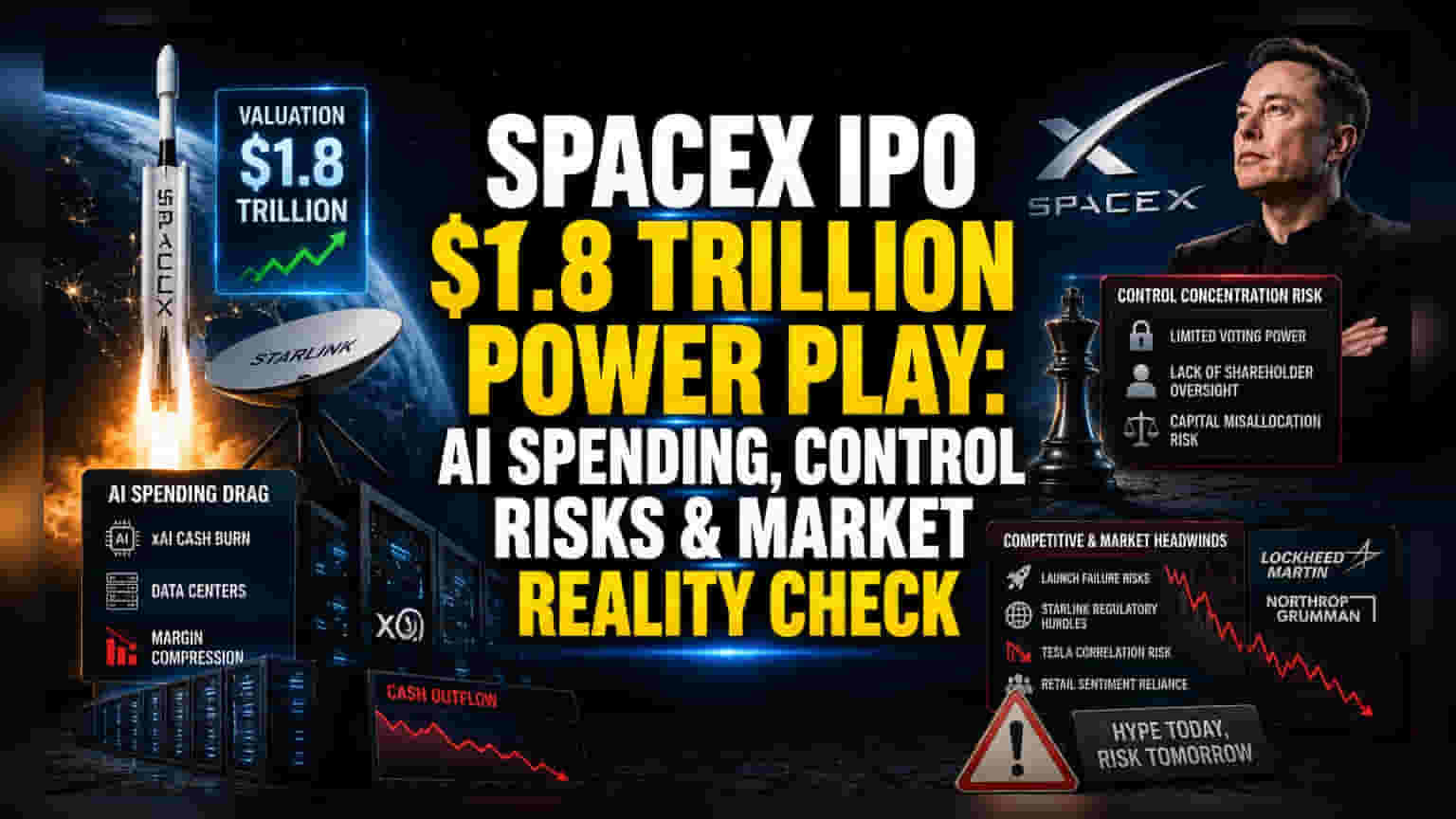


The Valuation Paradox
The projected $1.8 trillion valuation for SpaceX represents a monumental leap in capital market history, effectively dwarfing traditional aerospace conglomerates and even major tech incumbents. This valuation rests heavily on the aggressive expansion of the Starlink satellite network and speculative long-term revenue from interplanetary logistics. However, institutional skepticism is mounting regarding the sustainability of such a premium, particularly as the company transitions from a private entity supported by venture capital to a public vehicle subject to quarterly earnings scrutiny.
The AI Spending Drag
Beneath the surface of space exploration success lies the heavy weight of xAI, an artificial intelligence subsidiary that is currently consuming vast amounts of corporate capital. SEC filings suggest that the aggressive integration of AI data centers—both terrestrial and orbital—is creating a significant cash drain. Unlike traditional aerospace firms that operate with predictable project lifecycles, the capital intensity of the AI-space convergence introduces a high-volatility variable into the company’s balance sheet. Investors must consider whether the promise of space-based AI computation justifies the rapid margin compression currently seen in the broader sector.
The Structural Governance Risk
The proposed IPO structure prioritizes concentrated control, a hallmark of Musk-led entities. By limiting the voting power of public shareholders, the company insulates management from traditional institutional shareholder activism. This lack of democratic oversight is a critical divergence from typical public company governance. History shows that when executive control is absolute, the risk of capital misallocation—especially in speculative ventures—rises significantly. Investors are effectively trading liquidity for the opportunity to back a centralized vision, accepting a lack of influence as the price of entry.
Competitive and Market Headwinds
While the market buzz centers on the trillion-dollar milestone, the reality for peers in the sector reveals a different narrative. Traditional players like Lockheed Martin and Northrop Grumman operate on thinner, albeit more stable, government-backed margins. SpaceX faces distinct operational risks, including high launch failure costs and regulatory hurdles surrounding global Starlink permits. Furthermore, the correlation between SpaceX’s valuation and Musk’s existing holdings in Tesla implies that a downturn in the automotive or broader tech sector could trigger a liquidity crunch, forcing a rapid reallocation of assets to support the aerospace giant’s burn rate. The reliance on retail sentiment to anchor a valuation of this magnitude remains a primary concern for long-term institutional stability.