 Whalesbook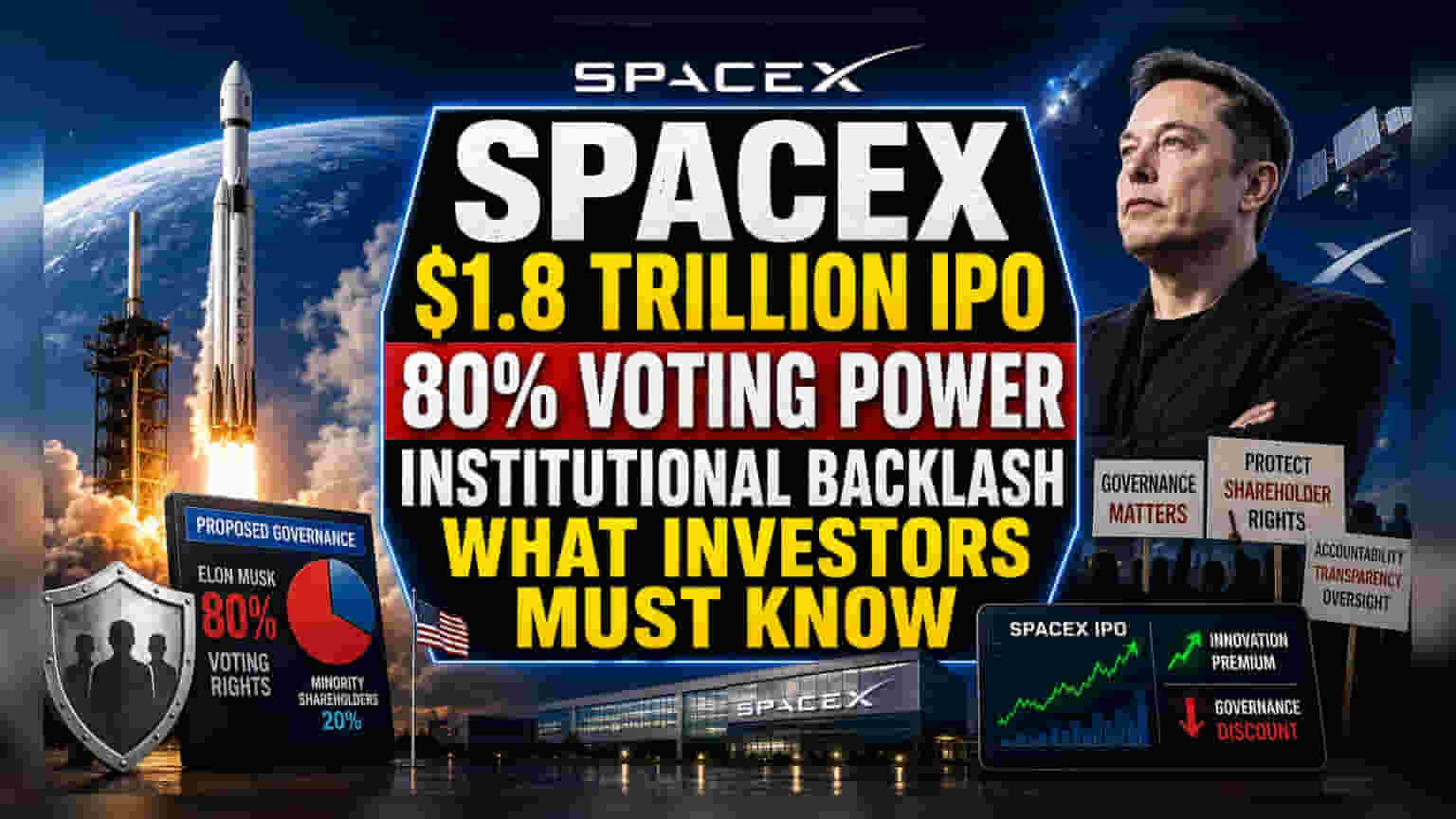


SpaceX’s massive $1.8 trillion IPO is facing significant pushback from institutional investors. Critics are raising concerns over Elon Musk’s proposed 80% voting control, sparking fears of weak shareholder rights. With major pension funds questioning the governance structure, investors are weighing the company's innovation against long-term accountability risks.
What Happened
SpaceX, the aerospace giant led by Elon Musk, is preparing for a landmark initial public offering (IPO) with a projected valuation of approximately $1.8 trillion. While the IPO has generated immense excitement due to the company's size and technology, it has also triggered a backlash from institutional investors. The core of the controversy lies in the proposed governance structure, which would grant Elon Musk 80% of the voting rights. This concentration of power effectively means that minority shareholders would have minimal say in the company’s strategic decisions.
Why This Matters For Investors
For potential investors, the governance structure is a critical factor. When one individual holds near-total voting control while simultaneously serving as CEO, chairman, and chief technical officer, it can create a 'key man' risk. This means the company's direction is tied almost entirely to one person's decisions, leaving little room for external oversight. Institutional investors, who manage the retirement savings of millions, are concerned that this setup lacks the necessary checks and balances to protect the interests of ordinary shareholders.
The Institutional Pushback
The governance concerns have already led to public opposition. The New York City Comptroller, Mark Levine, has criticized the plan, calling it a significant departure from standard shareholder rights. Meanwhile, institutional investors are taking concrete steps. Denmark’s AkademikerPension has explicitly stated it will not participate in the IPO, labeling the structure as problematic for governance. Other firms, including UK-based EdenTree Investment Management, have expressed hesitation, noting that they are uncomfortable with the lack of investor protections. These moves signal that the governance structure is a major hurdle that could influence the final subscription levels for the IPO.
The ESG And Accountability Debate
Beyond voting rights, some investors are scrutinizing the broader environmental, social, and governance (ESG) implications. Concerns have been raised about the transparency regarding the company’s environmental footprint and the integration of other Musk-led ventures, such as xAI. Some investors are seeking clarity on how these separate business interests impact SpaceX’s accountability. While some analysts recognize the operational success of SpaceX, the current governance model makes it difficult for traditional stewardship activities—where investors engage with management to improve corporate standards—to be effective.
Concerns Over Index Inclusion
There is also a debate about whether the company should be fast-tracked into major stock indices like the Nasdaq 100. Critics argue that allowing a company with such a concentrated governance model into these indices could expose passive investors to unnecessary risk. They suggest that the typical waiting period for new listings serves as a necessary buffer to allow market volatility to settle, and bypassing this process for a high-profile IPO could set a concerning precedent for future listings.
What Investors Should Track
The primary monitorable for investors will be any changes to the governance structure before the final public listing. Market participants will be watching to see if SpaceX makes concessions to satisfy institutional concerns, such as adding independent board members or creating stronger protections for minority shareholders. Additionally, the final valuation accepted by the market will be a key indicator of whether the 'innovation premium' outweighs the 'governance discount' in the eyes of the broader investor community.