 Whalesbook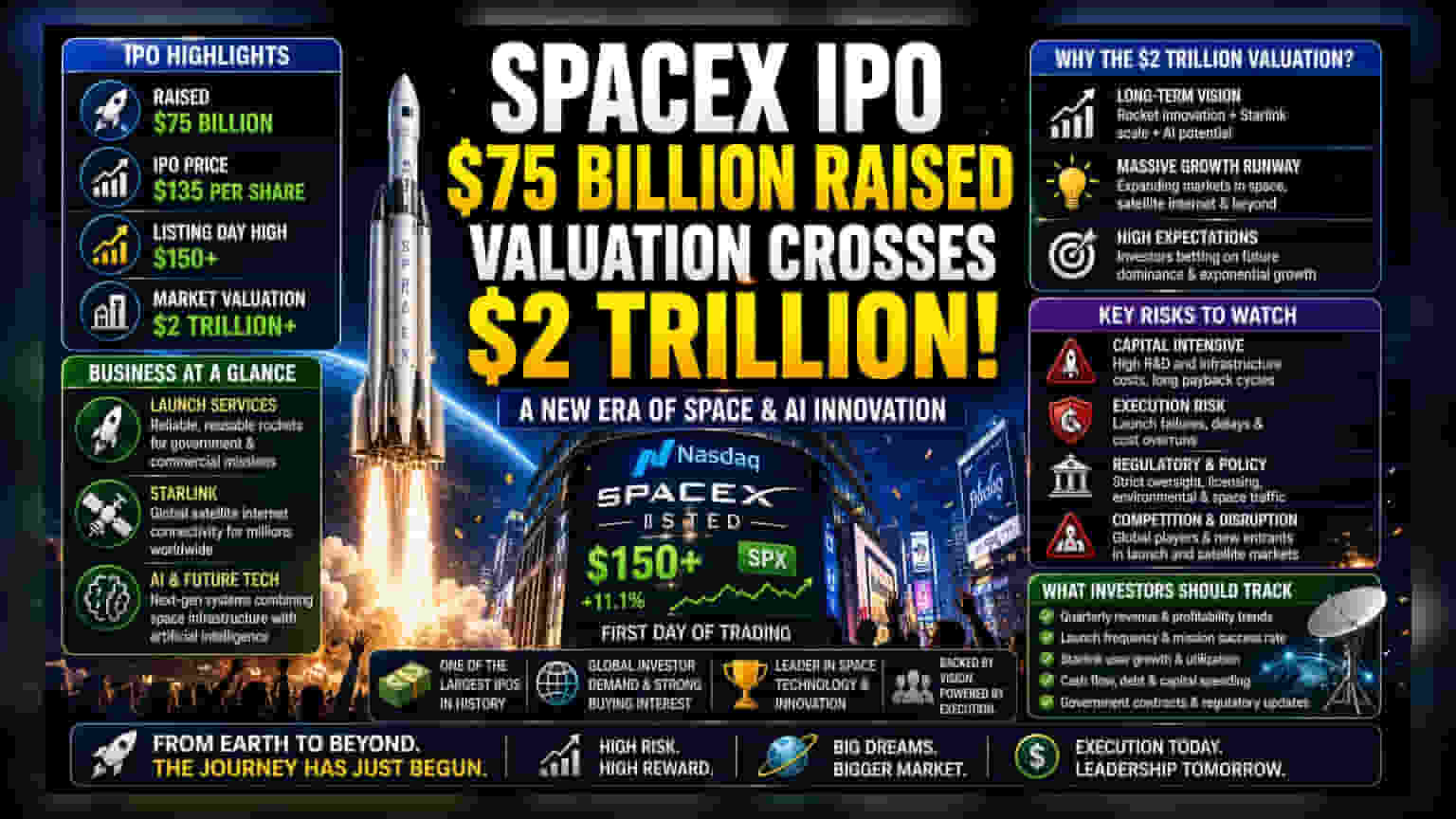


SpaceX has debuted on the Nasdaq with a record-breaking $75 billion IPO, pushing its market valuation beyond $2 trillion. While this listing marks a major milestone for the space and AI sectors, the massive valuation brings intense focus to the company’s capital-intensive business model, long-term execution risks, and the volatility often associated with high-growth tech stocks.
What Happened
SpaceX has completed its highly anticipated initial public offering (IPO), raising $75 billion. The stock, which began trading on the Nasdaq at an issue price of $135 per share, saw immediate buying interest, with the price moving above $150 shortly after the opening bell. This surge pushed the company's total market valuation beyond the $2 trillion mark. This event represents one of the largest IPOs in financial history, drawing significant attention from global investors and analysts alike.
The $2 Trillion Question
A valuation of $2 trillion places SpaceX among the most valuable companies in the world, alongside established tech giants. For investors, the challenge is determining how this valuation is justified. Unlike mature software or service companies that often have stable revenue and high profit margins, SpaceX operates in the aerospace and satellite sector. This industry is traditionally known for high research and development costs and long cycles before turning a profit. Investors are betting on the company's long-term vision, which combines rocket technology with artificial intelligence, but the current price suggests high expectations for future revenue growth.
The Business Model and Capital Intensity
One of the most important factors for investors to understand is the capital-intensive nature of space exploration. Building, launching, and maintaining rockets and satellite networks like Starlink requires massive, ongoing cash spending. While the IPO provides the company with significant capital, the company will need to balance this with the high costs of infrastructure and technology development. Unlike companies with low asset requirements, SpaceX’s business success is tied to its ability to consistently execute complex launches and maintain a dominant position in the global satellite market without facing cost overruns or technical delays.
Execution and Regulatory Risks
Investors should also consider the specific risks tied to the space and AI industries. The aerospace sector is heavily regulated, and operations are subject to strict oversight by government agencies regarding safety, environmental impact, and space traffic. Any delay in launch schedules, technical failure of a rocket, or change in government contract terms can directly impact the company's financial performance. Furthermore, because the company is combining space hardware with AI solutions, it faces the dual challenge of technological development in two very complex fields. Execution risk—the danger that projects might take longer or cost more than expected—is a standard monitorable for businesses of this scale.
How Investors May Read This
The stock’s rapid move above its IPO price reflects high market enthusiasm, but such volatility is common in high-profile tech listings. Investors are watching to see if the stock price stabilizes or if the initial excitement leads to significant price swings. It is common for companies with such massive public debuts to experience periods of adjustment as the market processes the company's financial results and long-term business potential. The focus now shifts from the IPO itself to the company's ability to show consistent revenue growth and a clear path toward sustainable profit margins.
What Investors Should Track
Going forward, the primary focus for market participants will be the company's quarterly financial disclosures. Investors will likely look for updates on launch frequency, satellite utilization, and the profitability of its various business segments. Monitoring how the company manages its debt, cash flow, and capital spending will be critical for assessing its financial health. Additionally, any updates on government contracts, regulatory changes in the space sector, or competitive shifts will be important signals to watch. Managing expectations will be key as the market moves from the hype of the IPO to the reality of public market performance.