 Whalesbook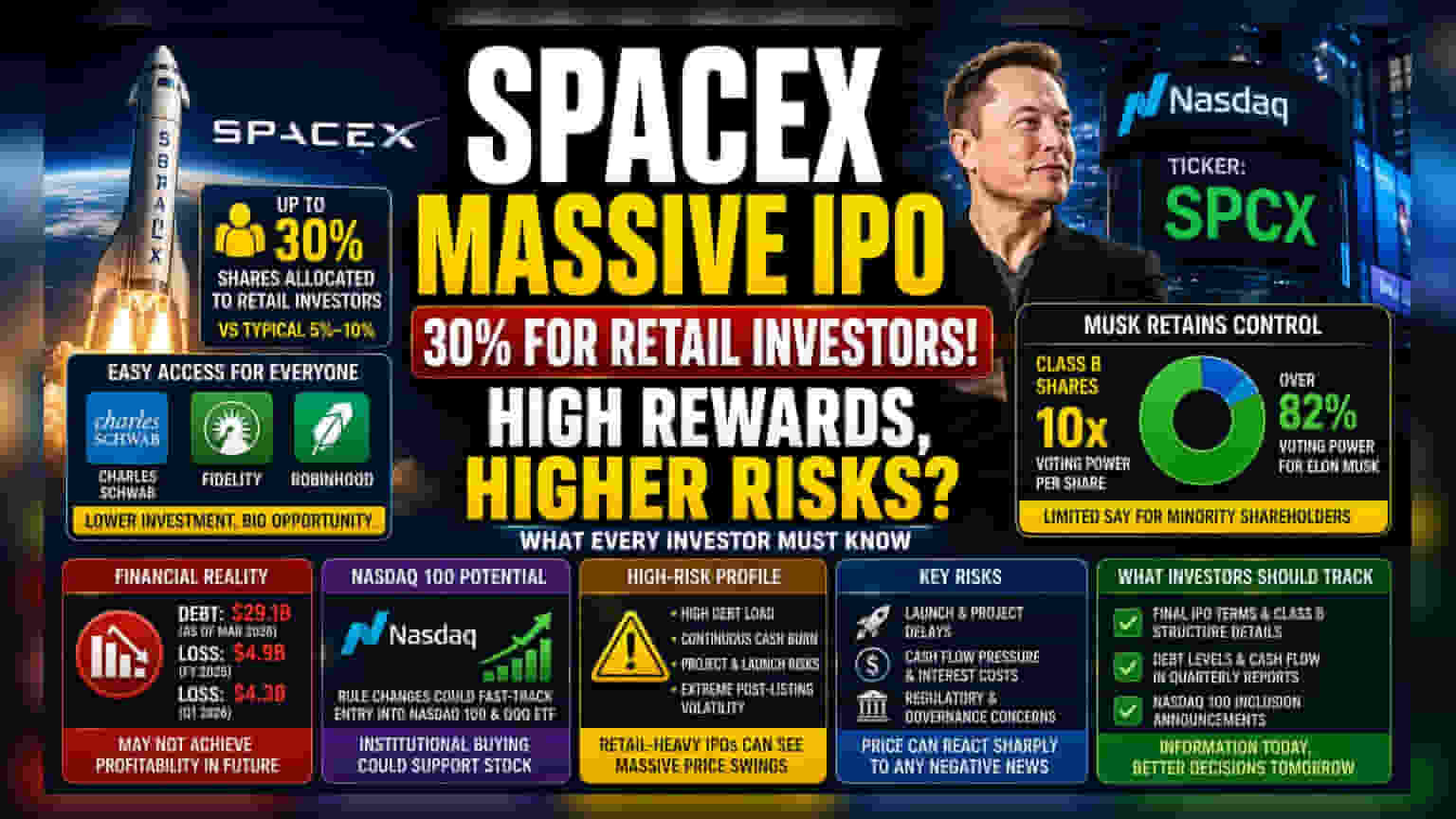


SpaceX is preparing for a landmark IPO with an unusual 30% allocation for retail investors. While the plan aims to increase public access, potential shareholders face significant risks, including heavy debt, ongoing financial losses, and concentrated voting control under Elon Musk. The company plans to list under the ticker 'SPCX' and is eyeing inclusion in major Nasdaq indexes.
What Happened
SpaceX, the aerospace company founded by Elon Musk, has unveiled plans for a major initial public offering (IPO) in the United States. The company is proposing to allocate up to 30% of its shares directly to retail investors, which is significantly higher than the standard 5% to 10% typically set aside for individuals in such offerings. The company aims to trade under the ticker symbol 'SPCX'. To facilitate this, SpaceX is reportedly working with major platforms like Charles Schwab, Fidelity, and Robinhood, potentially allowing individuals with smaller investment amounts to participate in the IPO.
Governance and Voting Control
A critical factor for potential investors is the company’s share structure. Elon Musk will retain substantial influence through 'Class B' shares. These shares carry 10 votes each, which could grant him over 82% of the total voting power. This concentrated control structure has drawn scrutiny from institutional investors, including pension funds, who have raised concerns about how much say minority shareholders will have in key company decisions. For retail investors, this means that while they may own a portion of the company, the ability to influence governance or management decisions will be limited compared to the founder.
Financial Health and Profitability
SpaceX’s financial statements present a complex picture. The company has accumulated a debt burden of approximately $29.1 billion as of March 2026. Financial performance has been volatile, with reported losses of $4.9 billion in the previous year and $4.3 billion in the first quarter of 2026 alone. The company has formally acknowledged that it may not achieve profitability in the future. For investors, this creates a high-risk profile where the business model relies heavily on long-term growth and capital scaling rather than immediate earnings.
Potential for Index Inclusion
Despite the financial challenges, SpaceX is targeting inclusion in major stock indexes, specifically the Nasdaq 100. Recent rule changes by Nasdaq could allow for an expedited entry into indexes like the QQQ ETF. If this happens, it would trigger automatic buying from institutional funds that track these indexes, providing a potential floor for the stock price regardless of its fundamental performance. However, other major indices like the S&P 500 have not implemented similar changes, creating an uncertain path for broader index support.
Risks and Market Reaction
The company itself has warned that its stock price could experience extreme volatility post-listing. Retail-heavy IPOs can sometimes mirror the trading patterns seen in 'meme stocks,' where retail sentiment drives rapid price swings. This creates a risk for investors who are looking for stable, long-term holdings. The combination of high debt, consistent cash burn, and limited shareholder voting rights suggests a stock that may react sharply to any news regarding project delays, cash flow constraints, or changes in the aerospace sector.
What Investors Should Track
Investors may want to monitor several key factors before and after the listing. First, watch for any updates on the final regulatory approval for the IPO and the specific terms of the 'Class B' share structure. Second, monitor the company’s quarterly reports to see if the debt burden is manageable or if interest payments are putting further pressure on cash flow. Finally, keep an eye on index inclusion announcements; entry into the Nasdaq 100 would be a major event that changes the buyer profile of the stock from individual to institutional, which could reduce volatility over time.