

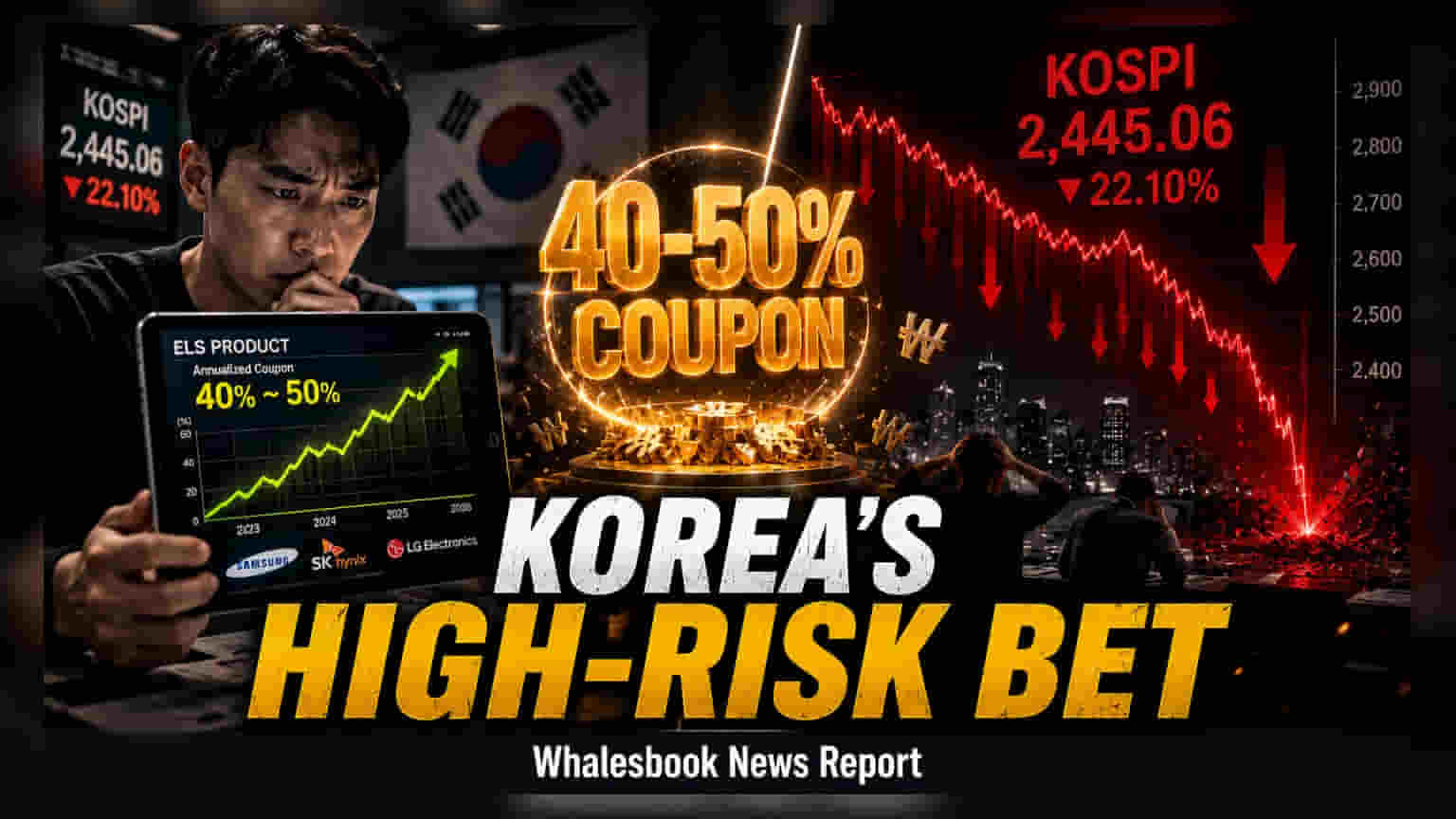
South Korean retail investors are pivoting toward complex Equity-Linked Securities (ELS) offering annual coupons as high as 50% following a sharp market correction. With regulators curbing speculative single-stock ETFs, investors are chasing these high-yield bets linked to tech giants like Samsung Electronics and SK Hynix. However, these financial products carry a real risk of significant principal loss if the underlying share prices fall beyond specific limits.
South Korean retail investors are changing their strategy following the recent 22% drop in the KOSPI index. Instead of single-stock leveraged ETFs, which faced regulatory limits, many are now turning to Equity-Linked Securities (ELS) that promise annualized coupons between 40% and 50%. This shift in focus highlights a persistent appetite for high-yield returns despite the ongoing market instability.
Sales of these structured products surged to 3.5 trillion won in July, marking the highest volume since April 2023. Major brokerages are driving this trend. For example, Meritz Securities issued products tied to Samsung Electronics and SK Hynix offering yields around 43.4%, while Kiwoom Securities launched notes linked to SK Hynix and LG Electronics with potential coupons up to 50%. These yields are significantly higher than traditional savings instruments, attracting investors looking to recover from recent market losses.
Understanding the Risk
While the high coupon rates are attractive, these investments operate very differently from buying stocks. Investors are essentially entering a contract that provides a fixed return only if the underlying stock price stays within a specific trading range. If the price of the linked stock—such as Samsung Electronics or SK Hynix—drops below a predefined level, investors may face significant losses on their original investment.
The primary danger for many investors is confusing strong company fundamentals with a safe investment product. Even if a company like Samsung has a strong long-term business outlook, the ELS product itself can cause losses if the short-term share price falls sharply. This risk is known as a 'knock-in' event, where the protection against loss is removed once the stock price hits a certain low point.
Regulatory Scrutiny
This trend has caught the attention of the Financial Supervisory Service, which is increasing oversight of these instruments to protect retail investors. This heightened regulatory focus follows past market episodes, including heavy losses on China-linked notes, where investors faced unexpected capital erosion. Regulators are now requiring brokerages to be more transparent about the potential risks and are reviewing product issuance if market conditions become too volatile.
Looking ahead, the performance of these structured products will depend heavily on market volatility and the price stability of the underlying tech stocks. Investors should be aware that these notes are complex instruments, and the high yields come with the significant trade-off of potentially losing their entire principal if the market downturn continues or worsens.