

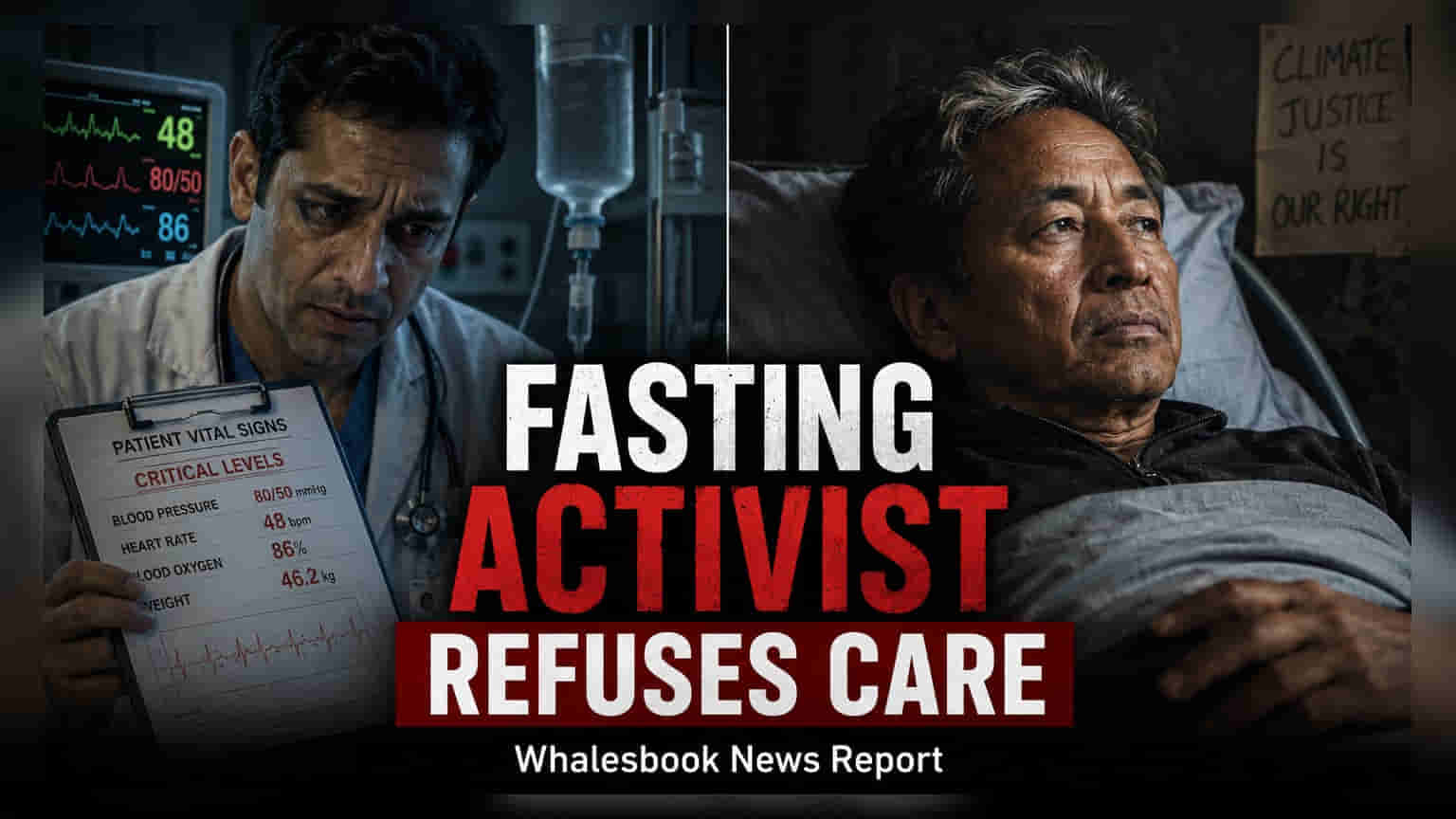
Activist Sonam Wangchuk is refusing medical care at Safdarjung Hospital following a 20-day hunger strike. Admitted for dehydration and metabolic issues, he continues to decline IV fluids while his family requests discharge. The situation follows his protest against alleged exam irregularities.
Activist Sonam Wangchuk is currently under medical observation at Safdarjung Hospital in New Delhi after his health deteriorated during a 20-day hunger strike. On Saturday, hospital authorities reported that the 59-year-old is suffering from dehydration and metabolic abnormalities. Despite clinical advice to undergo treatment, including intravenous fluids and oral rehydration, Wangchuk has refused all medical intervention.
Wangchuk was moved to the government facility on the 21st day of his protest, which was held at Jantar Mantar. While initial health reports indicated that he was conscious and had stable vitals, clinical tests showed signs of compensated acidosis and a drop in serum potassium levels. Additionally, urinary ketone levels had risen, signaling that his body is under significant physiological stress from the prolonged fast.
His wife, Gitanjali J Angmo, has formally requested that no medical treatment be administered without her explicit consent. She has expressed a lack of confidence in the current hospital's transparency and has demanded his discharge so he can be moved to a facility of the family's choosing. She maintained that Wangchuk remains in a stable state of mind and intends to continue his participation in public demonstrations, including a planned march to Parliament scheduled for July 20.
Wangchuk began his indefinite hunger strike on June 28. His protest was launched to show solidarity with students demanding accountability regarding alleged irregularities in the NEET and other competitive examinations. Throughout the 20-day period, medical monitoring indicated he had lost approximately 9.5 kg in body weight, with healthcare professionals closely tracking his blood pressure and sugar levels.
As the situation unfolds, the primary focus remains on the activist's immediate health status and the ongoing negotiations regarding his medical care. The next critical development to monitor is whether he will be discharged against medical advice or if a resolution can be reached between his family and the hospital authorities regarding his ongoing treatment plan.