

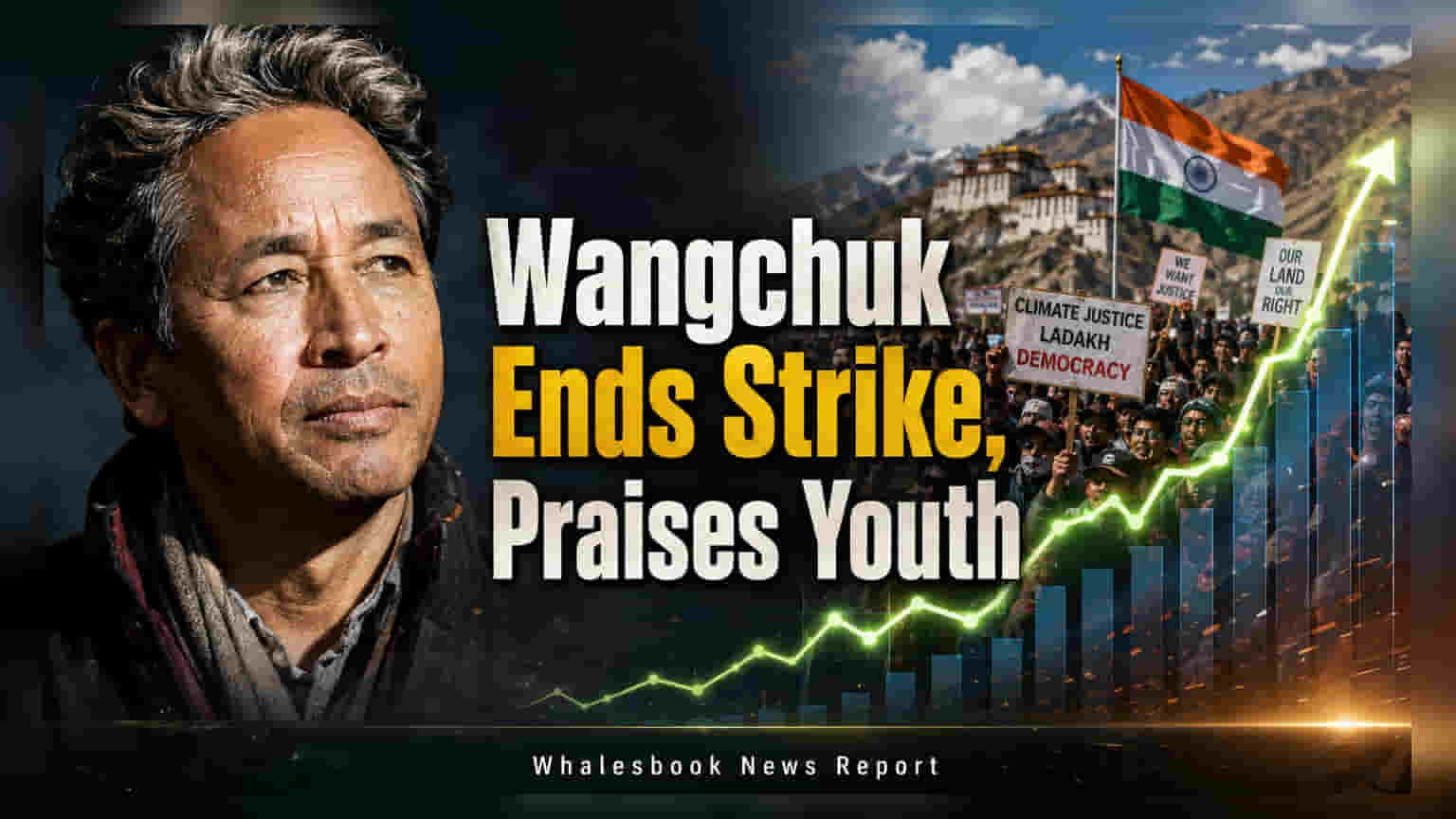
Climate activist Sonam Wangchuk has concluded his 26-day hunger strike, which advocated for reforms in competitive examinations, and is now recovering at his home. While the movement drew national attention and led to government legislative action, it remains a socio-political event with no direct implications for Indian stock markets or listed corporations.
Climate activist Sonam Wangchuk has concluded his 26-day hunger strike, expressing gratitude to the student community and supporters for their solidarity throughout his campaign. Mr. Wangchuk, who had been hospitalized following a decline in his health during the protest, has returned to his village and is currently in the process of recovering. He noted that he has regained a portion of the weight lost during the fast and expects to resume his regular schedule in the coming weeks.
The protest, which commenced in late June 2026, was centered on demands for accountability and transparency regarding alleged irregularities in competitive examinations, specifically the NEET system. Mr. Wangchuk highlighted the struggles of students facing repeated paper leaks and administrative failures. His advocacy gained significant traction among the youth, prompting nationwide discussions on the integrity of the public examination system in India.
Following the demonstrations, the government provided assurances to address these concerns, including the promise of enhanced transparency and compensation for affected families. Shortly after the conclusion of the fast, the Parliament passed the Public Examinations (Prevention of Unfair Means) Amendment Bill, 2026. This legislative development was widely viewed by the protesting groups as a necessary step toward stricter accountability.
From a market perspective, it is important for investors to note that this event is entirely socio-political in nature. There is no financial or corporate relationship between this protest and any companies listed on the National Stock Exchange (NSE) or the Bombay Stock Exchange (BSE). The movement has not created any regulatory, operational, or financial risks for the private sector, and market data confirms that the event did not cause material volatility in the broader Indian stock indices.
Mr. Wangchuk has indicated that he intends to remain active in public advocacy. For those following his work, the next updates will likely focus on his continued involvement in environmental and social causes rather than changes in the regulatory environment for businesses.