

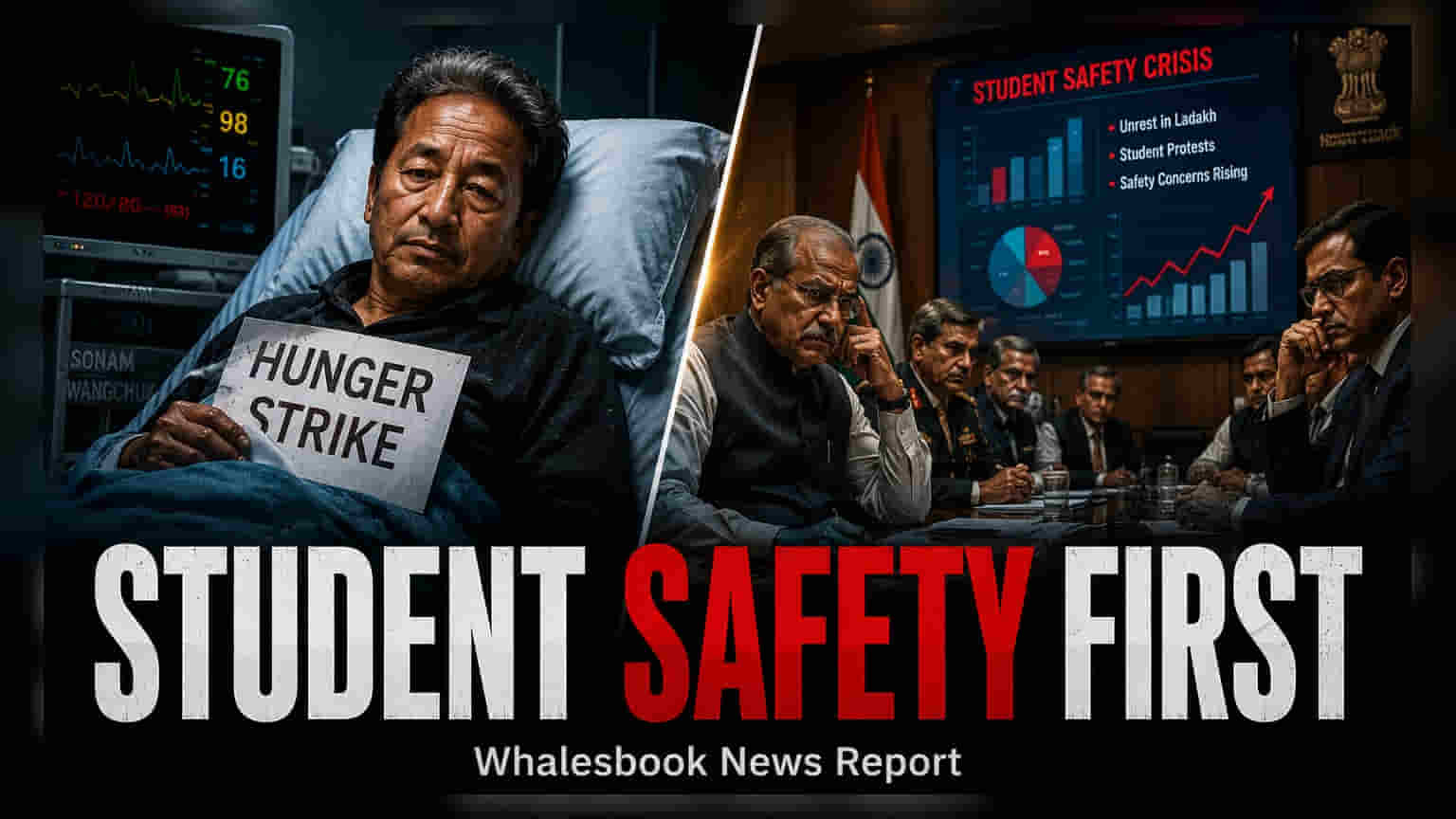
Activist Sonam Wangchuk is set to end his 25-day hunger strike if the government provides written assurance that no legal action will be taken against protesters of the 'Chalo Sansad' march. The protest centers on demands for accountability regarding NEET paper leaks and justice for students impacted by examination irregularities.
Detailed Coverage
Activist Sonam Wangchuk has indicated he is prepared to conclude his 25-day hunger strike, provided the government issues a formal guarantee against retaliatory action toward students and participants of the recent 'Chalo Sansad' march. The march, which aimed to highlight concerns over NEET paper leaks and systemic examination issues, reportedly faced significant police intervention, prompting Wangchuk's demand for the safety of these young protesters.
Government Dialogue and Current Demands
Following a visit from Union ministers JP Nadda and Jitendra Singh at Medanta Hospital in Gurugram, where Wangchuk is currently receiving care, the activist noted that initial discussions were held regarding his core demands. These demands include financial compensation for the families of students who died by suicide following examination irregularities and a formal parliamentary debate on accountability, which involves addressing the potential resignation of Education Minister Dharmendra Pradhan. While these issues remain central, Wangchuk has made the immediate cessation of his protest conditional on protecting the participants of the July 20 demonstration from legal harassment.
Background of the Protest Movement
The protest movement, which gained national attention after Wangchuk joined the fast on June 28, originated from demonstrations at Jantar Mantar initiated by Abhijeet Dipke of the Cockroach Janta Party (CJP). The core issue remains the integrity of national competitive examinations, which has led to widespread student unrest. Wangchuk was previously moved from Jantar Mantar to Safdarjung Hospital on July 18 by Delhi Police, and later to Medanta Hospital under court orders due to his deteriorating health.
Expectations and Potential Resolution
Despite receiving encouragement to end his fast from approximately 65 Members of Parliament across various political affiliations, Wangchuk maintains that his primary responsibility lies in ensuring the protection of the students who participated in the movement. He has characterized the peaceful protest as a valid exercise of democratic rights and stated that he cannot return to his regular academic work while the threat of punitive action against the students persists. The next phase of this situation will depend on whether the government provides the unequivocal, written assurance he has requested regarding the safety of the protesters. The market and the public will continue to monitor whether this commitment leads to a resolution or if the hunger strike will continue indefinitely.