

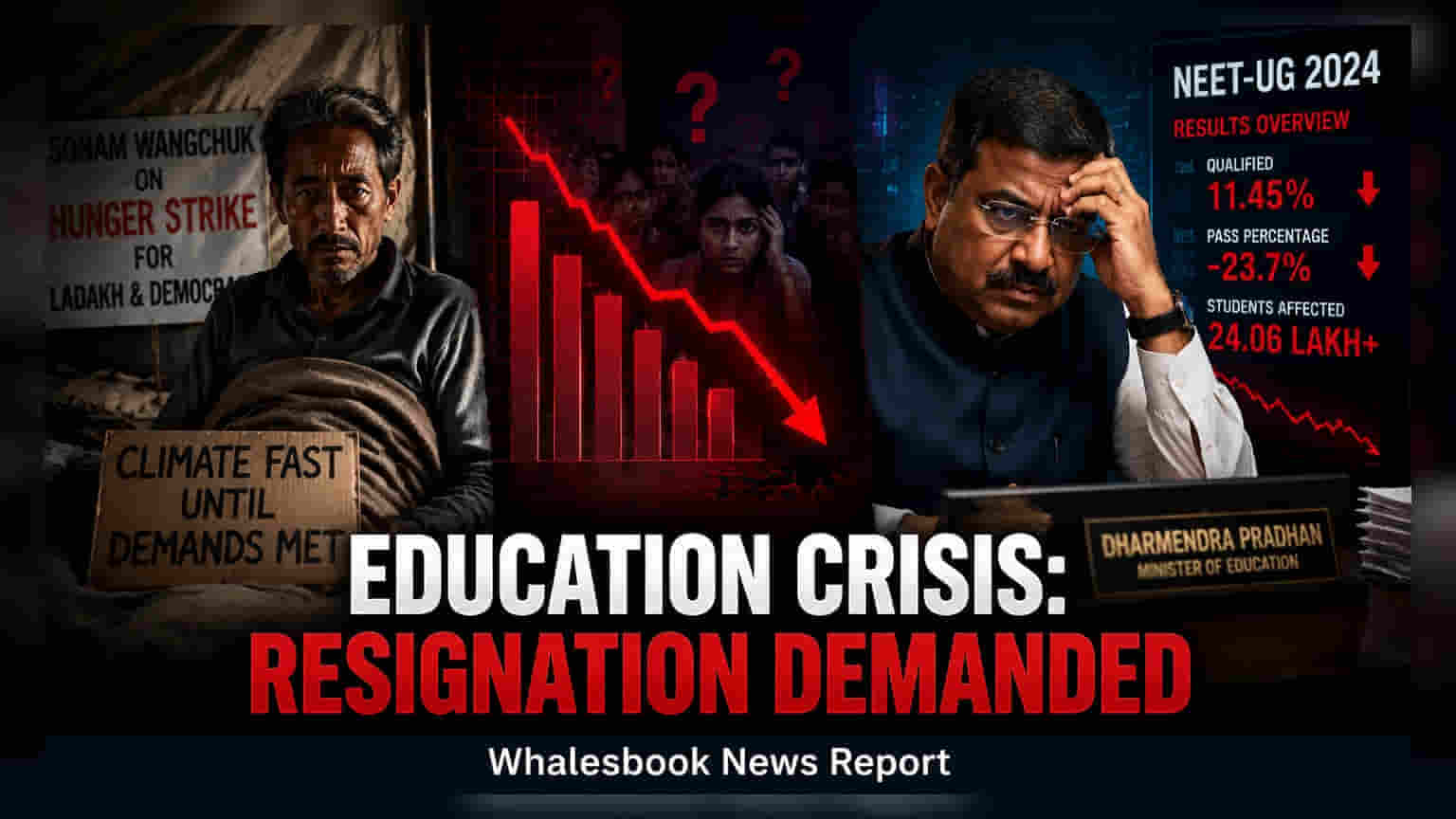
Ladakh-based activist Sonam Wangchuk is on an indefinite hunger strike demanding the resignation of Union Education Minister Dharmendra Pradhan. The protest follows the cancellation of the NEET-UG 2026 examination due to paper leak allegations, which has triggered widespread public criticism.
Ladakh activist and educator Sonam Wangchuk continues an indefinite hunger strike as of July 15, 2026, marking his 18th day of protest. The activist is calling for the resignation of Union Education Minister Dharmendra Pradhan, citing the NEET-UG 2026 examination paper leak as the primary catalyst for his action.
Impact of the NEET-UG 2026 Controversy
The NEET-UG 2026 examination, which involved over 22 lakh students, was cancelled on May 12, 2026, following reports of question paper leaks. The situation was further compounded by a retest conducted on June 21, which faced significant public and political backlash. The integrity of national-level entrance examinations has become a major point of discussion, with reports highlighting intense criticism from various stakeholders, including the judiciary, regarding the management of these tests.
Shift in Relationship
The ongoing confrontation marks a significant departure from the collaboration seen in March 2023. At that time, Minister Pradhan and Sonam Wangchuk publicly expressed mutual support for India's education reforms and the implementation of the National Education Policy. The Minister had previously praised Wangchuk’s commitment to educational innovation, and the activist had publicly supported the government's direction for educational transformation. The current protest reflects a breakdown in this alignment, as public frustration over examination mismanagement has grown.
Purpose of the Protest
During a brief public appearance on Tuesday, the 59-year-old activist addressed the ongoing protest, acknowledging the toll the hunger strike has taken on his health. He stated that the primary objective of the movement is to foster public awareness regarding systemic issues within government departments. According to Wangchuk, while a resignation might not be immediate, the goal is to stimulate a broader public awakening that could eventually lead to structural changes in how examinations and educational policies are managed.
The situation remains a significant topic of public discourse. Investors and observers interested in the education sector and government administration are monitoring how this protest influences future policy decisions, examination security protocols, and the stability of the ministry's leadership.