

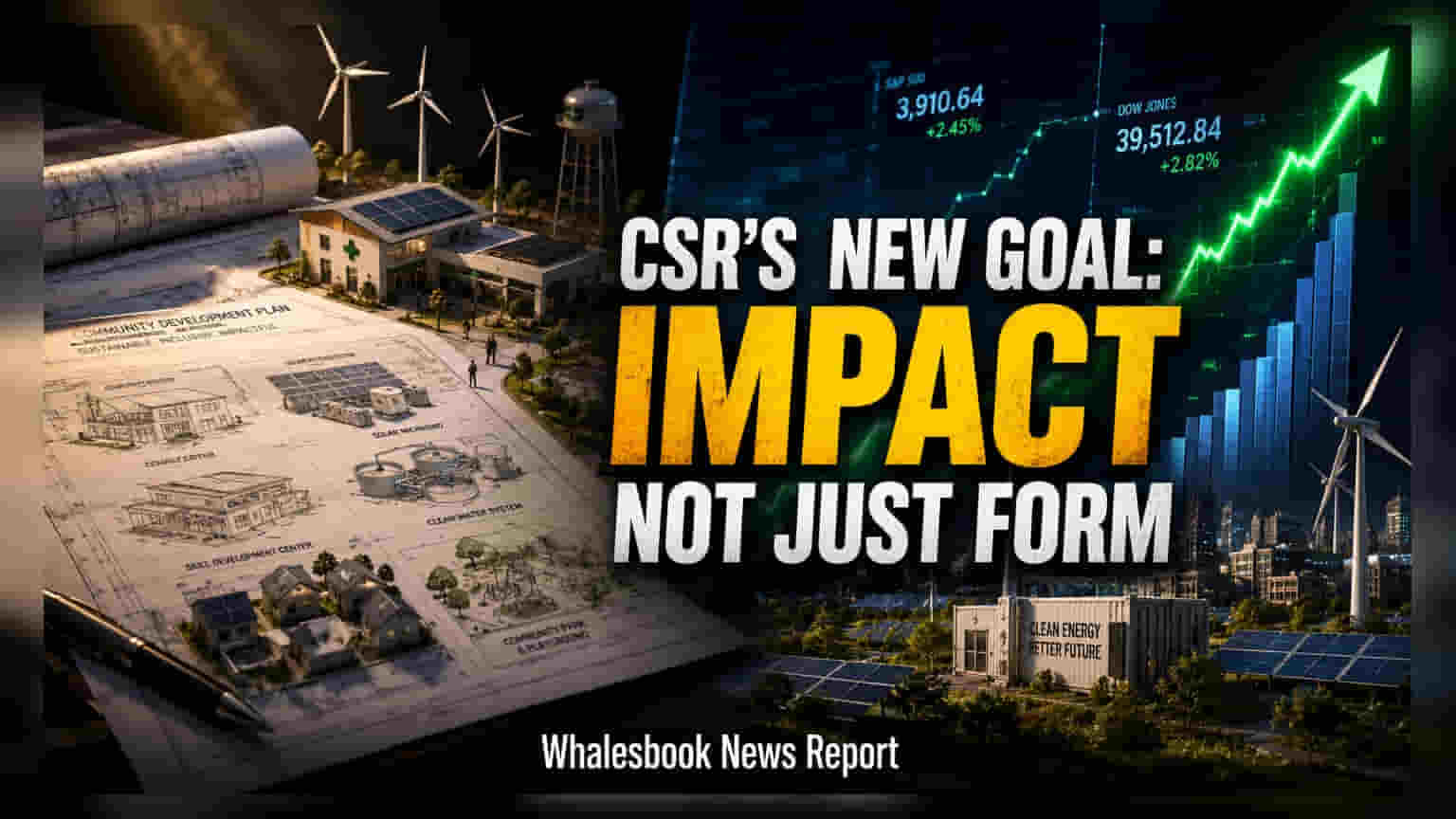
Industry leaders are pushing for a transition from simple CSR compliance to outcome-based social investment using the Social Stock Exchange. Companies can now deploy up to 10% of their mandatory CSR budget through this platform, aiming for greater transparency and measurable impact. This move is expected to bridge the gap between corporate capital and social welfare organizations through a structured regulatory framework.
The landscape of Corporate Social Responsibility (CSR) in India is shifting toward a model that prioritizes measurable results over basic regulatory compliance. At the recent CSR Conclave 2026, corporate leaders and regulators emphasized that the Social Stock Exchange (SSE) is poised to become a central highway for directing philanthropic and corporate funds. By providing a transparent environment for social enterprises to raise capital, the SSE aims to bring the same level of accountability to the social sector that is standard in financial markets.
Scaling CSR Through Transparency
Recent policy adjustments have enabled Indian companies to allocate up to 10% of their mandatory CSR spending through the Social Stock Exchange. This initiative is designed to encourage firms to move beyond routine donations and focus on projects with clear, trackable outcomes. During the discussions, participants highlighted that the SSE acts as an innovative interface, connecting corporate capital with verified social organizations. By using the exchange, companies can potentially bypass traditional inefficiencies, ensuring that funds are utilized for projects where impact can be independently audited and reported.
Building Trust and Infrastructure
The push for the SSE is supported by the need to treat trust as a measurable asset. Industry experts pointed out that while the regulatory framework is still maturing, the goal is to mirror the success seen in India’s digital public infrastructure. For companies, this means the adoption of standardized impact reporting, which can help in better decision-making when selecting social partners. Representatives from major financial institutions and the National Stock Exchange (NSE) noted that simplification of processes is currently the top priority to ensure that both non-profits and corporate donors can participate without excessive administrative burdens.
Future Monitorables for Investors
For shareholders and the broader market, the evolution of CSR through the SSE represents a change in how companies manage their social obligations. Investors may track how individual companies choose to allocate their 10% CSR budget through these new channels. A shift toward the SSE could indicate a more disciplined approach to social spending, potentially improving the quality and visibility of a company's social impact initiatives. The key monitorable moving forward will be the adoption rates among major corporates and the development of standardized metrics that allow for better comparison of social performance across different sectors.