 Whalesbook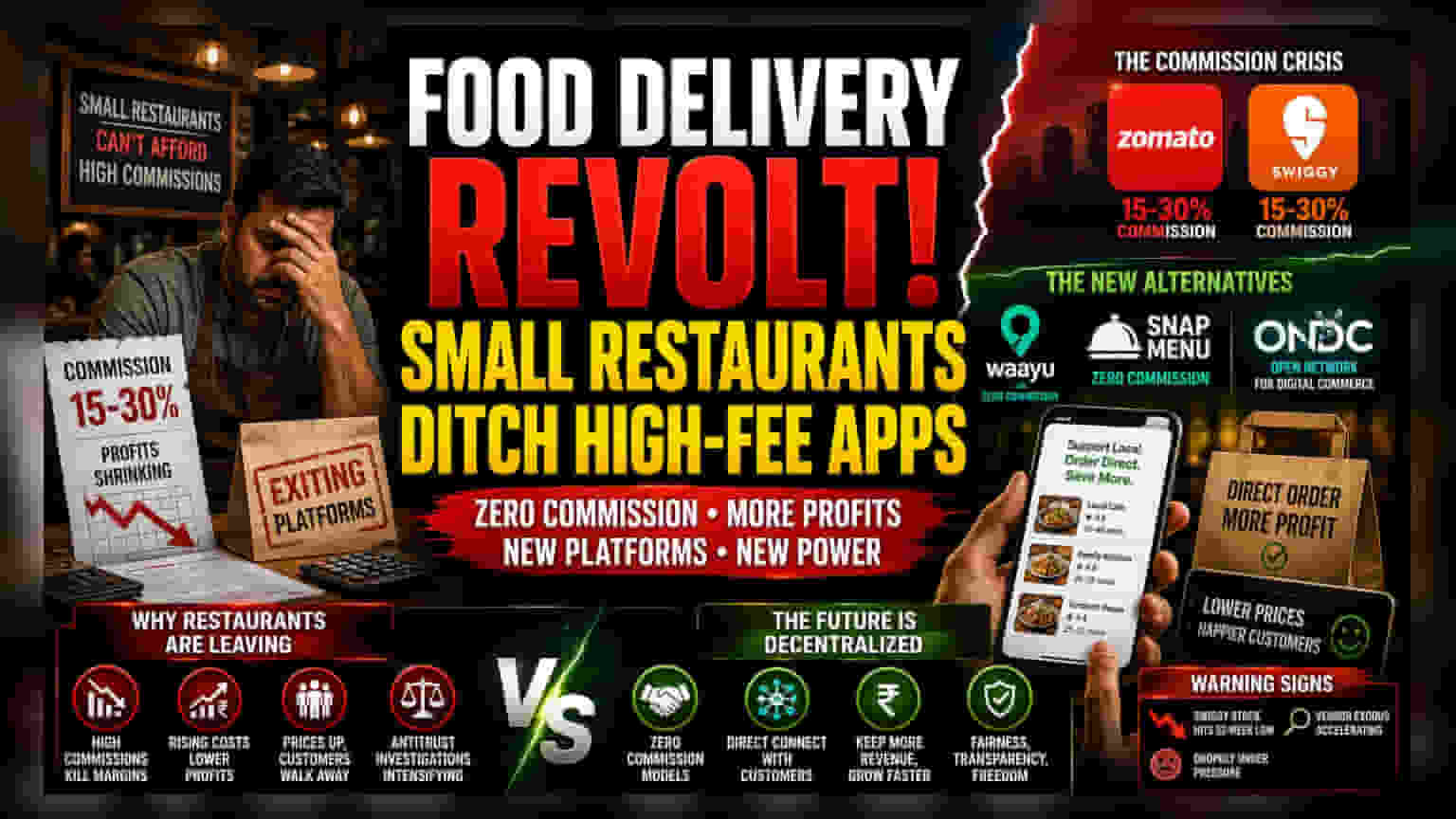


The Margin Erosion Crisis
India’s food delivery duopoly, dominated by Zomato and Swiggy, is experiencing a strategic inflection point as small-scale restaurant operators begin to exit the commission-driven ecosystem. Historically, these platforms extracted between 15% and 30% of order values as a mandatory fee for digital visibility. With inflation weighing on input costs and consumer spending, independent eateries—ranging from local cafes to family-owned outlets—find these levies commercially untenable. Unlike large chains with sufficient scale to negotiate favorable terms, smaller operators are increasingly passing these costs to consumers via menu price markups, creating a pricing disparity that risks alienating their core dine-in base.
The Shift Toward Decentralization
Market frustration is manifesting in a transition toward leaner, zero-commission alternatives. Platforms like Waayu and SnapMenu are gaining traction by positioning themselves as discovery tools that leave the logistics and customer relationship management to the restaurants themselves. Simultaneously, the government-backed Open Network for Digital Commerce (ONDC) serves as a critical catalyst for this shift, providing a decentralized infrastructure that bypasses the proprietary, fee-heavy frameworks of established aggregators. By facilitating direct interactions between diners and eateries, these models allow businesses to retain revenue that would otherwise be captured by the platform’s take rate, challenging the historical dominance of aggregator-owned data and customer loyalty.
The Forensic Bear Case: Structural Weaknesses
For investors monitoring the sector, the growing vendor exodus underscores a persistent tension between aggressive growth and unit economic viability. While both Zomato and Swiggy reported scaling metrics in Q4 FY26, their reliance on high-commission models has become a focal point of antitrust investigations. The Competition Commission of India (CCI) has previously highlighted concerns regarding exclusivity clauses and platform neutrality, suggesting that these practices may artificially distort market competition. Furthermore, Swiggy’s ongoing stock price weakness, which recently hit 52-week lows, reflects broader market skepticism regarding its ability to bridge the profitability gap with competitors. Unlike larger, diversified firms, these platforms are heavily reliant on maintaining high take rates to offset marketing and logistics spend. Should the vendor-led revolt accelerate, the underlying engine of their commission-based revenue stream faces structural risk.
Sector Outlook and Competitive Realignment
Consumer awareness regarding the hidden costs of delivery is rising, with urban diners increasingly scrutinizing service fees and price markups. This transparency-seeking trend poses a long-term risk to platforms that utilize dynamic pricing and commission-loading as their primary monetization tools. Future growth for established players will likely depend on their ability to transition from commission-harvesting to value-added service models, such as advertising, subscription tiers, or diversified quick-commerce offerings, rather than relying solely on the restaurant partnership model that is currently undergoing a painful reset.