

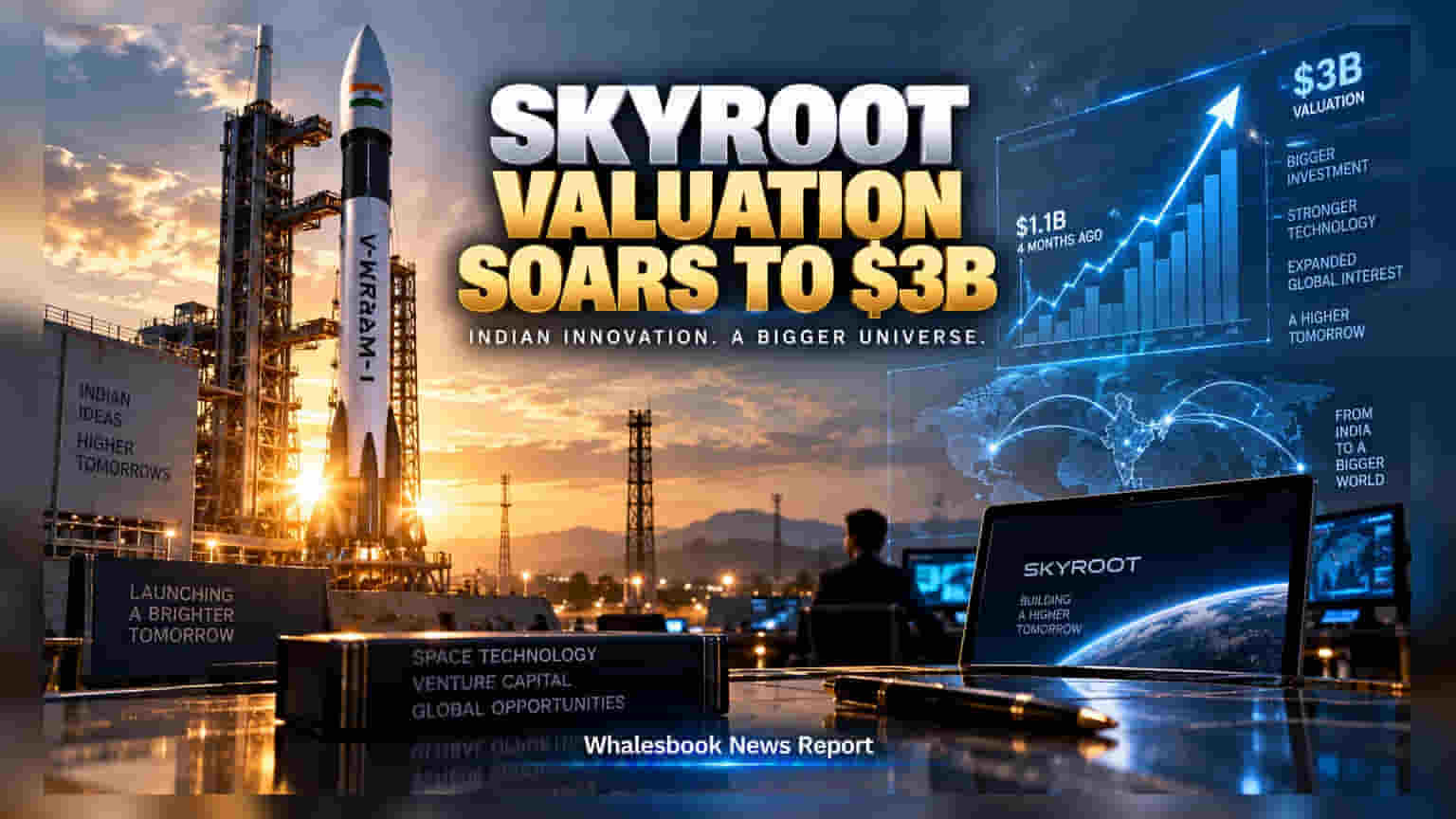
Hyderabad-based Skyroot Aerospace is in talks to raise $300 million, targeting a $3 billion valuation. This deal, involving major investors like Fidelity and Benchmark, marks a rapid rise from its $1.1 billion valuation just four months ago. While this signals strong investor confidence in India's space technology sector, the industry remains capital-intensive with long development cycles that require patience.
Skyroot Aerospace is currently negotiating a fresh funding round of up to $300 million, which aims to push the company's valuation to $3 billion. This target represents a significant increase from the $1.1 billion valuation the startup held only four months ago. The company, which operates in the specialized space technology sector, is in advanced talks to finalize the terms with several high-profile international investors.
A Rapid Valuation Growth
The proposed valuation reflects a nearly threefold increase in a short period. This growth follows the successful testing of the company's Vikram-1 orbital launch vehicle on July 18, 2026. Such technical milestones are vital for space startups to prove their capability in an industry that demands high initial spending and complex engineering. Founded in 2018 by Pawan Kumar Chandana and Naga Bharath Daka, Skyroot has emerged as a significant entity within India’s growing commercial space ecosystem.
Global Interest in Indian Space Tech
The funding round is attracting substantial international venture capital interest. Fidelity is expected to lead the round with an investment between $170 million and $190 million, while General Catalyst is considering a contribution of up to $80 million. Additionally, the American venture firm Benchmark, known for its early-stage technology investments, is looking to enter the Indian market through this deal with a commitment between $20 million and $30 million. Existing investors, such as GIC and BlackRock, may also participate to maintain their proportional stakes.
While this development shows positive momentum, the space sector is inherently capital-intensive. Unlike software or service-based businesses, space companies often face long gestation periods before achieving consistent revenue or profitability. The sector depends heavily on both public-private partnerships and the regulatory environment established by agencies like the Indian National Space Promotion and Authorization Centre, also known as IN-SPACe. Success for companies in this space will rely on their ability to manage high costs, hit technical targets consistently, and navigate the regulatory framework. Investors watching the sector should monitor how these startups manage their cash flow and transition toward commercial launch cycles in the coming years.