

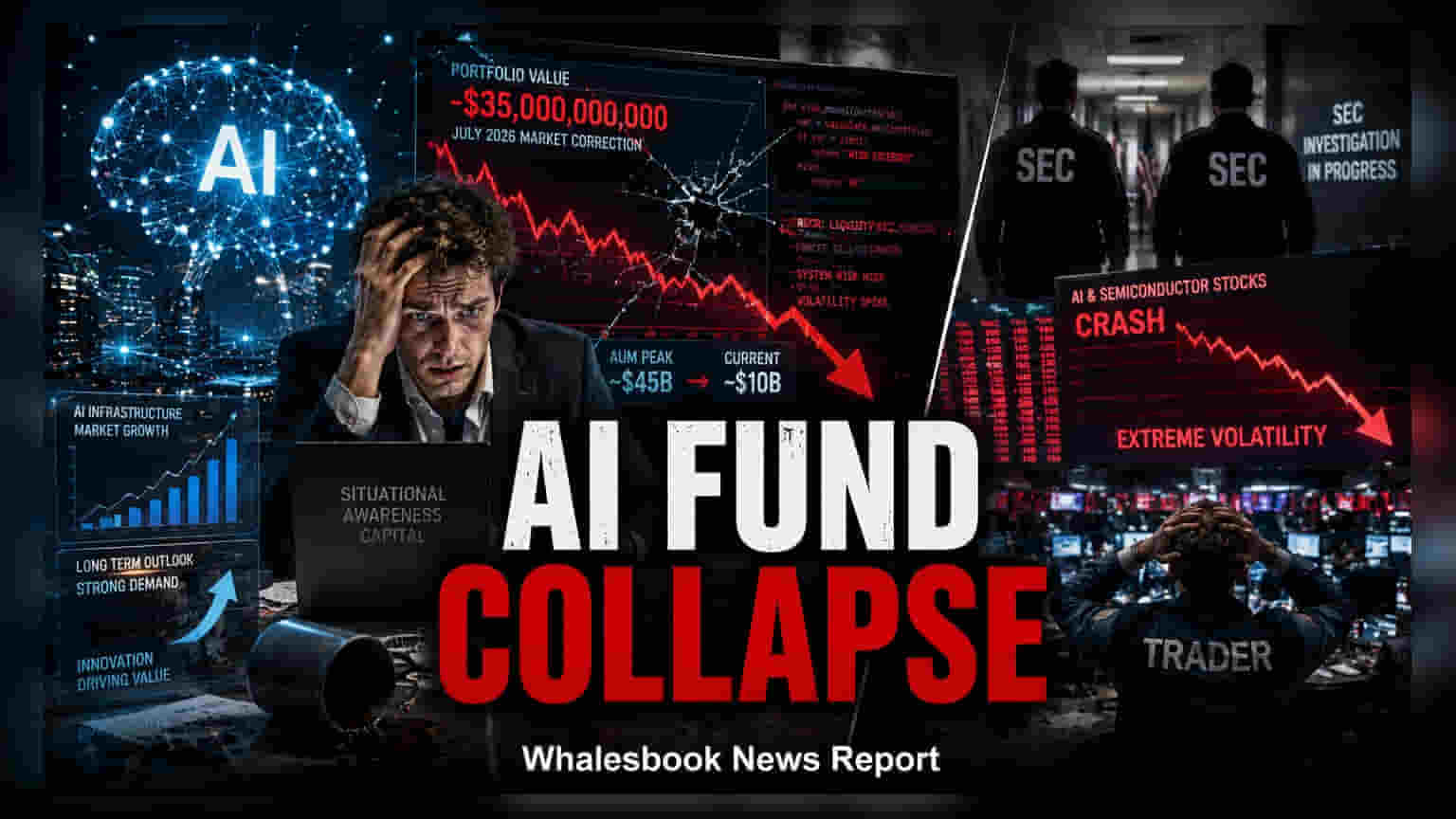
The U.S. Securities and Exchange Commission has launched an investigation into the AI-focused hedge fund Situational Awareness following a massive $35 billion loss during the July 2026 market correction. The probe involves major Wall Street banks and highlights the risks associated with highly concentrated bets in the volatile artificial intelligence sector.
The U.S. Securities and Exchange Commission (SEC) has initiated an investigation into Situational Awareness, a hedge fund focused on artificial intelligence, following a period of extreme market volatility. The regulator has issued demands for information to several major Wall Street banks, including Goldman Sachs, JPMorgan, Citigroup, and Bank of America, to understand the trading activities and risk management practices of the firm.
The July Market Correction and Portfolio Sale
This regulatory scrutiny follows a turbulent period for the fund, led by former OpenAI researcher Leopold Aschenbrenner. In late July 2026, the fund suffered a significant decline, losing an estimated $35 billion in value as AI and semiconductor stocks experienced a sharp correction. This sudden downturn created a liquidity crisis for the fund, forcing it to sell off the majority of its public equity portfolio.
To manage this pressure, the fund entered into an emergency transaction with Citadel. The hedge fund sold a $16 billion public equity portfolio at a 10% discount to its market value. Since the deal, Citadel has reportedly unwound more than 80% of the risk associated with these assets. This transaction allowed Situational Awareness to raise immediate cash, but it significantly reduced the fund's assets under management, which fell from a peak of roughly $45 billion to approximately $10 billion.
Risks of Concentrated AI Investing
For investors, this situation serves as a practical lesson on the risks of concentration. While the firm initially saw high growth, its strategy of putting a large amount of capital into a narrow set of AI infrastructure companies left it vulnerable when those specific stocks fell. When a fund has too much exposure to one sector, a sudden shift in market sentiment can lead to forced sales, where the fund must sell assets quickly at lower prices just to remain solvent.
Despite the investigation and the sharp reduction in assets, the fund remains operational. It has recently shifted its focus toward private investments, including a reported $400 million commitment to a private company. The SEC investigation is currently in the information-gathering stage, and it is important to note that Situational Awareness has not been accused of any wrongdoing or misconduct.
The key monitorable for the industry will be how regulators view the risk management practices of funds that concentrate heavily on volatile sectors like AI. Investors may also track whether other funds with similar high-concentration strategies face pressure if sector valuations continue to fluctuate.