

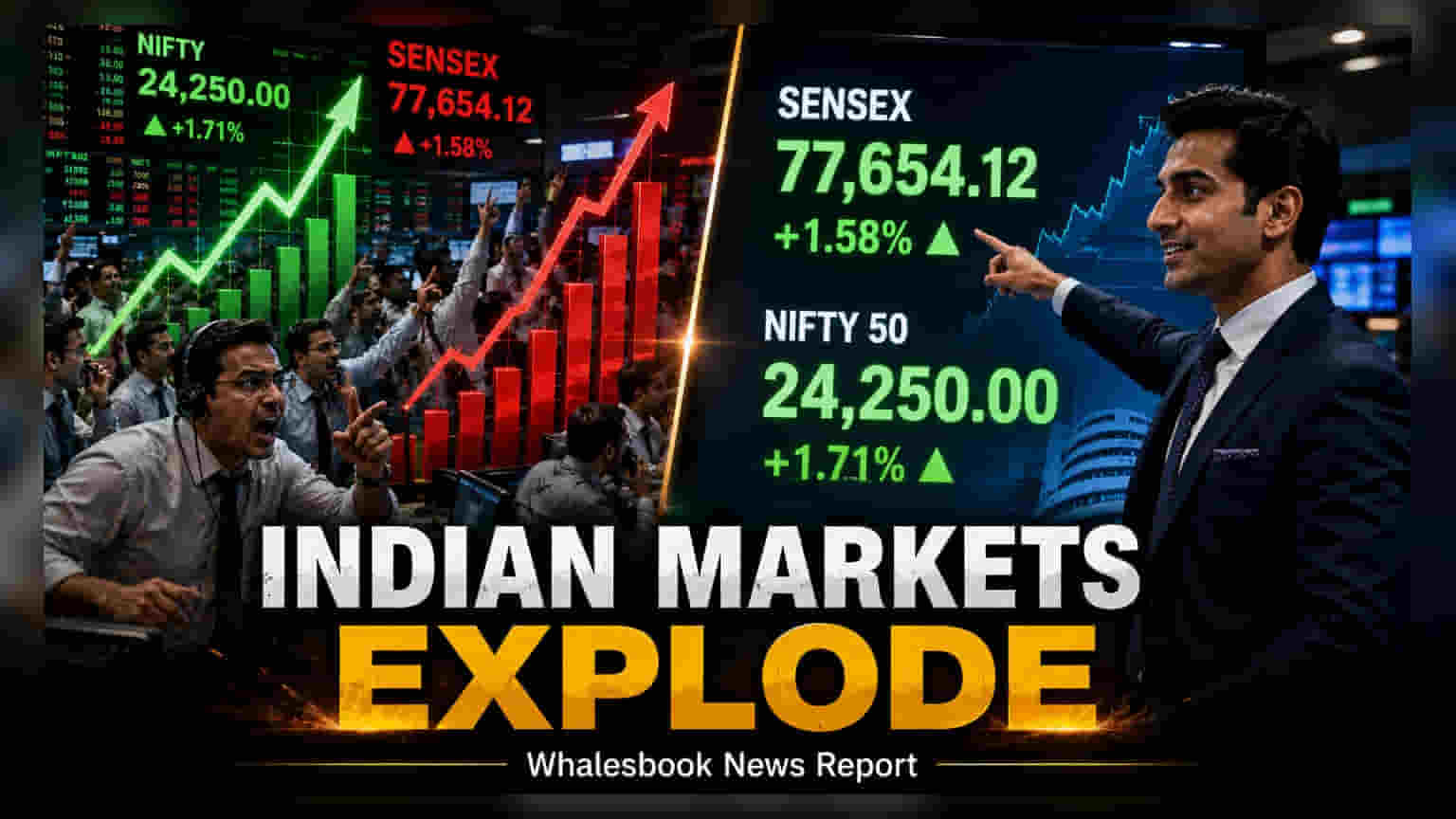
The S&P BSE Sensex and Nifty 50 reached new record highs on Wednesday, driven by broad-based buying. The Sensex climbed 888 points to 77,654, while the Nifty rose 264 points to 24,250. This surge reflects sustained investor confidence in the domestic economic outlook and positive sentiment across major sectors.
Indian equity markets reached significant new milestones on Wednesday, as both benchmark indices recorded fresh all-time highs. The S&P BSE Sensex closed at 77,654.60, registering a gain of 888.68 points, while the Nifty 50 index concluded the session at 24,250.20, adding 264.85 points. This movement represents an increase of over 1% for both indices, highlighting a strong momentum currently present in the Indian stock market.
The rally was broad-based, indicating that buying interest was not limited to a single sector but spread across the market. Such market-wide participation is often seen as a sign of healthy investor appetite, as it suggests that confidence is shared across different industries rather than being driven by isolated stock movements. This trend follows a period of focus on domestic economic indicators and corporate performance.
Market performance in India is often influenced by the flow of money from foreign institutional investors. When these investors remain net buyers, it provides the liquidity necessary to sustain upward movements in large-cap indices like the Sensex and Nifty. Additionally, expectations regarding upcoming corporate earnings play a crucial role in shaping investor decisions. When businesses are expected to report steady or improved profits, investors tend to show higher interest in purchasing equity.
While the current momentum remains positive, investors often look to balance this optimism with a focus on risk management. The broader market trajectory is typically sensitive to global cues, including interest rate decisions by global central banks and fluctuations in commodity prices. Any significant shift in global economic stability or domestic policy updates can influence the speed of these market movements. Investors who monitor indices at record highs often watch for signs of valuation stretching, where stock prices rise faster than the underlying earnings growth of companies.
Looking ahead, market participants will likely track upcoming macroeconomic data and quarterly corporate results to gauge whether the current growth trajectory is supported by fundamental business strength. Sustained performance will depend on the ability of the economy to maintain its current pace of activity and the continued confidence of both domestic and international investors. The next important step for the market will be to see if these new levels can be maintained without significant profit-booking or sudden changes in global liquidity trends.