

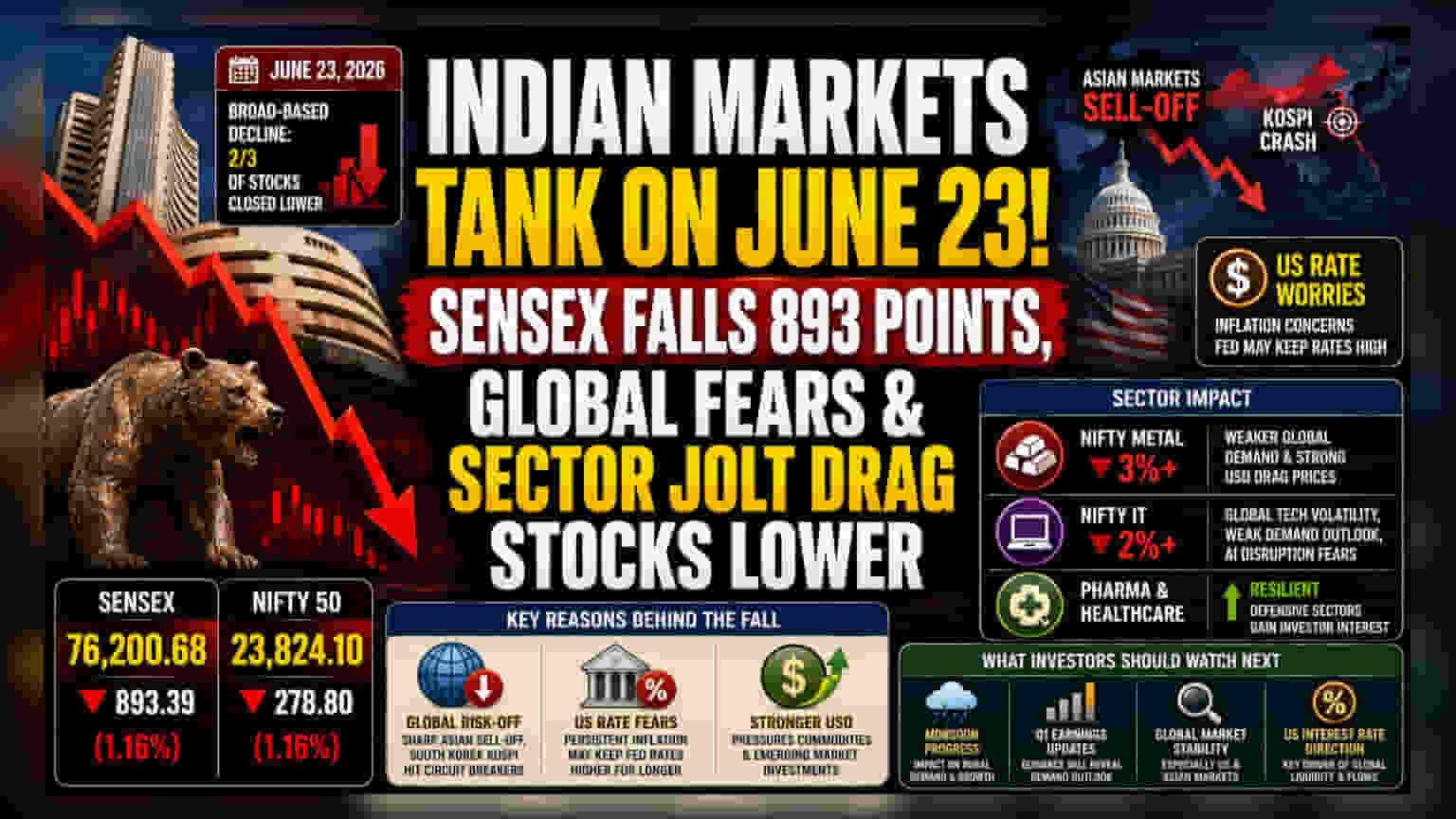
Indian equity indices plummeted on June 23, 2026, as the Sensex dropped 893 points and the Nifty 50 slipped 278 points. The sharp decline was driven by a global risk-off wave, triggered by a tech-led sell-off in Asian markets and renewed concerns over US monetary policy. While sectors like IT and Metals faced heavy selling, the defensive Pharma sector provided limited support to investors.
What Happened
Indian equity markets faced a sharp sell-off on June 23, 2026, as both major indices ended the trading day deeply in the red. The BSE Sensex recorded a significant decline of 893.39 points, or 1.16%, to close at 76,200.68. Similarly, the NSE Nifty 50 shed 278.80 points, or 1.16%, to finish at 23,824.10. The broad-based decline was reflected in the wider market, with most sectoral indices closing lower and two-thirds of listed companies witnessing a drop in share prices as investor caution took hold.
Why Global Sentiment Turned Sour
The downturn in Indian markets was primarily a reaction to negative cues from international markets. A sharp sell-off in Asian equity markets, particularly in South Korea, significantly dampened sentiment. The South Korean KOSPI index experienced a major decline, triggering market-wide circuit breakers. This global risk-off environment was further compounded by worries regarding US monetary policy. Investors are growing concerned that persistent inflation may lead the Federal Reserve to maintain higher interest rates, impacting global liquidity and investment flows.
Sectoral Impact: IT And Metal Stocks Under Pressure
Selling pressure was concentrated in sectors sensitive to global trends and economic cycles. The Nifty Metal index was the worst performer, falling over 3% amid concerns about weaker-than-expected industrial demand in major economies and the impact of a stronger US dollar on global commodity prices.
Similarly, the Information Technology (IT) sector witnessed heavy selling, with the Nifty IT index sliding more than 2%. This decline mirrored the volatility in global technology and semiconductor stocks. Indian IT companies, which derive a significant portion of their revenue from global clients, often face pressure when there is uncertainty about technology spending and AI-driven business disruptions. Heavyweights like Infosys and TCS saw significant selling as investors reassessed the demand outlook.
The Role Of Defensive Sectors
In a volatile market, capital often moves toward sectors seen as less affected by economic cycles. The pharmaceutical and healthcare sectors stood out as exceptions to the broad-based decline, providing some defensive cover for investors. These sectors typically exhibit more stable demand regardless of broader economic fluctuations, making them a common choice for investors seeking to reduce risk during uncertain times.
What Investors Should Track Next
For investors, the immediate monitorables include stability in global markets and clearer signals on US interest rate policy, as these factors currently drive the overall risk appetite. Furthermore, investors may watch for updates on domestic monsoon progress and upcoming quarterly earnings guidance, which will provide insight into how Indian companies are managing demand in a changing global economic environment. Monitoring these variables will be crucial to understanding whether the recent market drop is a temporary correction or the beginning of a longer period of volatility.