

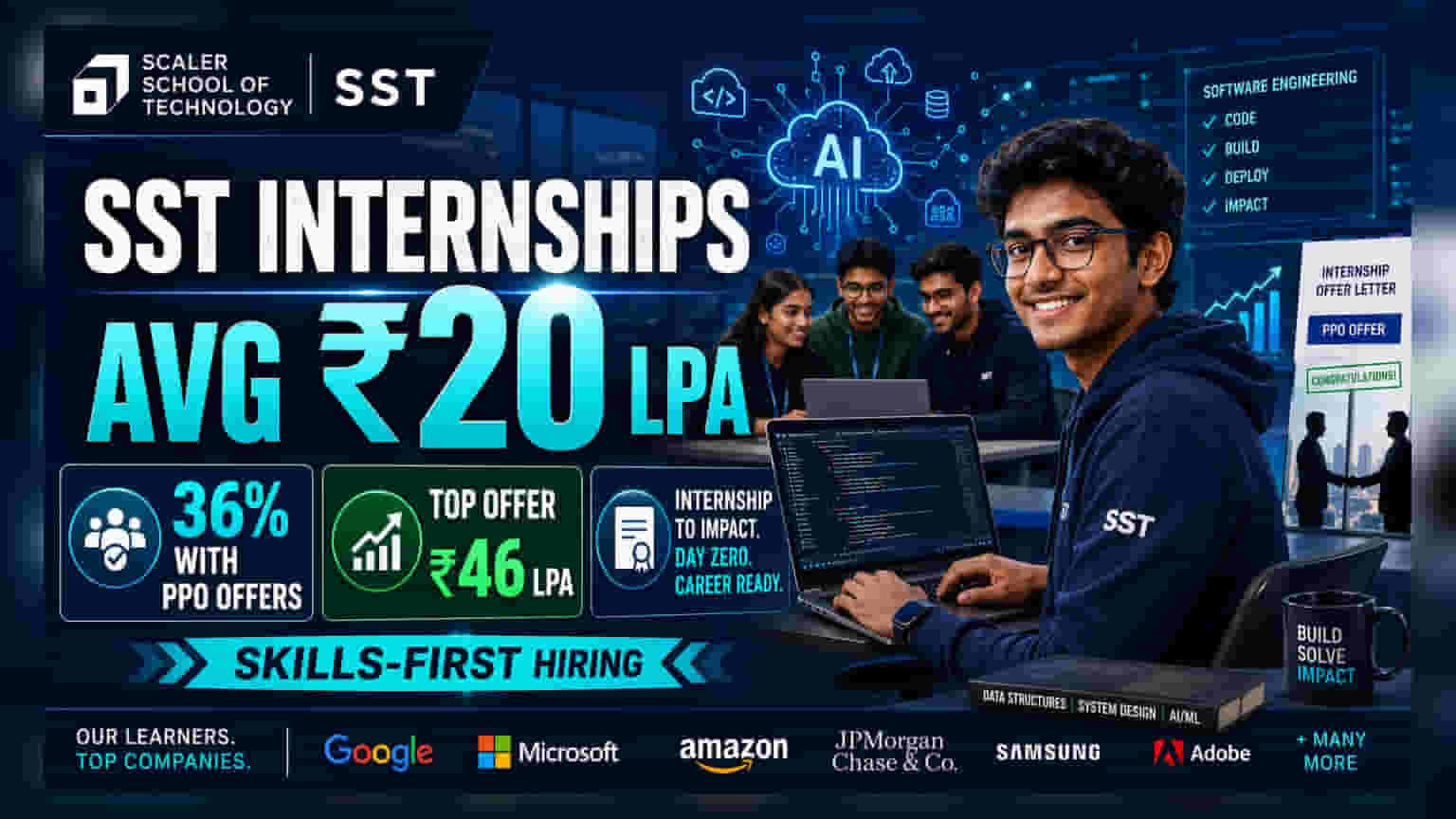
Scaler School of Technology (SST) announced that 36% of its students have secured internships with pre-placement offers, with average packages reaching ₹20 LPA. While SST is a private entity, these placement metrics reflect a broader corporate shift toward prioritizing specialized, industry-ready skills over traditional degrees in the 2026 hiring market.
What Happened
Scaler School of Technology (SST), an initiative by the private ed-tech company InterviewBit, announced that 36% of its current batch has secured internships with pre-placement offer (PPO) opportunities. According to the institution, these internships currently offer an average salary of ₹20 LPA, with the highest offers reaching ₹46 LPA. The institution attributes this outcome to its mandatory one-year industry immersion curriculum, which emphasizes hands-on software engineering and AI-focused project work over traditional academic coursework.
The Shift Toward Skills-Based Hiring
For market observers and investors tracking the IT and education sectors, these figures highlight a significant transformation in hiring patterns. As of 2026, many Indian enterprises are moving away from traditional “degree-first” screening methods, which historically relied heavily on CGPA and pedigree. Instead, employers are increasingly focusing on “Day Zero” skills—the ability to contribute immediately to product development, cloud architecture, and AI-driven workflows.
This trend is relevant for investors monitoring IT services companies (like TCS, Infosys, Wipro, and HCLTech), as the efficiency of fresh-hire training programs is a critical factor for margins. A workforce that requires less foundational training because they are already equipped with industry-specific skills can reduce the “time-to-productivity” for these major employers. The rising demand for specialized roles in AI and data engineering is forcing companies to look for talent beyond traditional top-tier campus recruitment drives.
Ed-Tech Sector Context
While individual placement reports often generate headlines, it is important for investors to view them within the context of the broader ed-tech sector. The Indian ed-tech industry has undergone a massive structural correction since 2024. After a period of unsustainable, venture-capital-fueled hyper-growth (often termed “Edtech 1.0”), the sector is now navigating a leaner “Edtech 2.0” phase.
Many companies in this space have faced significant funding pressure, consolidation, or insolvency, leading to widespread skepticism regarding the sustainability of business models that rely solely on paid subscriptions or aggressive marketing. Investors monitor this sector to track whether firms can generate consistent cash flow and provide tangible outcomes, such as genuine employment, rather than just selling courses.
What Investors May Track
Investors interested in the intersection of education and employment should focus on a few key metrics beyond just salary numbers. First, it is essential to watch the long-term sustainability of such placement rates. When an institution reports high averages, monitoring the sample size and the proportion of the batch that remains unplaced is vital for assessing true performance.
Second, the “skills-first” hiring narrative is a long-term theme. The ability of any training entity—or corporate internal training wing—to consistently produce graduates who meet the evolving technical requirements of global and domestic IT companies will be the primary measure of success. Finally, with the ed-tech sector remaining under regulatory and financial scrutiny, any further evolution in government policy regarding online education and skill certification will be a key monitorable for the industry’s future growth.