

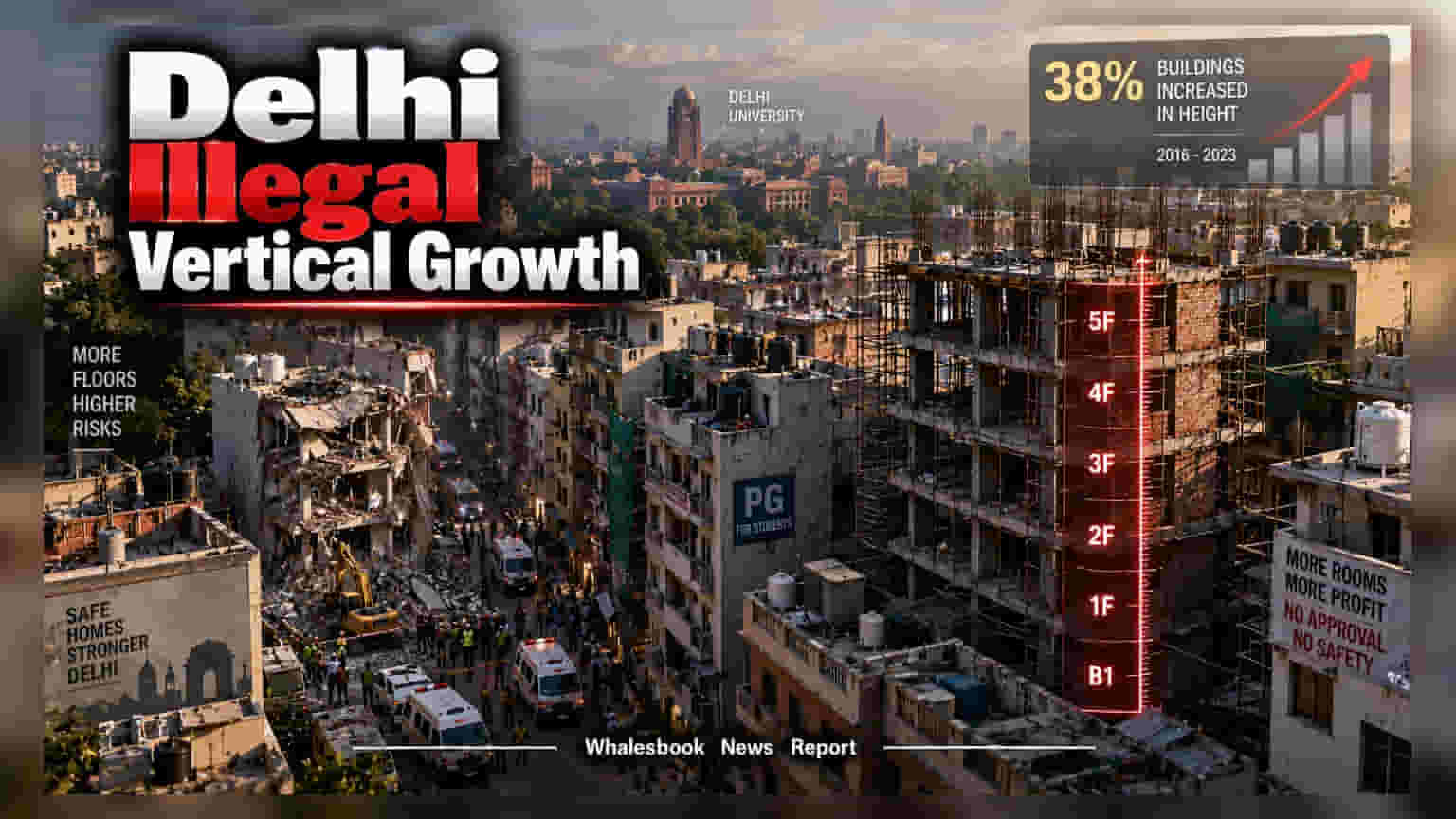
A five-storey student PG hostel collapsed in Delhi's Satya Niketan on September 6, 2026, claiming seven lives. Satellite data reveals that 38% of buildings in the area have undergone unauthorized vertical expansion since 2016 to meet high student housing demand. Following the disaster, the Delhi High Court has ordered an immediate safety audit of all paying guest accommodations in the city.
A deadly building collapse in Delhi’s Satya Niketan neighborhood has brought the critical issue of unauthorized urban expansion to the forefront. On September 6, 2026, a five-storey structure operating as a paying guest (PG) accommodation collapsed, resulting in seven fatalities. Investigations following the disaster revealed that the building lacked a sanctioned structural plan and included illegal basement construction, highlighting a dangerous gap in municipal oversight.
Satellite Data and Infrastructure Strain
Recent satellite analysis provides a stark look at the structural changes in this student-heavy hub. Data shows that 38% of buildings in Satya Niketan have increased in height between 2016 and 2023. This trend of rapid vertical growth is largely driven by the intense demand for affordable student housing near Delhi University. As property owners rush to maximize floor area to accommodate more students, many have added floors without adhering to building bye-laws or safety regulations. This proliferation of unplanned construction has created a systemic infrastructure risk where the density of occupants far exceeds the structural capacity of the buildings.
Regulatory Response and Accountability
The impact of this tragedy has triggered swift government and judicial action. The Municipal Corporation of Delhi (MCD) has suspended five officials for failing to curb unauthorized construction in the area, and police have arrested three individuals connected to the collapsed property. Recognizing the wider threat, the Delhi High Court has directed the MCD to conduct a comprehensive safety audit of all PG hostels across the city within one week. This intervention underscores the challenge authorities face in monitoring nearly 2.8 million structures, especially when official surveys have historically flagged very few as dangerous compared to the reality captured by remote sensing.
Sector Risk and Housing Shortage
The incident highlights a significant tension in the urban real estate market. While the demand for student housing remains high, the supply of safe, authorized, and compliant facilities is critically short. This shortage incentivizes property owners to bypass regulations, leading to the dangerous vertical sprawl observed in Satya Niketan. For the real estate sector and property managers, the immediate future will likely involve stricter compliance checks, potential closure of non-compliant facilities, and increased operational costs. Investors and stakeholders in the student housing market may monitor the results of the upcoming city-wide audits, as they could lead to a widespread crackdown on unauthorized PG accommodations and reshape the supply landscape for affordable housing in high-density zones.