

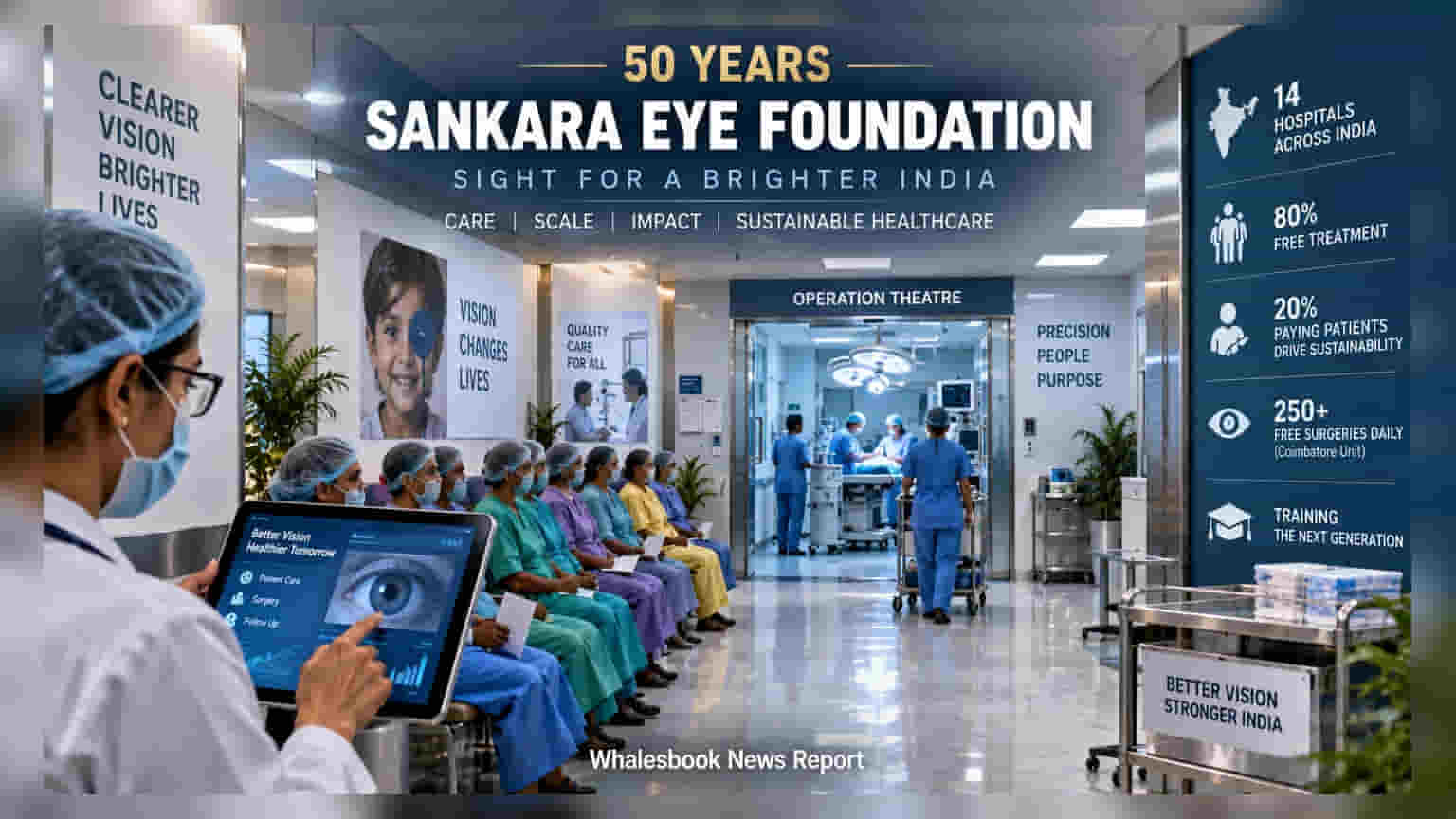
Sankara Eye Foundation completes five decades, operating 14 hospitals using an 80:20 cross-subsidy financial model. The organization plans to reach 100 rural vision centers by 2030, highlighting the challenges and operational strategies involved in scaling high-volume, low-cost eye care in India.
The Sankara Eye Foundation, which began as a small clinic in the 1970s, has grown into a healthcare network with 14 hospitals across India. As the organization marks its 50th year, its operational approach offers insights into how large-scale, high-volume healthcare facilities manage to balance social goals with financial stability in the competitive Indian hospital sector.
The 80:20 Financial Model
The foundation operates on a cross-subsidy framework, where revenue generated from 20% of paying patients is used to fund free medical treatments for the remaining 80%. This model is a significant undertaking in the hospital industry, where capital spending is high and returns take time to materialize. The organization notes that new facilities typically face a long gestation period—the time required for a hospital to become self-sustaining—of five to seven years. Currently, only six of its 14 hospitals have reached this break-even milestone. The remaining units rely on donor capital and corporate social responsibility (CSR) funding, highlighting the financial dependency that often characterizes large-scale charitable healthcare projects during their growth phase.
Operational Efficiency and Scale
To handle large patient volumes without compromising on medical standards, the foundation has adopted a process-driven approach similar to assembly lines in manufacturing. At its Coimbatore unit, the hospital performs approximately 250 free surgeries daily. This volume is managed through standardized systems, such as color-coded patient ID cards and gowns, which allow medical teams to quickly identify comorbidities like diabetes or hypertension. This level of process standardization is a common strategy used by hospital chains to maintain consistent quality and control costs across different locations, reducing the risk of clinical errors that can occur when scaling operations.
Addressing the Talent Gap
A common risk for expanding hospital networks is the shortage of skilled medical staff. To mitigate this, the foundation established the Sankara Academy of Vision in 2002. This academy trains women from rural, economically disadvantaged backgrounds to become vision-care technicians. This three-year residential program ensures a steady supply of skilled labor that is already aligned with the organization’s culture, effectively reducing recruitment and training risks. As the foundation moves to decentralize its training operations, shifting responsibility to hospitals in cities like Bengaluru and Guntur, it aims to support its target of reaching 100 rural vision centers by 2030.
For observers of the healthcare sector, the next phase of this strategy involves using AI to track patient outcomes and feedback. The primary monitorables moving forward will be the ability of the newer hospitals to shorten their break-even timelines and the effectiveness of the decentralized training model in maintaining quality as the organization expands its geographical footprint.