

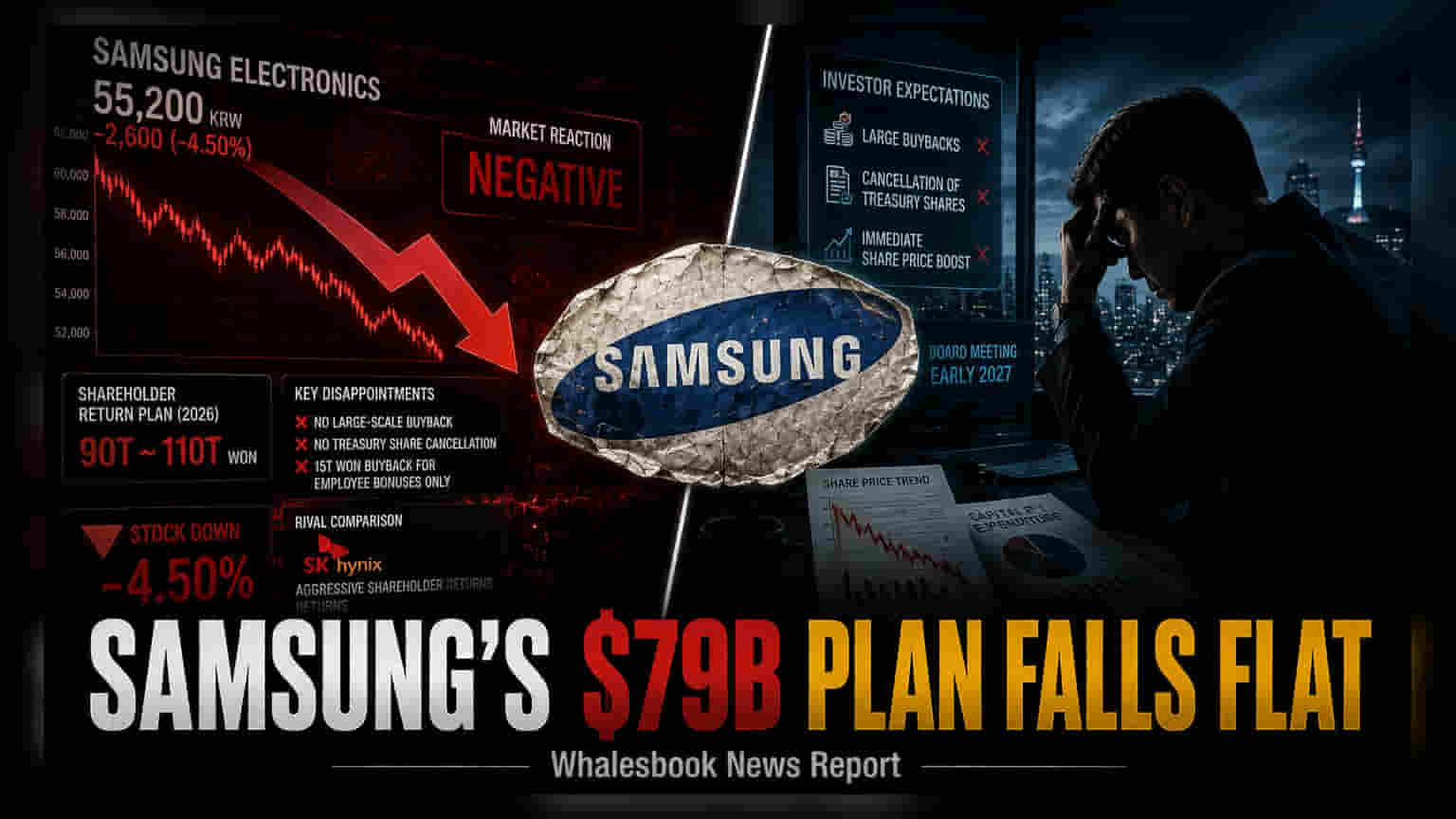
Samsung Electronics shares dropped as investors reacted negatively to its 2026 shareholder return plan, which is projected between 90 trillion and 110 trillion won. While the plan is large, the market was disappointed by the absence of immediate share buybacks or cancellations, unlike the aggressive strategies used by some competitors.
Samsung Electronics saw its stock price decline in recent trading sessions following the announcement of a massive shareholder return plan for 2026. The South Korean technology giant outlined a payout projection ranging from 90 trillion to 110 trillion won. While this figure is among the largest in the company's history, the market reaction was muted and negative, reflecting a gap between investor expectations and the company's official strategy.
The core of the disappointment lies in the structure of the returns. Investors were looking for specific, immediate measures such as large-scale share buybacks and the cancellation of treasury shares, which generally help to boost the value of the remaining shares for investors. However, the company’s announcement lacked these direct price-boosting actions. Samsung did confirm a 15 trillion won buyback, but this was specifically earmarked for employee stock bonuses rather than a general return to shareholders.
This development comes against the backdrop of a competitive semiconductor sector. Rival chipmaker SK Hynix has recently adopted a more aggressive approach to returning cash to shareholders, which has set a higher bar for expectations. When major tech companies provide updates on how they plan to use their cash, the market often compares these plans directly. Because Samsung’s plan focused more on long-term projections rather than immediate, concrete actions, it failed to trigger the positive sentiment many traders had hoped for.
For Indian investors following global technology stocks, it is important to note that Samsung Electronics is not listed on Indian stock exchanges like the NSE or BSE. It is primarily traded on the Korea Exchange, with global depositary receipts available on the London Stock Exchange. Consequently, this volatility does not have a direct impact on Indian portfolios, though it highlights the ongoing volatility in the global semiconductor sector, which can indirectly influence sentiment in related tech-heavy indices.
Looking ahead, the next key monitorable for the company will be its board meeting scheduled for early 2027. Investors will be tracking whether the company provides more concrete details on future payouts, including potential adjustments to its dividend and buyback policies. The challenge for the company remains to balance its significant capital spending needs with the market’s desire for immediate financial returns. The ability of the company to maintain its competitive position in the chip market while managing shareholder expectations will remain the primary focus for market participants.