

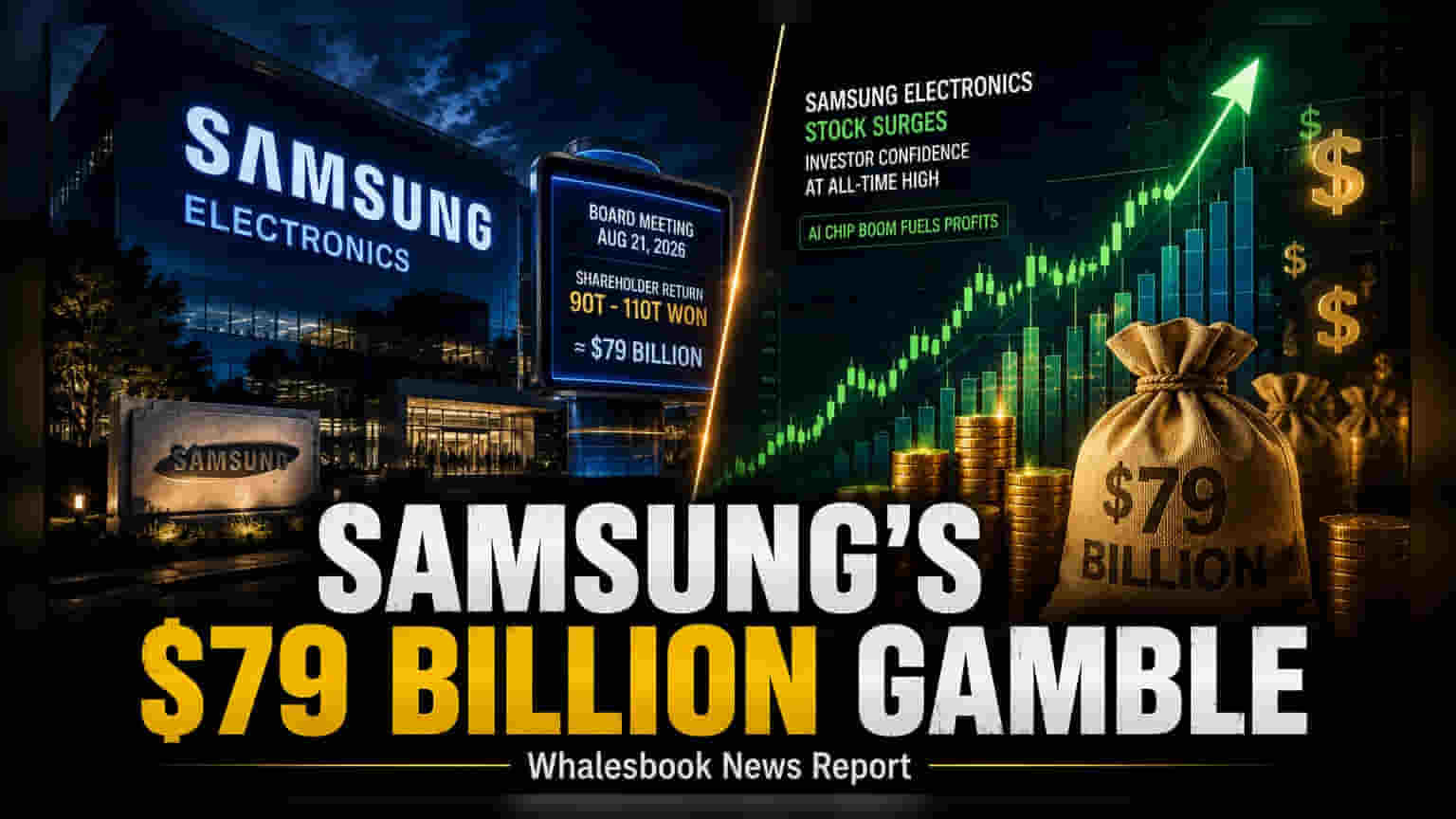
Samsung Electronics is set to hold a board meeting today, August 21, 2026, to discuss a potential shareholder return package worth up to $79 billion. Driven by investor demand amidst the AI chip boom, this initiative is expected to favor special dividends over share buybacks to navigate regulatory complexities. Investors are watching for the final allocation plan and the impact on the company's long-term capital spending capabilities.
Samsung Electronics is preparing for a significant board meeting today, August 21, 2026, where directors are expected to finalize a major shareholder return package. The proposal, estimated to range between 90 trillion and 110 trillion won, or approximately $79 billion, marks one of the most substantial capital return initiatives in the company's history.
This move comes as a response to growing investor pressure. Shareholders have been calling for greater returns, particularly as the global market for AI-related semiconductors generates strong profits and cash flow. The intensity of this demand increased recently after rival chipmaker SK Hynix announced its own 40 trillion won buyback and cancellation program, setting a new benchmark for competitive shareholder returns in the sector.
While the market has responded with optimism, a key point for investors to monitor is the method of distribution. Reports indicate that the board may prioritize special cash dividends over share buybacks. This preference is largely driven by regulatory constraints related to Samsung's ownership structure. Specifically, Samsung Life Insurance and Samsung Fire & Marine Insurance hold significant stakes in Samsung Electronics; under current regulations, a large-scale share buyback could trigger complex issues for these insurance affiliates, making cash dividends a more viable route.
Despite the positive outlook on potential payouts, the company faces inherent risks that investors should consider. Samsung is currently in a phase of high capital spending, required to build new infrastructure and boost research and development for the competitive AI chip market. A payout of this magnitude raises questions about whether the company will retain enough cash to support its long-term growth and capital expansion projects without impacting its financial health.
Furthermore, macroeconomic factors, such as potential volatility in global chip demand, could impact free cash flow. While the proposed payout is designed to provide value to shareholders, analysts note that broader economic uncertainty may still influence investor sentiment in the near term. The final details regarding the exact amount, the allocation between dividend types, and the payment timeline are expected to be clarified following the board meeting scheduled for 4 p.m. local time today.