

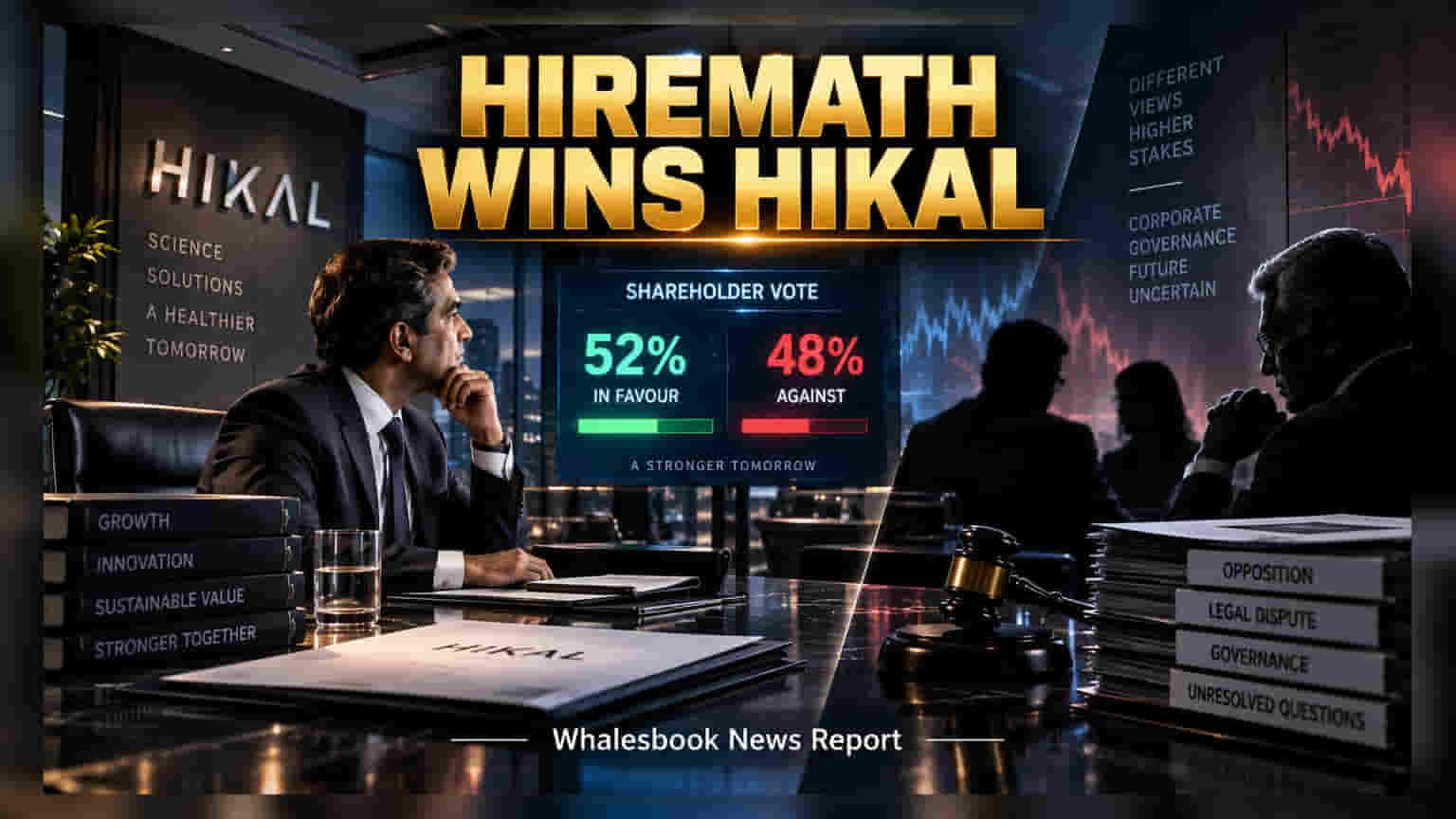
Sameer Hiremath has been appointed as the chairman and managing director of Hikal after securing 52% of shareholder votes. The move intensifies the ongoing family dispute between the Hiremath and Kalyani groups, raising questions about corporate governance and the progress of court-led mediation efforts.
Sameer Hiremath has been appointed as the chairman and managing director of Hikal, a specialty chemicals and pharmaceutical company. The appointment was confirmed following a narrow shareholder vote in which 52% of votes were cast in his favor, while 48% of shareholders opposed the move. This decision marks the official exit of outgoing chairman Jai Hiremath and non-executive director Sugandha Hiremath, whose tenures concluded at the start of October.
The vote result highlights the deepening conflict between the Hiremath and Kalyani families, who are involved in a long-standing legal dispute regarding the control and ownership of company assets. The Kalyani group, led by Bharat Forge chairman Baba Kalyani, spearheaded the opposition to the appointment, reflecting the ongoing struggle for influence within the company.
A significant point of concern for investors involves the Kalyani camp's decision to vote against the adoption of the fiscal year 2026 financial statements and the reappointment of executive director Sarangan Suresh. This is considered unusual because the company’s board of directors, which includes Amit Kalyani—the son of Baba Kalyani—had already approved these financials. Such actions by a promoter group against proposals approved by their own board representatives can lead to governance uncertainty and create potential hurdles for the company’s operational and strategic decision-making processes.
This dispute creates a complex situation for Hikal, as the company was reportedly engaged in formal mediation managed by a former Supreme Court judge to resolve these issues. The decision to challenge board-approved financial reports suggests that the mediation efforts face difficulties. For shareholders, this conflict introduces potential volatility and raises questions about how the company will maintain its strategic focus while dealing with internal friction. The next important updates for investors will be any developments in the ongoing court-led mediation, future board meetings, and official disclosures regarding the stability of the company's management structure.