

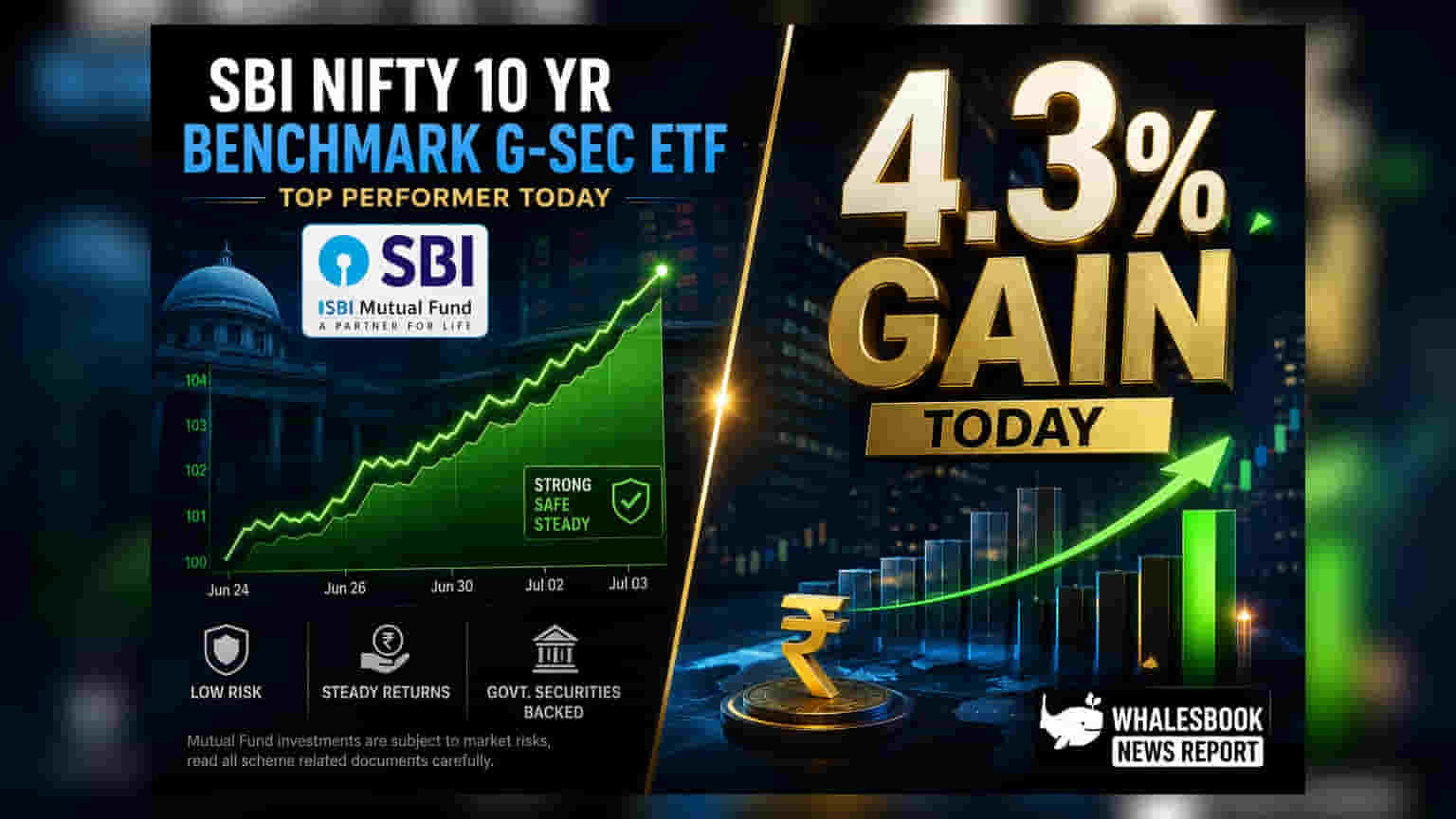
The SBI Nifty 10 yr Benchmark G-Sec ETF recorded a 4.3% return over the past three months, emerging as the top performer among large debt exchange-traded funds. Investors should note that performance leaders often shift across different time horizons, highlighting the need to look beyond short-term gains when selecting fixed-income investments.
What Happened
The SBI Nifty 10 yr Benchmark G-Sec ETF has emerged as the best-performing debt exchange-traded fund (ETF) over the three-month period ending July 2, 2026. The fund delivered a 4.3 percent return during this timeframe. This performance analysis was restricted to debt ETFs with an asset under management (AUM) exceeding Rs 1,500 crore to ensure a focus on larger, more established funds.
Competition Among Gilt Funds
Following the SBI Nifty 10 yr Benchmark G-Sec ETF, other gilt-focused funds also showed strong performance. The LIC MF Nifty 8-13 yr G-Sec ETF and the Nippon India ETF Nifty 8-13 yr G-Sec Long Term Gilt occupied the next two spots, returning 4.2 percent and 4.1 percent respectively. These funds primarily invest in government securities, which are generally considered lower-risk instruments compared to corporate debt funds, as they are backed by the government.
Consistency Over Time
While the SBI fund led the three-month window, performance patterns change when viewing longer durations. For instance, the BHARAT Bond ETF - April 2033 recorded a 3.1 percent gain over the last six months, and the BHARAT Bond ETF - April 2032 led the one-year category with a 5.6 percent return. Over a three-year horizon, the BHARAT Bond ETF - April 2032 remains a notable performer with a return of 7.9 percent.
Why Performance Varies
Debt ETFs often show different returns depending on the maturity profile of the underlying government bonds. Funds holding bonds with longer maturities tend to be more sensitive to interest rate changes. When interest rates in the economy fall, the prices of existing long-term bonds typically rise, which can boost the returns for ETFs holding these securities. Conversely, if interest rates rise, these funds may face pressure on their returns. Investors should understand that short-term performance is heavily influenced by these interest rate cycles rather than just the fund's management.
What Investors Should Track
When looking at debt ETFs, it is important to check the expense ratio, as this fee directly reduces the final return to the investor. Additionally, liquidity is a critical factor for ETFs; investors should monitor the trading volume on the exchange to ensure they can buy or sell units easily without significantly impacting the price. Finally, before investing, one should verify the average maturity of the bonds held by the fund, as this dictates how much the fund's value will move when interest rates change in the broader economy.