

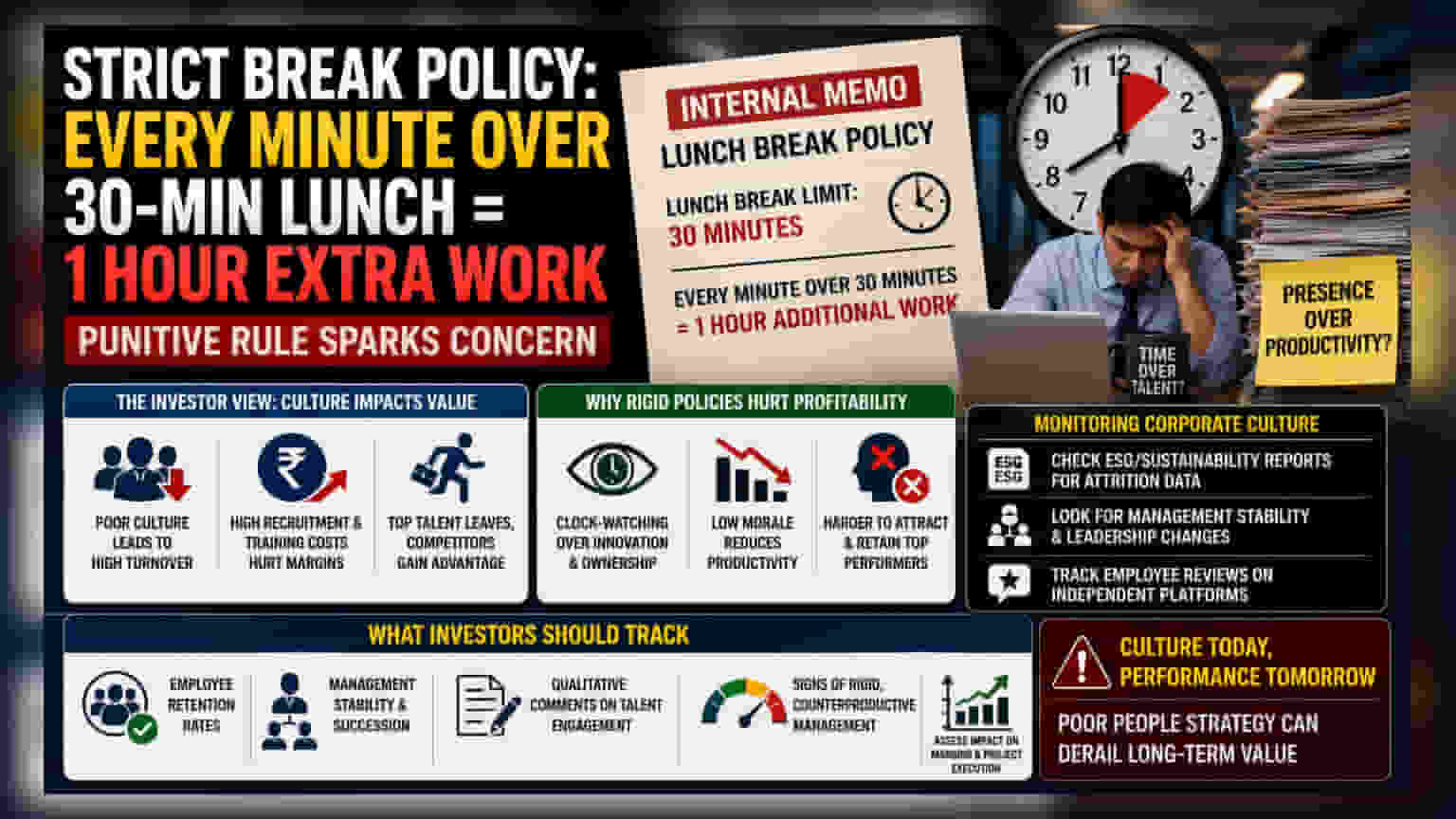
A recent office memo penalizing employees with an hour of extra work for exceeding a 30-minute lunch break has sparked debate. For investors, such rigid management styles can be a red flag, often signaling potential issues with talent retention, declining employee morale, and long-term operational efficiency.
What Happened
A recent internal office memo has gained attention for its strict enforcement of break times, mandating that employees compensate for every minute spent over a 30-minute lunch break with an hour of additional work. The policy effectively institutes a severe penalty system for time management, sparking criticism that the measure is disproportionate and punitive. While the logic behind the policy appears aimed at maximizing office presence, the rigid structure has raised concerns about the impact on employee morale and workplace culture.
The Investor View On Workplace Culture
For investors, workplace culture is often an intangible asset that significantly impacts financial performance. When management prioritizes rigid time-tracking over output and employee well-being, it can serve as a signal of potential operational friction. High turnover rates, often a byproduct of such management styles, come with direct financial costs, including the expense of recruiting and training new talent. In competitive industries, losing skilled employees to rivals due to poor culture can negatively impact long-term growth and stability.
Why Rigid Policies Can Affect Profitability
Operational efficiency is not always synonymous with strict time enforcement. Over-management can lead to a 'clock-watching' culture, where employees focus on attendance rather than productivity or innovation. If a company relies on top-tier talent to drive revenue—such as in the IT, consulting, or creative sectors—a restrictive environment may limit the ability to attract or retain the best performers. This, in turn, can affect the company’s ability to execute projects effectively and maintain its competitive edge in the market.
Monitoring Corporate Culture
While workplace policies are rarely detailed in quarterly financial filings, astute investors look for indicators of health in human capital. This includes reviewing employee attrition data, which large publicly listed companies often disclose in their annual sustainability or ESG (Environmental, Social, and Governance) reports. Additionally, consistent patterns of management turnover or negative feedback on independent employee review platforms can sometimes act as leading indicators of internal instability that may eventually manifest in operational performance.
What Investors Should Track
Investors interested in understanding the long-term sustainability of a company's human capital strategy may look for several indicators. These include disclosures regarding employee retention rates, management stability, and qualitative comments in annual reports about talent engagement. If a pattern of rigid, counterproductive management emerges, it may be worth analyzing whether this is an isolated incident or a reflection of a broader, systemic issue within the company's organizational structure that could eventually pressure profit margins or project execution timelines.