

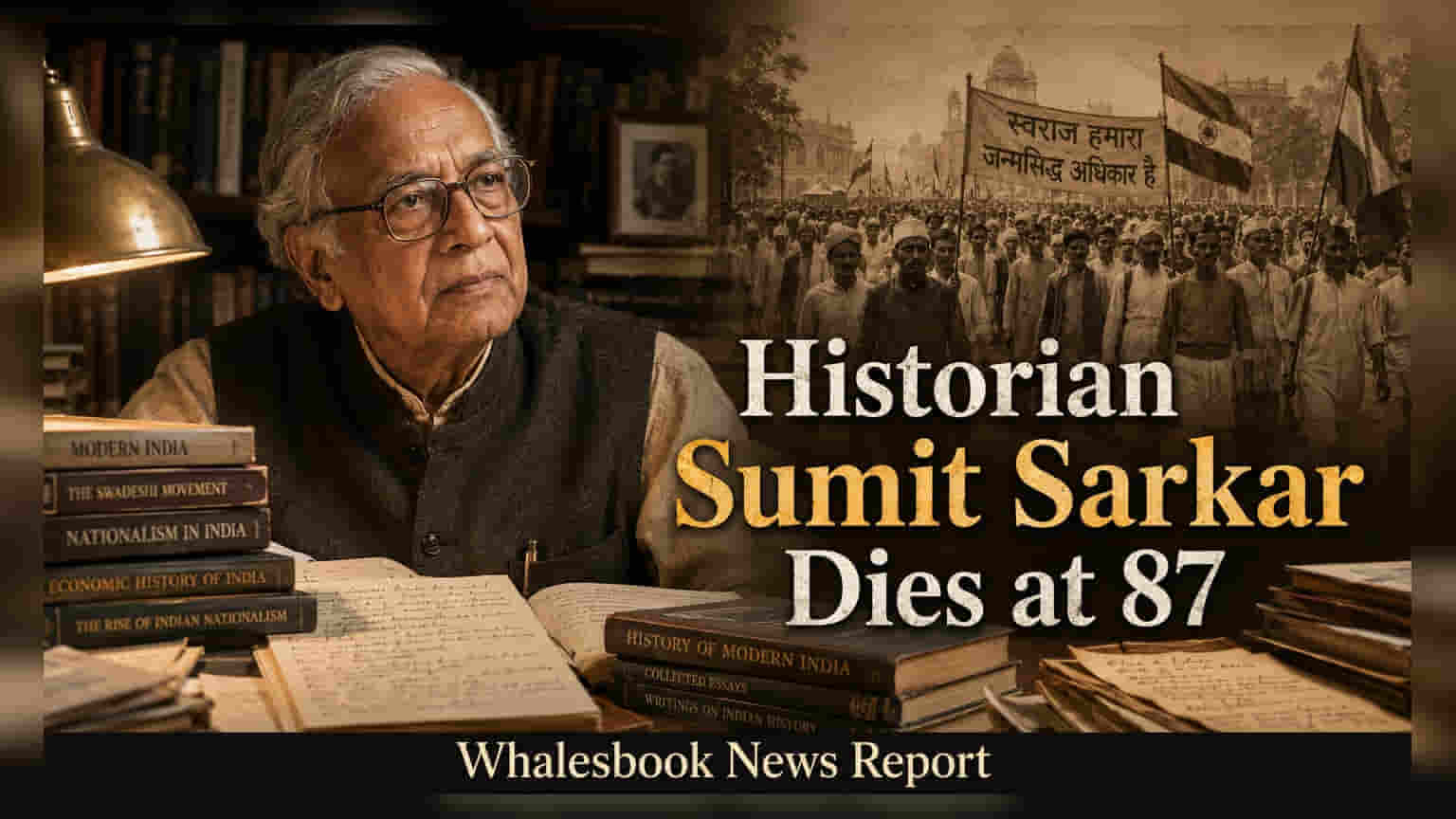
Sumit Sarkar, a distinguished historian of modern India and a pioneering figure in Marxist historiography, has died in New Delhi at age 87. His academic legacy includes seminal research on the Swadeshi movement and his work with the Subaltern Studies Collective.
Sumit Sarkar, an influential Indian historian whose scholarship fundamentally shifted the academic understanding of modern India, passed away on Thursday in New Delhi at the age of 87. His death marks the conclusion of a career that spanned several decades, during which he became a defining voice in Marxist historiography and social history.
Academic Contributions and Research
Sarkar was widely recognized for his rigorous, critical approach to history, particularly regarding the themes of colonialism, nationalism, and the freedom struggle. He was instrumental in moving historical narratives away from elite-centric perspectives toward a deeper examination of social groups and popular movements. His seminal work, "Modern India, 1885–1947," remains a foundational text for students and scholars of Indian history. Additionally, his research into the Swadeshi movement in Bengal provided critical insights into the dynamics of early 20th-century anti-colonial protests.
Throughout his professional life, Sarkar taught at several premier institutions, most notably the University of Delhi, where he served on the faculty for many years until his retirement in 2004. His pedagogical influence extended to generations of historians, many of whom have continued to build upon the methodological frameworks he established.
Involvement with the Subaltern Studies Collective
Beyond his individual research, Sarkar was a founding member of the Subaltern Studies Collective, a collaborative initiative that sought to redefine historical inquiry by focusing on the experiences of marginalized and non-elite sections of society. This work significantly altered the discourse within Indian academia regarding how history is documented and interpreted. While he remained committed to the core objectives of this group, he also demonstrated independent critical thinking by providing nuanced critiques of the collective’s direction at various stages of his career.
Legacy
Sarkar’s contributions to the field were recognized through several prestigious platforms and awards, reflecting the breadth of his intellectual impact. Born in 1939 to the renowned historian Sushobhan Sarkar, he maintained a lifelong commitment to a pluralistic and democratic vision of India’s history. He is survived by his wife, the historian Tanika Sarkar, and his son, Aditya Sarkar. His passing is viewed by the academic community as the loss of a preeminent scholar whose work will continue to serve as a cornerstone for historical research.