 Whalesbook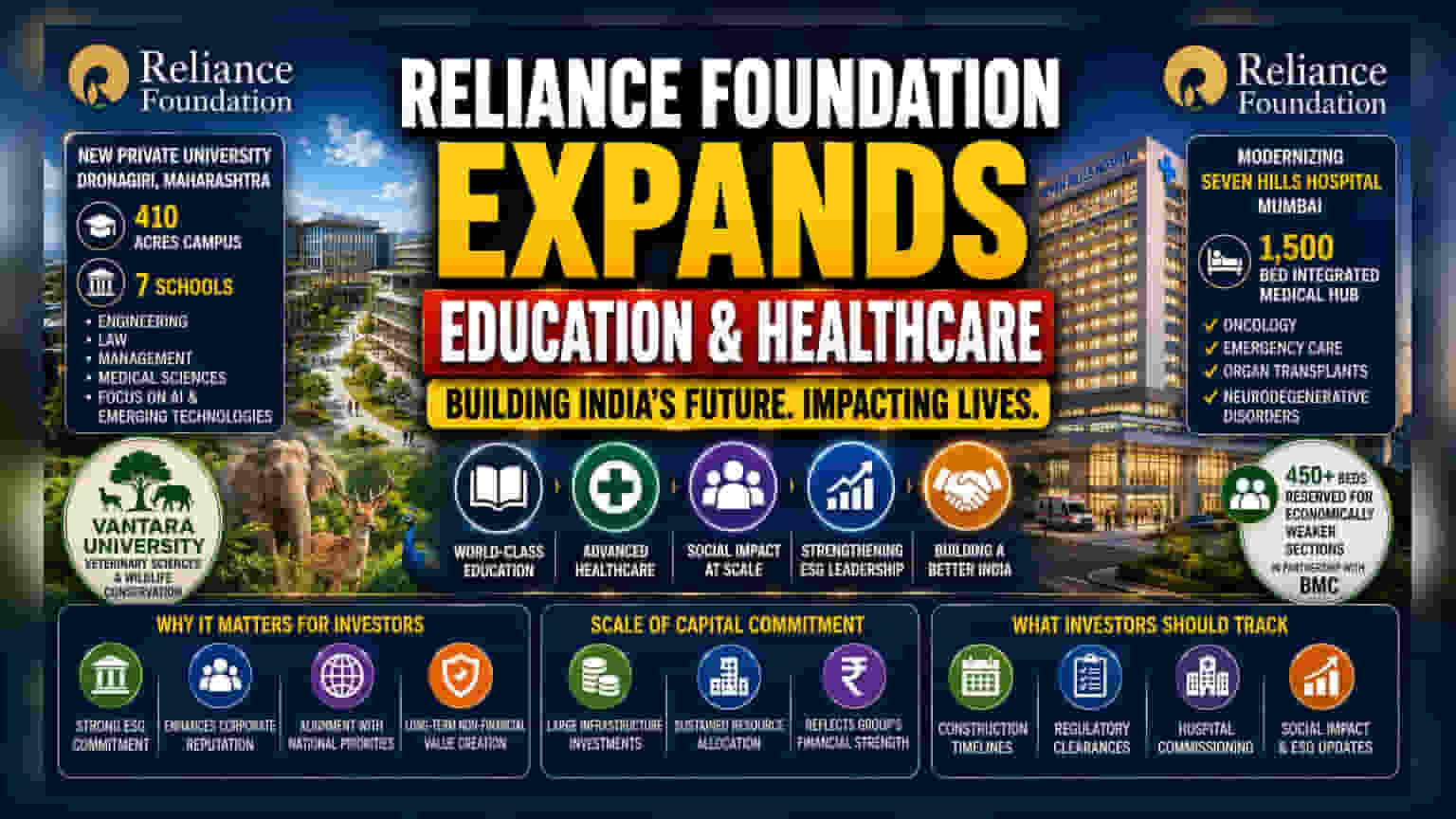
Reliance Foundation is launching a 410-acre university in Maharashtra and upgrading Mumbai's Seven Hills Hospital. These major social initiatives reflect the group's ongoing focus on ESG and community development.
What Happened
Reliance Foundation, the philanthropic arm of Reliance Industries, has announced significant plans to expand its presence in education and healthcare. The foundation is set to establish a new private university in Dronagiri, Maharashtra. The campus will span 410 acres and feature seven distinct schools, offering programs across engineering, law, management, and medical sciences, with a specific focus on artificial intelligence and emerging technologies. Additionally, the foundation is launching Vantara University, which will focus on veterinary sciences and wildlife conservation.
In the healthcare sector, the foundation is moving to modernize the Seven Hills Hospital in Mumbai. This project aims to transform the facility into an integrated 1,500-bed medical hub. The upgrade will prioritize specialized care areas, including oncology, emergency response, organ transplants, and treatment for neurodegenerative conditions. The initiative includes a partnership with the Brihanmumbai Municipal Corporation to reserve over 450 beds for patients from economically weaker sections.
Why This Matters For Investors
For shareholders and market observers, these initiatives highlight the strategic importance of ESG (Environmental, Social, and Governance) commitments within the Reliance Industries ecosystem. As one of India’s largest conglomerates, Reliance utilizes its philanthropic wing to execute large-scale social projects that align with national development goals. While these projects are primarily social in nature, they serve as a critical component of the company's non-financial performance indicators. Investors often monitor these developments to understand the group's long-term approach to social responsibility and its impact on the company's corporate reputation and public standing.
The Scale of Capital Commitment
Projects of this magnitude, particularly large infrastructure like a 410-acre university and a 1,500-bed hospital, require substantial and sustained capital allocation. While Reliance Industries maintains a massive balance sheet, investors typically keep an eye on how such large-scale social infrastructure projects are funded and managed over time. The long-term operational costs and the commitment to resource these facilities are factors that reflect the group's ability to maintain high-impact community investments alongside its core commercial operations.
Operational and Execution Risks
As with any large infrastructure project, there are inherent risks regarding execution. Developing a 410-acre university campus and modernizing a major hospital involves complex regulatory approvals, construction timelines, and long-term operational management. Delays in project completion or cost overruns can occur in such large-scale developments. For investors, the track record of the group in executing large projects—whether commercial or social—serves as a key indicator of its operational efficiency. The ability to bring these facilities to full utility within the promised timeline will be a measure of the foundation's execution capabilities.
What Investors Should Track
Looking ahead, market participants may monitor the progress of these projects through upcoming annual reports or periodic updates from the group. Key monitorables include the timeline for the commencement of construction, updates on necessary regulatory clearances for the new university, and the commissioning schedule for the modernized hospital facility. Additionally, commentary regarding the social impact metrics of these initiatives will likely feature in the company's sustainability reporting, providing further insight into how these ventures contribute to the group's overall ESG objectives.