 Whalesbook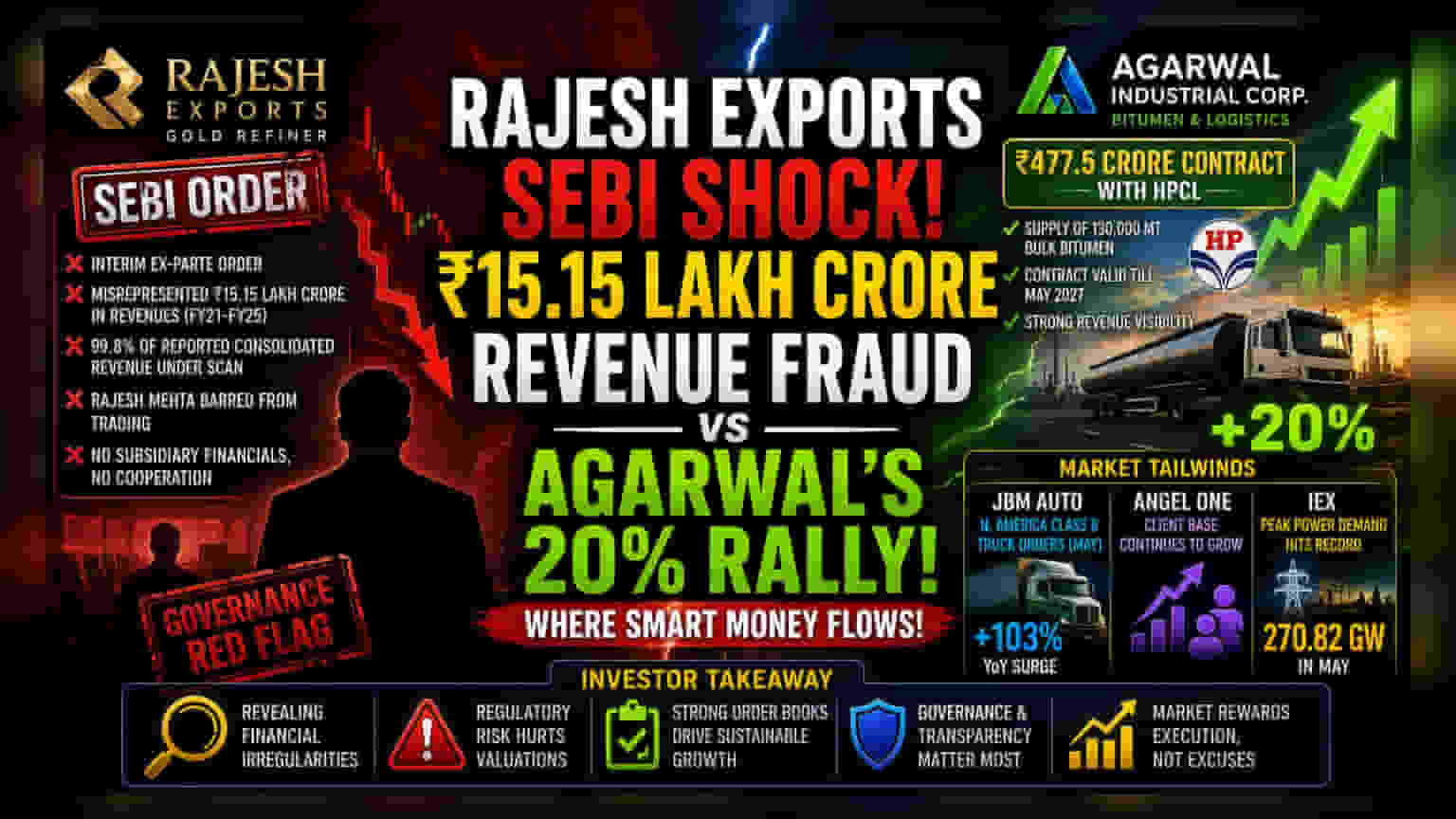


The Regulatory Impasse at Rajesh Exports
The market reacted sharply to an interim ex-parte order from the Securities and Exchange Board of India (SEBI) concerning Rajesh Exports, which triggered a significant decline in its share price. The regulatory intervention stems from preliminary findings of deep-seated financial irregularities, specifically alleging that the company misrepresented approximately Rs 15.15 lakh crore in consolidated revenues between FY21 and FY25. This staggering figure accounts for nearly 99.8% of the company's reported consolidated revenue during that timeframe. The regulator, citing a systemic failure to substantiate financial figures and a persistent lack of cooperation with forensic auditors, has effectively barred Chairman and Managing Director Rajesh Mehta from trading in the company's securities until further notice.
The Valuation Gap and Performance Divergence
While Rajesh Exports struggles under the weight of these allegations, Agarwal Industrial Corporation has emerged as a contrast in sentiment. Shares of the bitumen and logistics firm rallied 20% following the announcement of a Rs 477.5 crore supply contract with Hindustan Petroleum Corporation Limited (HPCL). This order, which covers 130,000 metric tonnes of bulk bitumen, provides concrete revenue visibility through May 2027. Unlike the volatility characterizing the Rajesh Exports situation, Agarwal’s recent win underscores a functional, albeit smaller, business model that relies heavily on consistent execution within the infrastructure supply chain, rather than the complex, opaque subsidiary structures flagged in recent investigations.
Risk Factors and The Bear Case
Investors are now scrutinizing the sustainability of Rajesh Exports' business model. Forensic audit concerns regarding the absence of subsidiary financials and questions surrounding past investments—such as the claimed Rs 1,035 crore in African gold mines which reportedly failed to appear on balance sheets—paint a precarious picture. From a risk-management perspective, the SEBI order highlights a severe information asymmetry that renders fundamental analysis difficult. Meanwhile, companies like JBM Auto are benefiting from broader cyclical tailwinds; recent North American Class 8 truck order data revealed a 103% year-on-year surge in May, a positive indicator for heavy-duty vehicle manufacturers that contrasts sharply with the firm-specific governance risks currently plaguing the gold refiner.
Market Outlook and Sector Trends
Equity markets are currently processing these disparate signals. While the brokerage sector, evidenced by Angel One, continues to show growth in client bases despite mixed operational metrics, the focus remains on companies with transparent, scalable demand drivers. The surge in India's peak power demand to a record 270.82 GW in May has similarly supported volume growth for the Indian Energy Exchange (IEX), reflecting healthy underlying utility sector activity. Moving forward, the market is likely to prioritize companies offering clear, verifiable order books while discounting entities burdened by regulatory or governance-related uncertainty.