

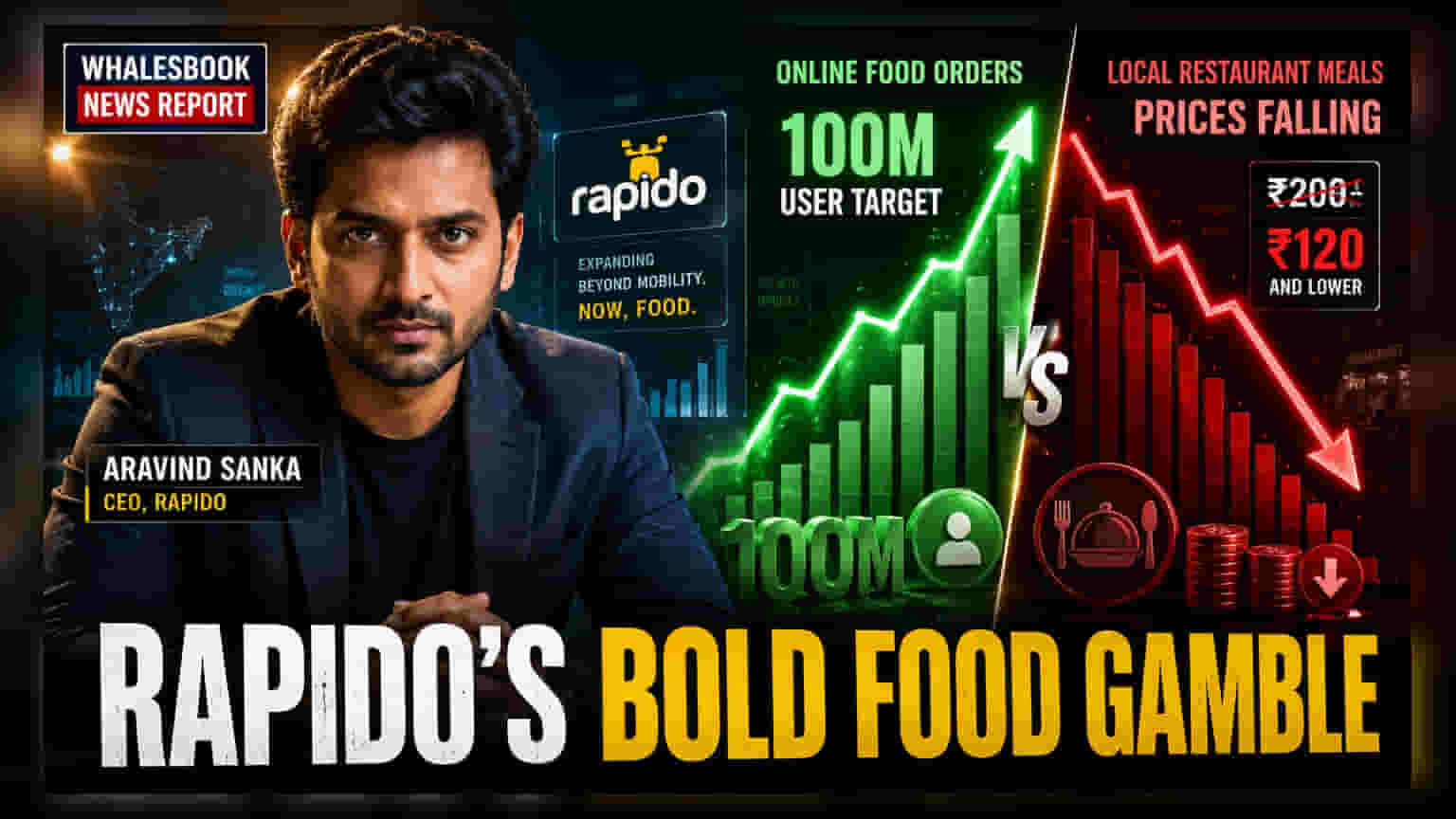
Ride-hailing firm Rapido plans to expand into food delivery using its existing logistics network. The company aims to reach 100 million users by focusing on local eateries and lower consumer prices, challenging the current market duopoly.
Rapido, primarily known for its bike taxi services, is entering the food delivery sector with its platform named Ownly. CEO Aravind Sanka has set an ambitious target of acquiring 100 million online food ordering users over the next three years. This objective seeks to exceed the current combined user base of established players like Zomato and Swiggy, which is estimated at approximately 43 million users.
Focusing on Price and Local Eateries
The company's strategy involves addressing the price gap between dine-in meals and online food orders. Rapido intends to maintain menu prices that are consistent with what customers pay at the restaurant. To achieve this, the firm plans to rely on its logistics efficiency rather than charging higher commissions to restaurants or adding significant mark-ups to the order value. By focusing on local and regional eateries that it believes are currently underserved, Rapido hopes to attract a wider segment of price-sensitive consumers.
Leveraging Existing Infrastructure
Rapido plans to treat food delivery as a logistics operation rather than a brand-building exercise. The company aims to utilize its existing network of over 3 million riders, who currently process more than 7.5 million orders daily across its bike taxi, auto, and cab segments. This asset-light model is intended to provide the company with cost control and operational flexibility. By avoiding capital-intensive activities like operating cloud kitchens or entering the quick-commerce space, the management aims to maintain a disciplined expansion approach.
Growth and Expansion Context
Rapido's core mobility business has seen significant scaling, moving from presence in roughly 100 cities to nearly 500 cities within the last 15 months. Data indicates that demand from smaller cities, such as Khammam in Telangana, is occasionally outpacing volumes seen in major metropolitan areas. This suggests a potential for growth in regions beyond the traditional Tier 1 markets. Following a recent funding round of $240 million, the company has indicated that it intends to prioritize mobility expansion while dedicating the next two years to establishing its food delivery model.
Investors may monitor the execution of this new venture, particularly how the company balances its logistics-heavy model with the operational requirements of food delivery. Future performance will depend on the platform's ability to onboard local eateries, maintain consistent pricing, and manage competition from established delivery incumbents. The company's future filings or official communications regarding user growth and operational performance in the food segment will be the next key updates for market observers.