 Whalesbook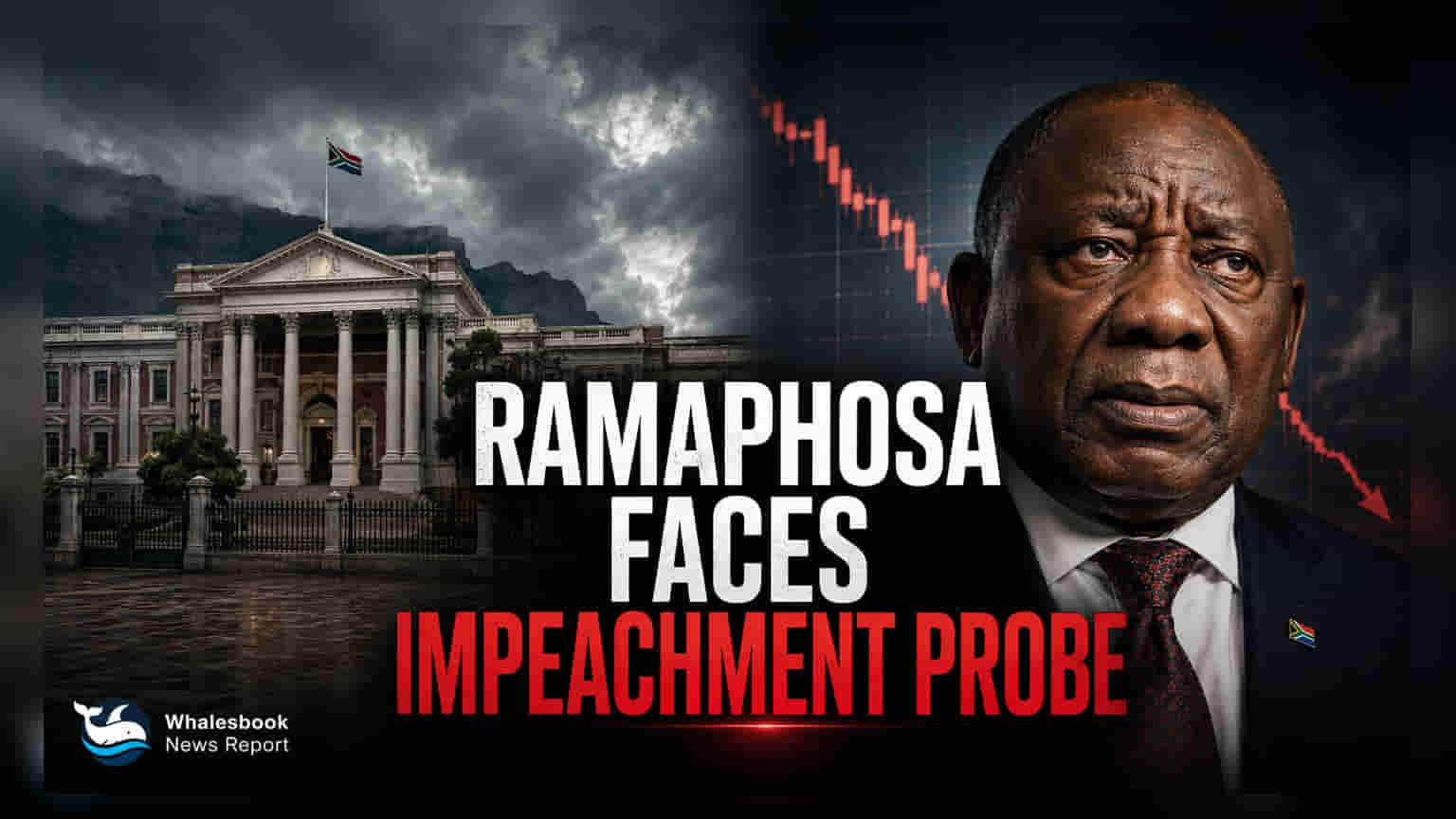


The Institutional Friction
The formal commencement of the impeachment inquiry against President Cyril Ramaphosa signals more than a mere political dispute; it represents a deepening crack in South Africa’s governance structure. While the Constitutional Court’s ruling provides the legal basis for these proceedings, the market reaction is driven by the uncertainty surrounding the president’s ability to advance critical fiscal policies while defending his position. Investors are closely monitoring whether this legislative focus will effectively paralyze the cabinet, stalling essential reforms in the energy and logistics sectors that are vital for maintaining the nation’s sovereign credit rating.
The Economic Risk Premium
Historically, political instability in South Africa has manifested in rapid rand volatility and a widened sovereign risk premium. When comparing the current situation to previous political crises, the primary concern for institutional participants is the potential for capital outflows if the coalition government fractures. Unlike the relative stability seen in recent years, the current impeachment push creates a multi-front conflict within the parliament. With the African National Congress (ANC) holding only a minority of the impeachment committee seats, the risk of a chaotic legislative process is significantly higher than market participants initially priced in, potentially leading to a sharp repricing of local bonds.
The Bear Case: Structural Paralysis
The central risk remains the effective termination of the current economic reform roadmap. Ramaphosa’s administration has been the primary vehicle for efforts to stabilize Eskom and address structural economic bottlenecks. If the impeachment committee succeeds in shifting the political narrative, the resulting power vacuum could invite policy populism from fringe political actors attempting to capitalize on the turmoil. Furthermore, the reliance on the Democratic Alliance (DA) and other smaller parties within the coalition to manage this process exposes the fragility of the current administration. A breakdown in this relationship would likely trigger a sell-off in domestic equities as foreign investors preemptively move to hedge against a broader political collapse.
Future Outlook and Legislative Hurdles
While a two-thirds majority is required for removal—a threshold that remains difficult to reach given the ANC's remaining legislative influence—the damage to investor confidence may be decoupled from the actual impeachment outcome. The persistence of the 'Farmgate' inquiry ensures that political noise will continue to dominate the discourse, likely suppressing foreign direct investment until the committee reaches a definitive conclusion. Market participants should anticipate increased trading volumes in currency derivatives as institutional desks adjust their exposure to South African assets in response to the deteriorating political stability metrics.