

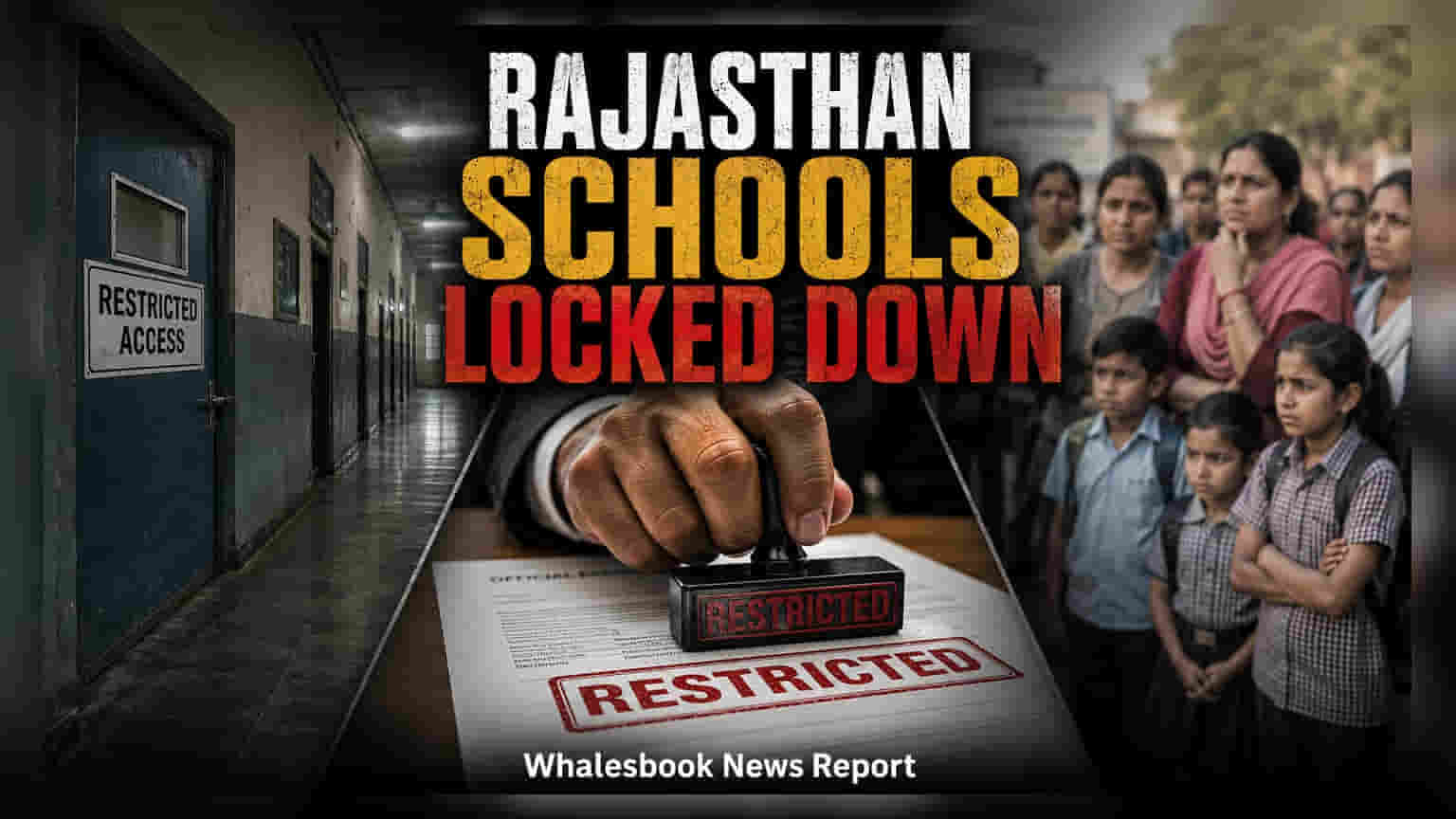
The Rajasthan government has mandated prior written permission for any visitor entering state-run schools, prohibiting unauthorized photography and recording. This directive follows a school inspection campaign launched by the youth-led Cockroach Janta Party (CJP). Opposition leaders have criticized the order, claiming it is an attempt to restrict public oversight of government school infrastructure.
The Rajasthan government has issued a strict directive restricting unauthorized entry, photography, and recording within state-run schools, effective immediately. The circular, released on August 16, 2026, mandates that all non-governmental visitors must obtain prior written approval from the school principal and be accompanied by staff when accessing sensitive areas like classrooms and laboratories.
The new regulations require visitors to log their visits officially. The government justified the move by citing the principle of 'in loco parentis'—the legal responsibility of schools to act in the place of a parent—alongside child safety and privacy guidelines issued by national protection bodies. The stated intent is to safeguard student dignity and prevent the unauthorized collection of student data or classroom activities.
This administrative shift occurs in the wake of a 'School Thik Karo' (Fix Schools) campaign announced by the Cockroach Janta Party (CJP), a youth-led social and political pressure group founded in May 2026. The group had publicly declared plans to conduct independent inspections of government schools in several districts, including Jaipur, Jodhpur, Ajmer, and Kota. The CJP aimed to highlight purported gaps in basic infrastructure and teacher availability, issues that have gained traction on social media.
The government's decision has faced significant pushback from the political opposition. Tika Ram Jully, Leader of the Opposition in the Rajasthan Assembly, and other critics have described the restriction as a defensive measure intended to conceal systemic infrastructure failures within the state education system. They argue that the order effectively blocks public and activist oversight of government schools.
From an operational standpoint, the directive places new administrative burdens on school principals, who are now tasked with screening all visitor requests and managing potential conflicts. While the government emphasizes the protection of the learning environment, the tension highlights a growing friction between administrative control and the push for transparency regarding the conditions of public educational facilities. The outcome of this policy will likely depend on how strictly these rules are applied in practice versus the intent of activist groups to continue their oversight efforts.