

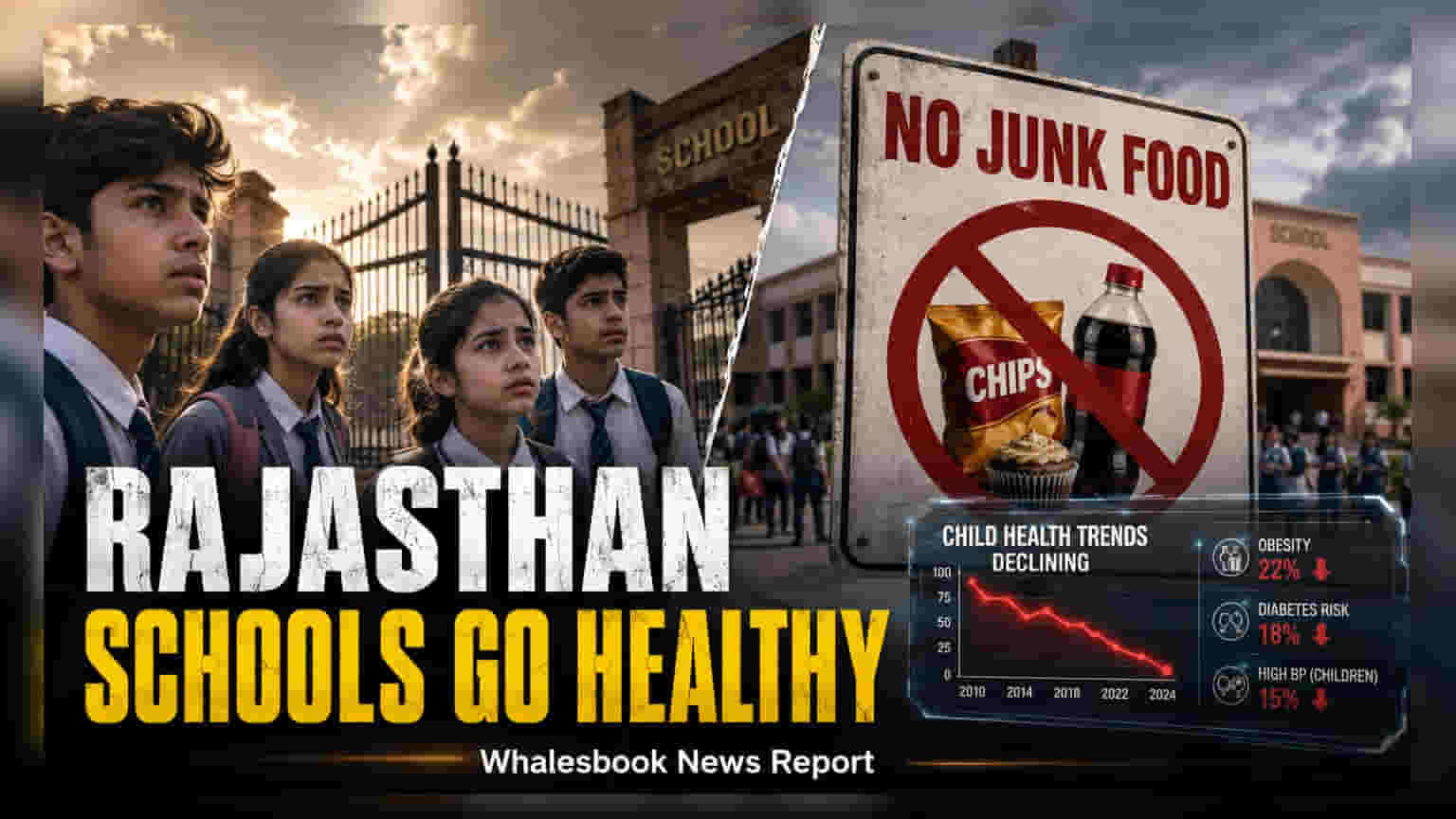
The Rajasthan High Court has ordered a ban on high-fat, high-sugar, and high-salt foods within 50 meters of schools. This directive mandates new nutrition committees and stricter labeling in canteens. For investors, this highlights a growing regulatory focus on health-conscious consumption, which may influence future policy guidelines for processed food manufacturers and retailers.
The Rajasthan High Court, under the direction of Justice Anoop Kumar Dhand, has issued a significant ruling prohibiting the sale of high-fat, high-sugar, and high-salt (HFSS) food items within a 50-meter radius of school premises. This directive specifically targets products such as aerated drinks, chips, and trans-fat-heavy bakery items, aiming to promote healthier dietary habits among students. The order mandates that schools establish specialized Food Safety and Nutrition Committees within four weeks to oversee these standards, with a further requirement for canteens to implement a traffic-light labeling system for nutritional content within eight weeks.
Implications for the Food and Retail Sector
While the immediate impact of the court order is localized to school surroundings and small-scale vendors, the ruling fits into a broader, intensifying regulatory environment regarding ultra-processed foods. Government bodies and health regulators, including the Food Safety and Standards Authority of India (FSSAI), have been increasingly focusing on clearer nutritional labeling and restricting marketing practices that target children. For the broader packaged food industry, this signifies that health-related policy pressure is rising. While this specific order is a state-level directive, investors often monitor whether such mandates gain traction in other states or influence national-level FSSAI guidelines.
Operational and Compliance Considerations
Schools now face the operational task of forming these oversight committees and ensuring that their canteens comply with new, more transparent menu requirements. For suppliers and local vendors operating near educational institutions, this regulation poses a direct challenge to their current business model. In the longer term, food and beverage companies operating in the snacking and aerated drink segments may face indirect pressure to prioritize product reformulation or adjust their distribution strategies to align with these changing health standards. Increased compliance costs and the need for more transparent labeling are becoming recurring themes in the food sector.
Monitoring Regulatory Trends
The court also touched upon broader issues, including rural school infrastructure and the need for a balanced approach to digital learning. For investors, the key monitorable remains the potential for this type of health-focused regulation to be adopted more widely. Any expansion of similar restrictions, or a move toward stricter national health labeling norms, could necessitate strategic adjustments from large FMCG companies regarding their product portfolios and marketing approaches. The immediate next steps for the education and health departments in Rajasthan will involve ensuring compliance with the eight-week deadline for the new labeling standards.