

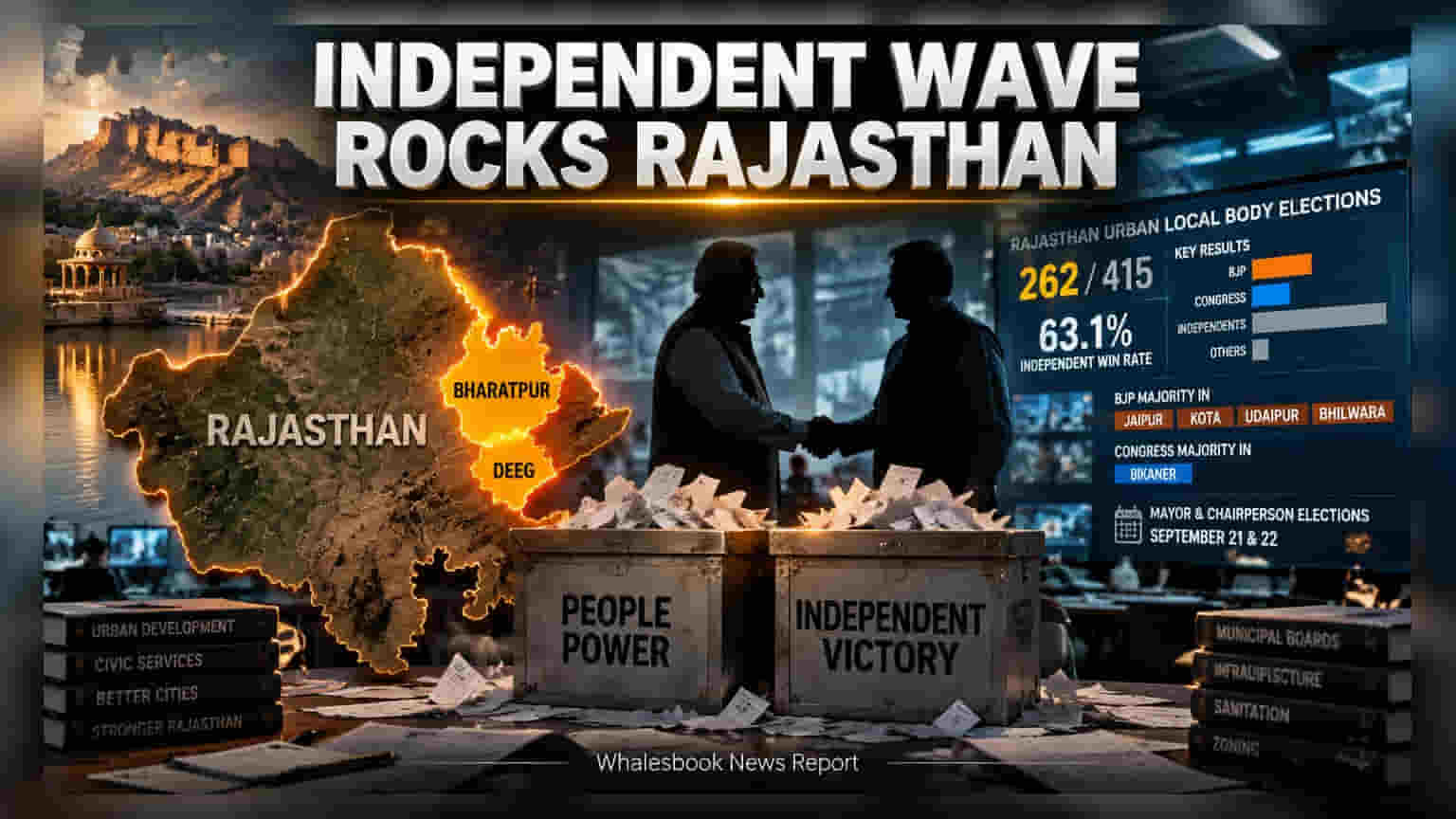
Independent candidates won 262 out of 415 wards in Rajasthan's Bharatpur and Deeg districts, marking a 63.1% win rate in the home region of Chief Minister Bhajanlal Sharma. While major political parties secured leads in several state municipal corporations, the strong showing by independents highlights a fragmented mandate in local governance. Attention now shifts to the mayoral and chairperson elections scheduled for September 21 and 22.
In the recently concluded Rajasthan urban local body elections, independent candidates achieved a significant victory in Bharatpur and Deeg, the home districts of Chief Minister Bhajanlal Sharma. The independents secured 262 of the 415 available wards, resulting in a 63.1% win rate. This outcome stands out when compared to the statewide results, where established national parties held their ground in major municipal corporations.
While the Bharatpur and Deeg districts saw a preference for local independent representatives, the statewide trend showed a different picture. The Bharatiya Janata Party (BJP) emerged as the single largest party, successfully securing clear majorities in four municipal corporations, including Jaipur, Kota, Udaipur, and Bhilwara. Meanwhile, the Congress party secured a majority in Bikaner. These urban local body elections, distinct from state legislative assembly polls, focus on local administrative issues such as municipal infrastructure, sanitation, and zoning.
For residents and local administrative observers, the formation of the municipal boards is the next focus area. The high number of seats won by independent candidates means that both the BJP and Congress are likely to engage in negotiations to garner the support needed to elect mayors and chairpersons. This process of coalition-building or individual alignment is critical for the stability of local governance, as the composition of these boards directly impacts the execution of local urban development projects and civic service delivery.
The administrative focus now turns to the elections for mayoral and chairperson positions, which are scheduled to take place on September 21 and 22. The ability of the winning candidates to form stable boards will determine how effectively the municipal bodies function in the coming term. Investors and observers of state-level policy often monitor these local electoral outcomes to gauge local political sentiment and the potential for bureaucratic continuity in urban infrastructure projects, though these civic results do not have a direct bearing on state-wide legislative stability.