

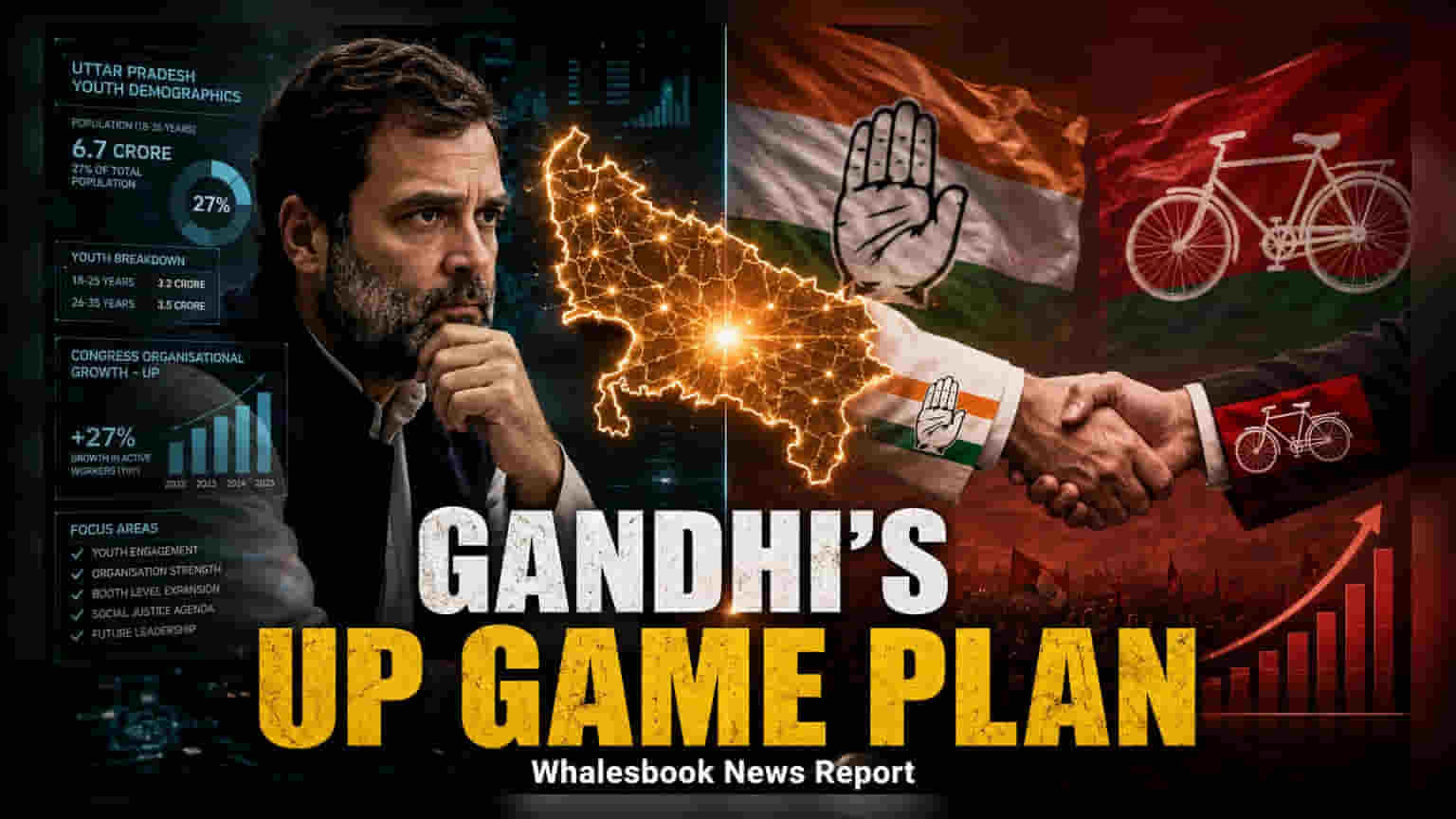
Rahul Gandhi is launching a strategy for the 2027 Uttar Pradesh Assembly elections, focusing on youth outreach, organizational restructuring, and early seat-sharing talks with the Samajwadi Party. The move aims to build a stronger party foundation in India's most populous state, a factor often watched by market observers for its potential impact on regional political stability and policy direction.
Rahul Gandhi is rolling out a comprehensive three-pronged strategy to boost the Congress party's footprint in Uttar Pradesh ahead of the 2027 Assembly elections. The plan prioritizes three specific areas: engaging with younger voters, fixing internal party machinery, and securing an early seat-sharing agreement with the Samajwadi Party (SP).
As part of this initiative, Rahul Gandhi is visiting Prayagraj to lead the third edition of the 'Chhatron Ki Goonj' student outreach program. The choice of Prayagraj carries symbolic weight, given its deep historical ties to the Nehru-Gandhi family and the location of Anand Bhawan. This event is part of a broader push to connect with Gen Z and student communities, whom the party views as a critical and emerging voter segment in the state.
The strategy also addresses the alliance with the Samajwadi Party, which is a major point of discussion within party circles. Leadership has received input from Uttar Pradesh MPs regarding the need to finalize seat-sharing talks well in advance—ideally by August 20—to prevent local friction. While the senior leadership of both parties maintains a cooperative relationship, reports of disagreements between lower-level cadres regarding seat allocation present a challenge that could cause confusion or hurt electoral performance if not managed early.
Simultaneously, the Congress is undertaking a structural overhaul of its state organization. This includes the appointment of Rajinder Pal Gautam, a former Delhi minister, as the Uttar Pradesh in-charge. His mandate focuses on widening outreach to Dalit communities, a demographic where the Bahujan Samaj Party has seen its traditional support base fluctuate. By replacing several AICC secretaries, the party is attempting to inject fresh energy into its grassroots network, reducing its dependency on partner machinery.
For market observers and those tracking the Indian political economy, Uttar Pradesh remains a critical state. As India's most populous region, its political developments often influence national policy, infrastructure planning, and regional investment sentiment. Stability in the state's political arena is frequently monitored, as it can dictate the ease of implementation for major projects and long-term economic policies. The party's ability to successfully convert student-level engagement into actual electoral growth, and to manage the complexities of its alliance with the SP, will be the key monitorable for political analysts in the coming months.