

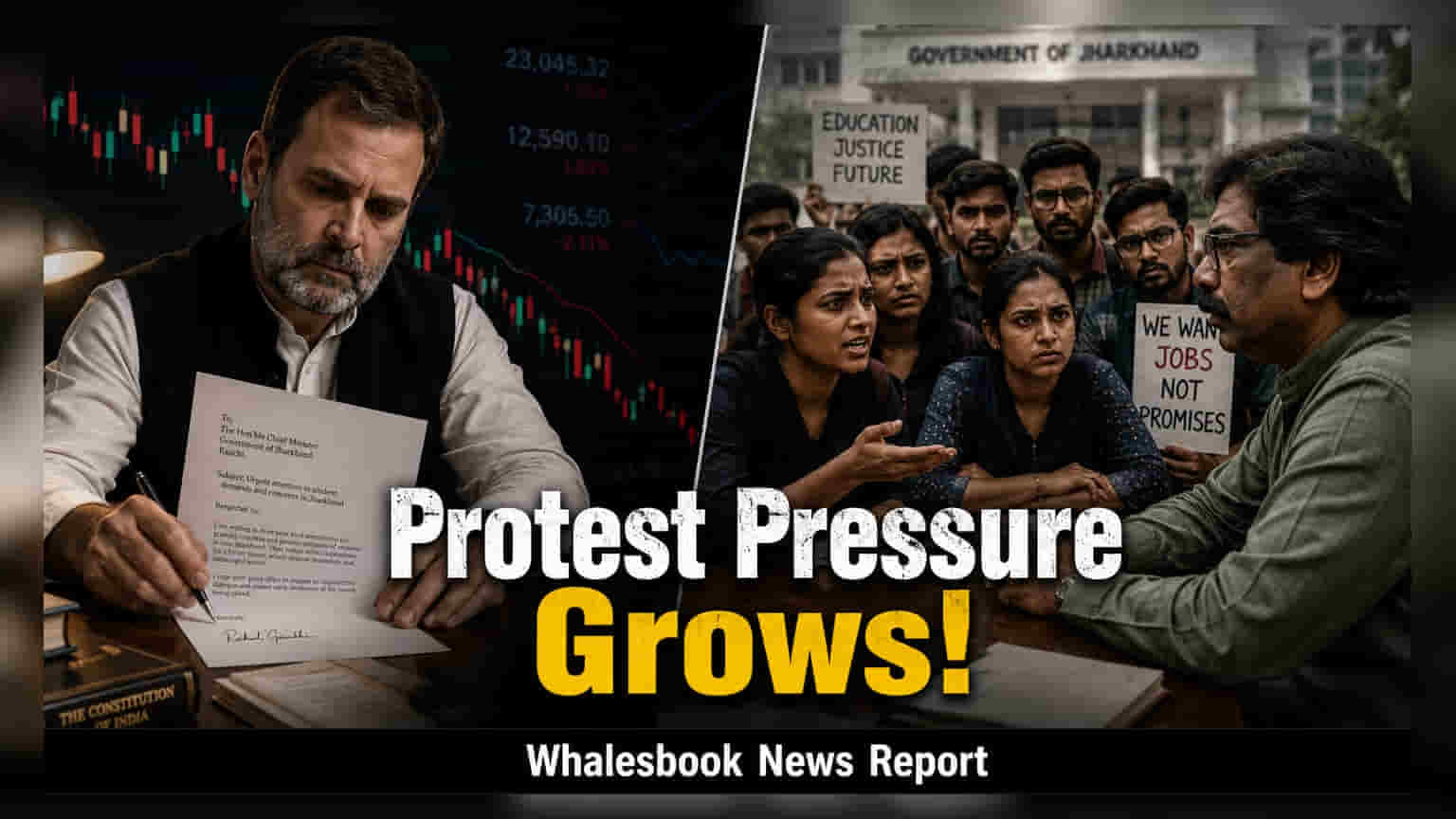
Congress leader Rahul Gandhi has urged Jharkhand Chief Minister Hemant Soren to personally meet with students protesting alleged recruitment exam irregularities. The agitation has continued for 24 days, with some students observing a hunger strike. The state government has called for a fourth round of talks today to address the ongoing unrest, which has recently seen public criticism of both ruling and opposition parties.
Congress leader Rahul Gandhi has formally requested Jharkhand Chief Minister Hemant Soren to engage directly with students who have been protesting for 24 days. The demonstrators are agitating against alleged irregularities in state recruitment examinations conducted by the Jharkhand Public Service Commission (JPSC) and the Jharkhand Staff Selection Commission (JSSC).
In his communication to the Chief Minister, Gandhi emphasized the need for a direct dialogue to address the grievances of the students, terming their demands legitimate. The intervention follows weeks of unresolved tension in Ranchi, where participants have organized various forms of protest, including an indefinite hunger strike.
Escalation of Protests
The situation on the ground has intensified in recent days. While the state government previously initiated dialogue through a committee, the protesters have stated that these discussions did not result in satisfactory outcomes. The frustration among the demonstrators recently manifested in the burning of effigies of both Chief Minister Hemant Soren and Rahul Gandhi, highlighting a growing public impatience with the political class, including the ruling JMM-Congress alliance.
Governance and Social Stability
For those monitoring the state's environment, the prolonged nature of these protests introduces risks related to governance and social stability. Persistent unrest and the recurring nature of recruitment-related allegations can impact public trust in state institutions. When civil unrest remains unresolved for an extended period, it often raises concerns regarding the effective administration of state-level recruitment processes and general social order. Investors and stakeholders typically monitor such situations as indicators of potential administrative or policy-related bottlenecks within the region.
Next Steps for Dialogue
The Jharkhand government has invited the student representatives for a fourth round of talks, which is scheduled for August 17. The primary focus for observers will be whether this meeting leads to a concrete resolution. The protesters have also threatened to gherao the Chief Minister's residence on August 20 if their demands are not met. The outcomes of the upcoming negotiations will be the key factor in determining whether the agitation continues or moves toward a resolution.