

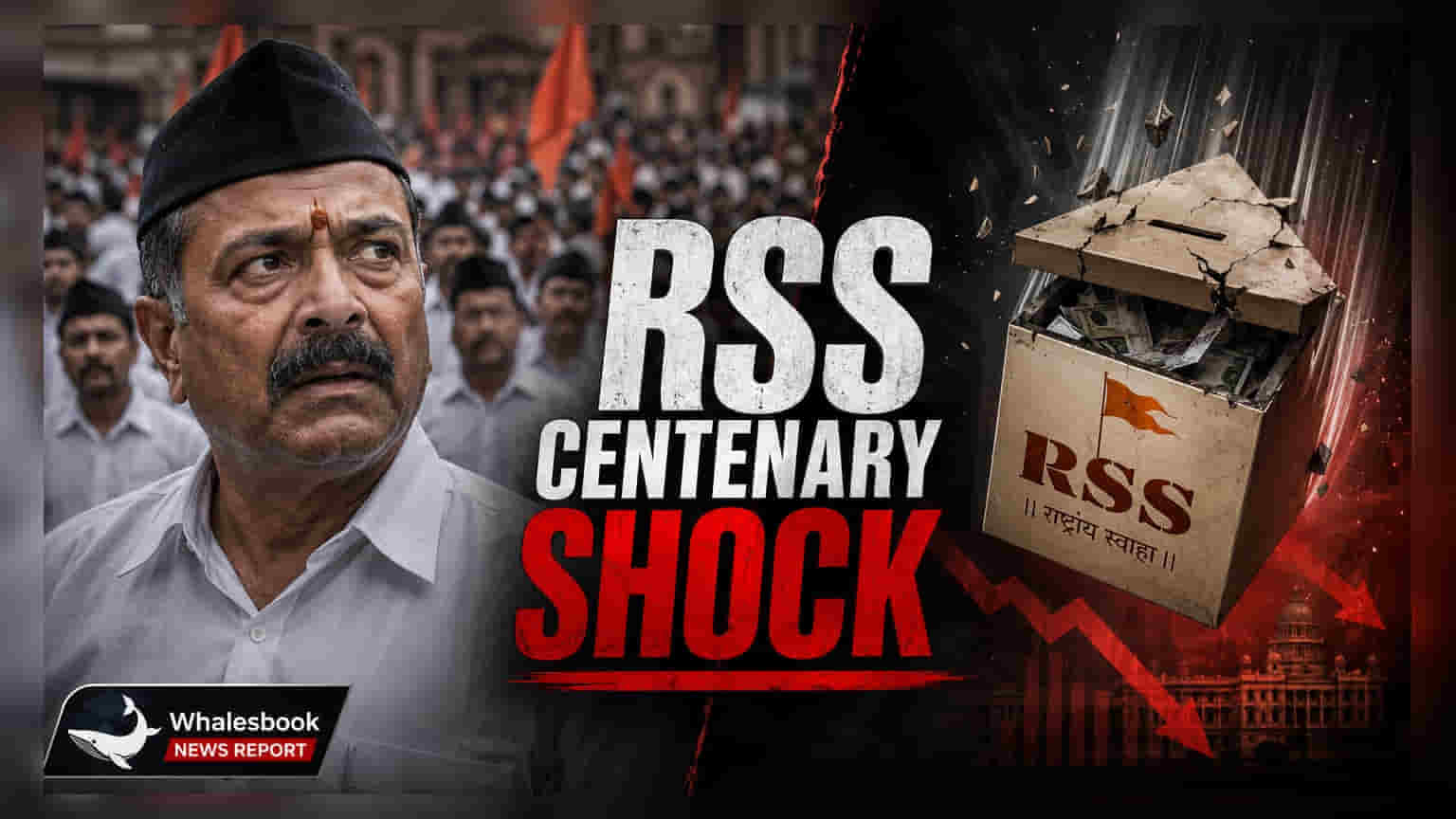
The Rashtriya Swayamsevak Sangh (RSS) faces internal and public criticism as a Ram temple donation controversy emerges during its centenary year. Simultaneously, remarks from a BJP minister regarding declining member quality have sparked debate, challenging the organization's public image and internal cohesion.
What Happened
The Rashtriya Swayamsevak Sangh (RSS), during its significant centenary year, is navigating a dual challenge involving allegations of financial misconduct and questions regarding its internal standards. Reports have surfaced concerning the alleged theft of donations intended for the Ram temple, a development that complicates the organization’s reputation for institutional discipline. Alongside this, public remarks made by a senior Bharatiya Janata Party (BJP) leader have introduced further scrutiny regarding the organization’s recent expansion.
Membership Quality and Internal Criticism
During a recent event in Bhopal, Madhya Pradesh minister Kailash Vijayvargiya expressed concerns about the dilution of standards within the RSS. While acknowledging the rapid increase in the organization's membership during the tenure of Prime Minister Narendra Modi, Vijayvargiya noted that the growth has not been matched by a similar rise in the quality of its members. He suggested that as the organization has expanded, the proportion of individuals who are truly dedicated to its core values has effectively decreased. These comments have triggered discussions regarding how the rapid scaling of any large institution can sometimes lead to challenges in maintaining original standards and values.
Political Reactions and Implications
The comments made by the minister have drawn attention from various political quarters. The Congress party has utilized these remarks to question the neutrality of officials within the administration who may be associated with the organization. Beyond the direct critique, there is ongoing speculation within political circles regarding whether such statements signal deeper internal friction or shifting dynamics within the Sangh Parivar, especially given the organization's history of maintaining a unified public front.
Broader Political Shifts
The political environment continues to see fluid alliances and shifts in leadership influence. In Mizoram, the Zoram People's Movement (ZPM) has moved to support a BJP-led candidate for the Chakma Autonomous District Council, marking a pragmatic shift in local governance alliances despite previous stances against formal associations with the National Democratic Alliance (NDA). Meanwhile, internal adjustments continue within other major parties, with leaders such as KC Venugopal shifting focus toward constituency-level development initiatives and other senior figures experiencing changes in their influence over party-led committees.
What Investors and Observers Should Track
For those monitoring the political and institutional landscape, the primary points of interest include how the RSS leadership addresses the fallout from the donation-related allegations and whether these internal critiques regarding member quality lead to any formal changes in organizational policy or vetting processes. Furthermore, observers will track whether these events impact the coordination between the government and the Sangh Parivar, as well as any subsequent political realignment at the state level.