

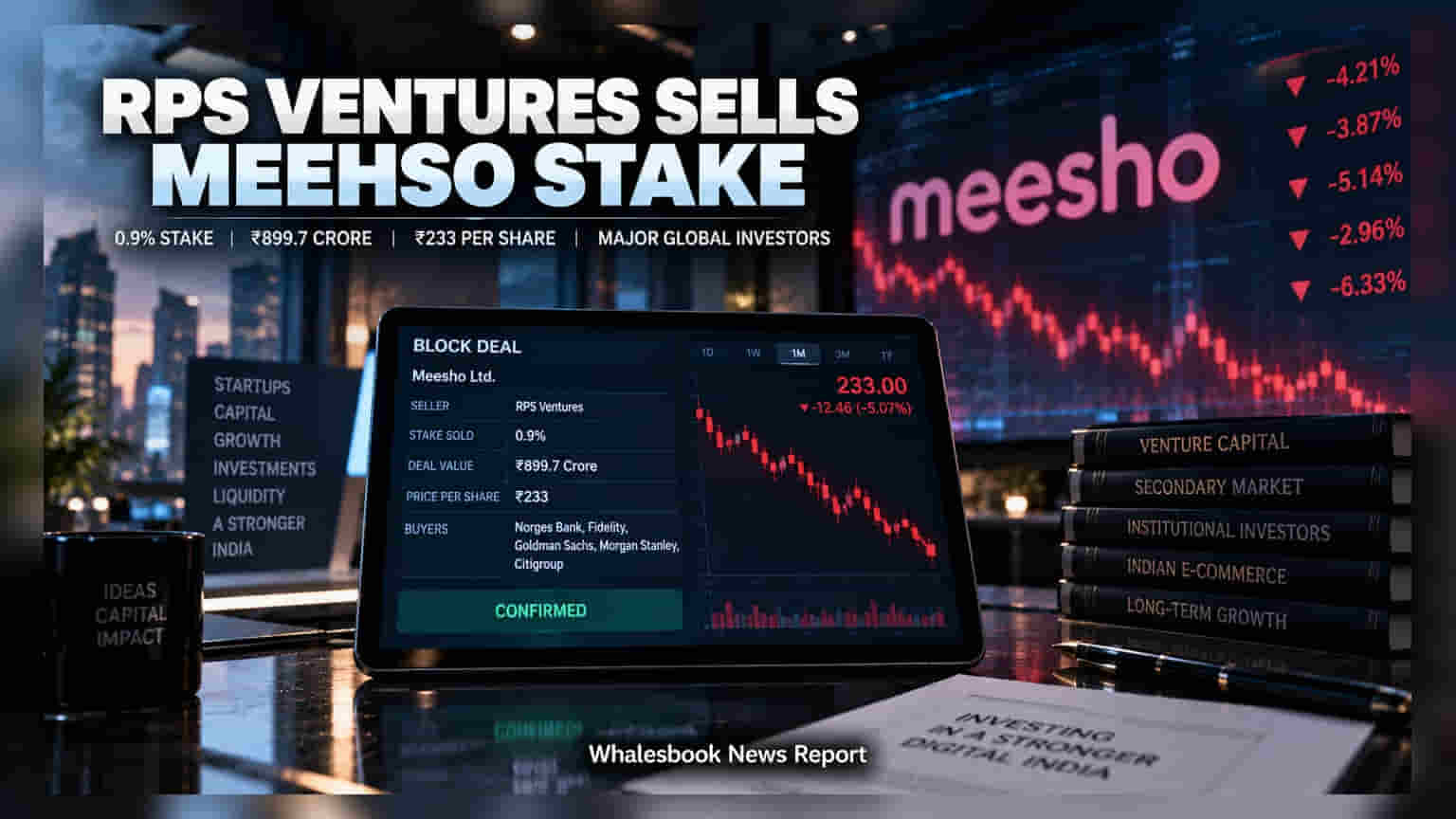
RPS Ventures, led by Kabir Misra, has sold a 0.9% stake in Meesho for Rs 899.7 crore. The sale attracted major institutional investors like Goldman Sachs and Norges Bank. This deal reflects a wider trend of early-stage investors trimming their holdings in the e-commerce firm as it reaches a more mature stage.
RPS Ventures, the venture capital firm founded by former SoftBank executive Kabir Misra, has executed the sale of a 0.9% stake in the e-commerce platform Meesho. The transaction, completed through a series of secondary market deals, was valued at Rs 899.7 crore. Shares were traded at Rs 233 per unit during this process, marking a notable liquidity event for the fund.
Institutional appetite for the company remains robust despite these exits. The block deals saw participation from major global asset managers, including Norges Bank, Fidelity, Goldman Sachs, Morgan Stanley, and Citigroup. The entry of these large-scale institutional investors suggests confidence in the company's long-term prospects, even as earlier backers look to realize their investments.
This sale highlights an evolving shift in the company’s capital structure. RPS Ventures was an early participant in the company's growth, having joined in a $50 million funding round back in 2018. At that time, the valuation of the startup was estimated between $200 million and $250 million. The current exit allows the fund to lock in returns from its initial investment, continuing a trend observed in recent months. In August, other prominent early backers such as Peak XV Partners and Elevation Capital also reduced their stakes in the company in a deal worth approximately Rs 1,900 crore.
For investors and market observers, this steady rotation of shares from early-stage venture capital firms to large institutional asset managers is a sign of a maturing business. As the company moves toward later stages of its growth cycle, the composition of its cap table is transitioning to reflect a more institutionalized shareholder base. While this provides liquidity for early backers, it also places greater focus on the company’s performance and ability to compete against established players in the e-commerce sector.
The broader e-commerce market in India remains highly competitive, with significant pressure on profitability and growth. While these secondary market deals provide liquidity, the future value for shareholders will depend on the company's ability to navigate these market challenges. Investors may continue to track whether this trend of early investors exiting continues or if the shareholder base stabilizes as the company moves toward its next phase of development.