

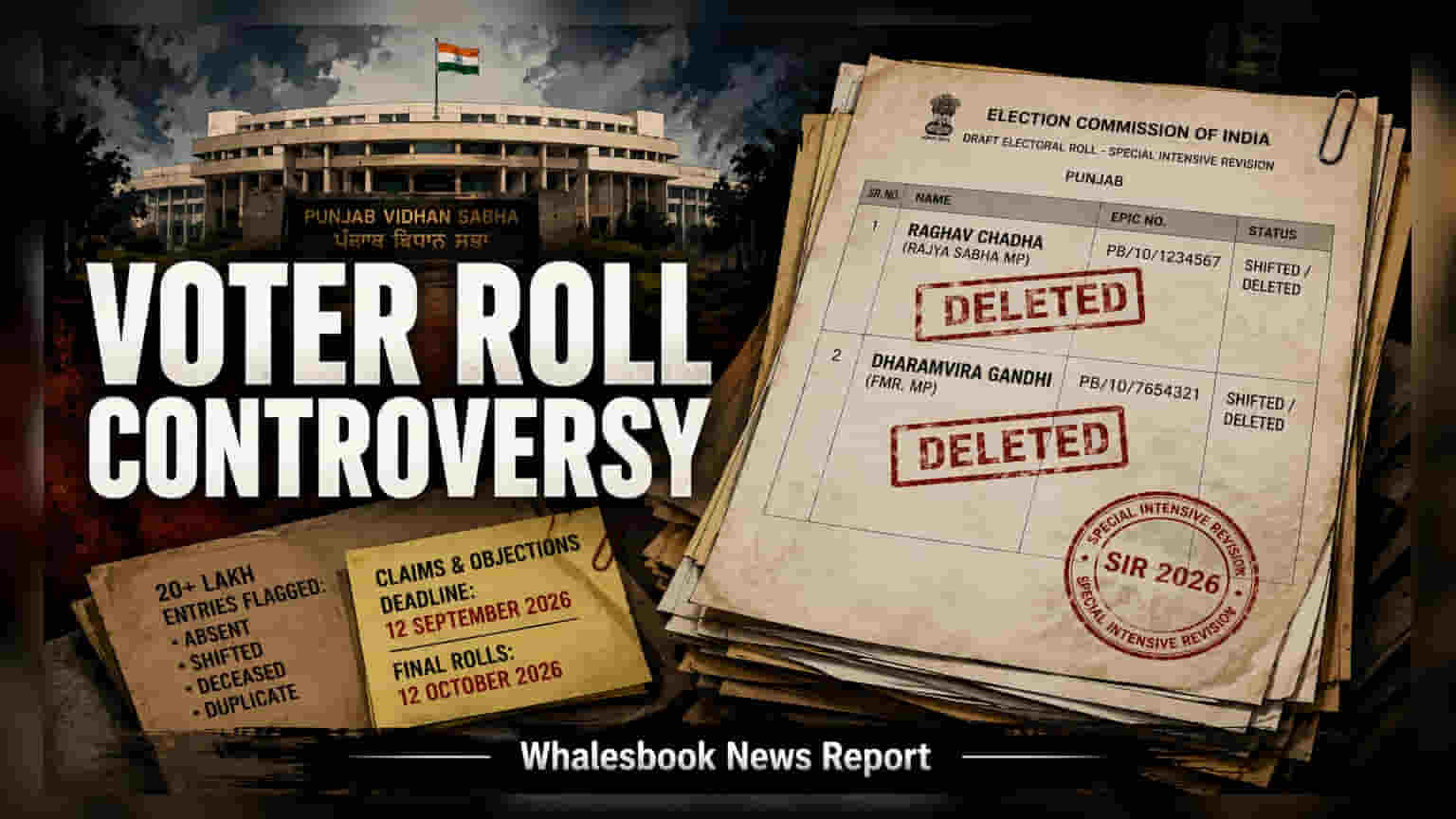
Prominent political figures, including Rajya Sabha MP Raghav Chadha and former MP Dharamvira Gandhi, have reported their names missing from the latest draft electoral rolls in Punjab. While accusations of political interference have surfaced, the Election Commission of India has clarified that the process is currently in the draft stage, with the window for corrections and objections open until September 12, 2026.
The integrity of the electoral process in Punjab has become a subject of intense debate following reports that the names of prominent public representatives have been removed from the draft electoral rolls. Both BJP Rajya Sabha MP Raghav Chadha and Congress leader and former MP Dharamvira Gandhi have publicly stated that their names were either missing or incorrectly marked as having shifted residence in the recently published draft lists.
The draft electoral rolls were published on August 13, 2026, as part of the Election Commission of India's (ECI) Special Intensive Revision (SIR) exercise. This exercise is a standard administrative procedure designed to update voter databases, but the removal of high-profile names has triggered allegations of political motivation. Raghav Chadha has alleged a political vendetta, claiming his registration status was changed without his knowledge, while the Aam Aadmi Party (AAP) has rejected these claims, asserting that the ECI conducts the revision process independently of the state government.
Election officials have clarified that the lists published in August are not the final versions. The ECI has opened a specific window for citizens and representatives to file claims and objections to address any discrepancies or errors in the draft data. This phase is critical, as it allows individuals to verify their registration status and request corrections before the final electoral rolls are published. According to official schedules, the deadline for submitting these claims is September 12, 2026, with the final rolls slated for release on October 12, 2026.
The scale of this revision process is significant, with over 20 lakh entries—categorized as absent, shifted, deceased, or duplicate—identified and flagged during the first phase of the SIR in Punjab. The removal of such a large volume of entries has created administrative pressure, leading to concerns regarding the potential for genuine voters to be inadvertently excluded from the final rolls.
The situation has highlighted broader risks, including the potential for administrative delays and the burden placed on voters to manually verify and correct the records. Political observers note that the accusations of vendetta and the scrutiny of the ECI's processes could exacerbate political tensions in the state. For now, the most significant monitorable for residents and political entities alike remains the ongoing 'Claims and Objections' window, which serves as the primary mechanism for resolving the discrepancies identified in the draft documentation.