

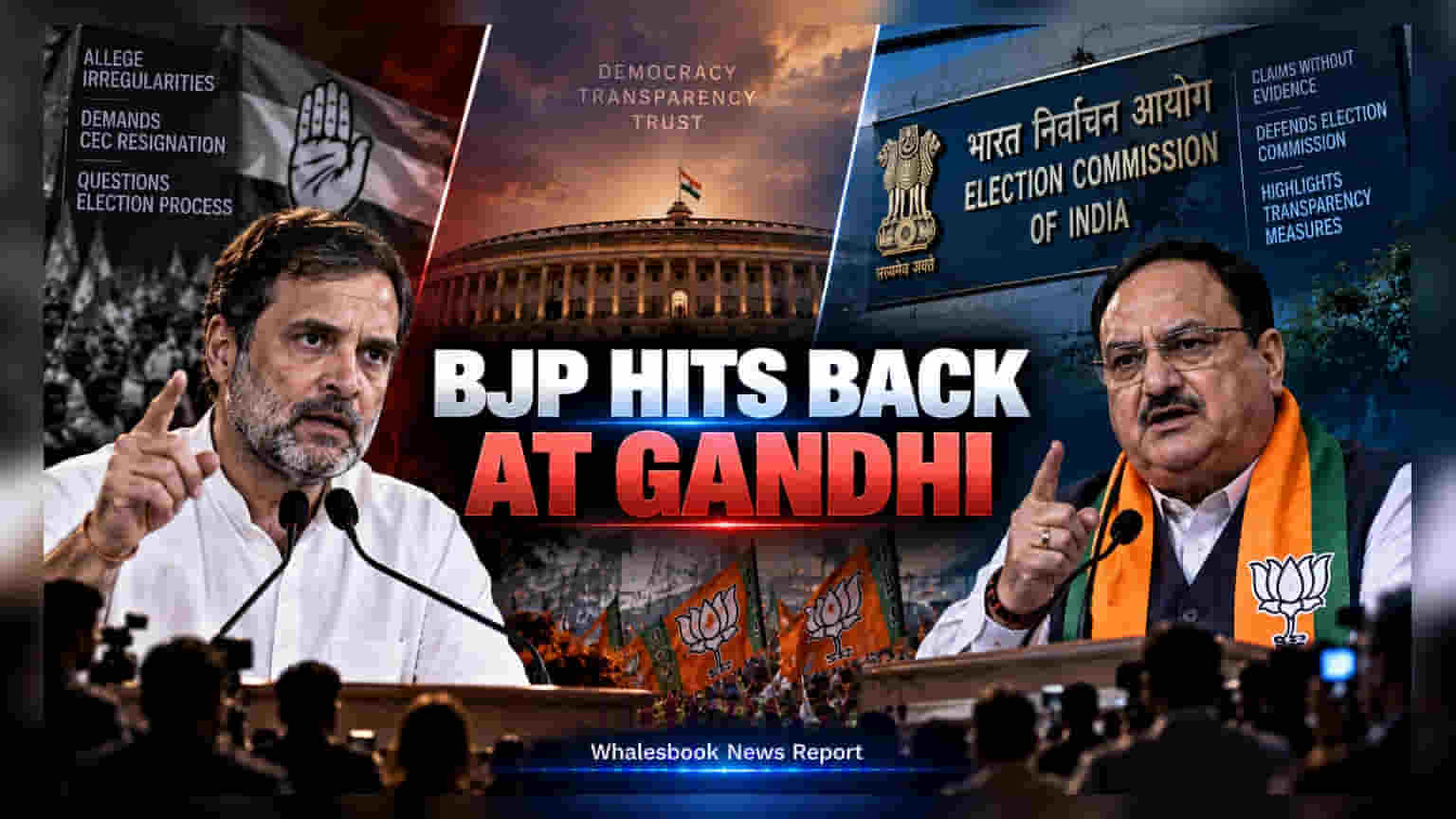
The political debate between the BJP and Congress over Election Commission neutrality has intensified. While this remains a political event, investors monitor such developments for their potential impact on governance perceptions and overall market sentiment.
The ongoing political standoff between the Bharatiya Janata Party and the Congress party has intensified following sharp critiques from Congress leader Rahul Gandhi regarding the Election Commission of India. Gandhi has demanded the resignation of Chief Election Commissioner Gyanesh Kumar, alleging widespread irregularities in the 2024 elections, while the BJP has dismissed these claims as unsubstantiated and lacking evidence.
For Indian market participants, political stability and the robustness of democratic institutions are often viewed as foundational elements of the broader economic environment. Foreign Institutional Investors and domestic market players generally track such developments because institutional independence is linked to policy predictability and the rule of law, which are essential for long-term capital deployment. When institutional trust is questioned in public discourse, it can sometimes lead to increased caution among those who value long-term governance standards.
Historically, Indian equity markets have demonstrated significant resilience toward short-term political noise. Investors typically prioritize macroeconomic data, corporate earnings trends, and government fiscal discipline over campaign-related disagreements. However, sustained concerns regarding institutional architecture can be a monitorable for institutional investors, who often look for clarity in governance and administrative processes to gauge the risk profile of a market.
The BJP has countered these accusations by pointing to the electoral track record of the Congress party and emphasizing the transparency measures introduced in recent years, such as the increased use of surveillance technology during the polling process. From an investor perspective, the primary monitorable in such political disputes is whether they influence the legislative environment or the pace of administrative reforms.
While this debate remains firmly in the political sphere, market observers often assess how such tensions might affect the climate for policy implementation. Investors typically look for signs of policy continuity and governance consistency rather than individual political narratives. As the discourse continues, the market focus will likely remain on whether these concerns translate into any tangible impact on foreign investment flows or the broader administrative stability of the country.