 Whalesbook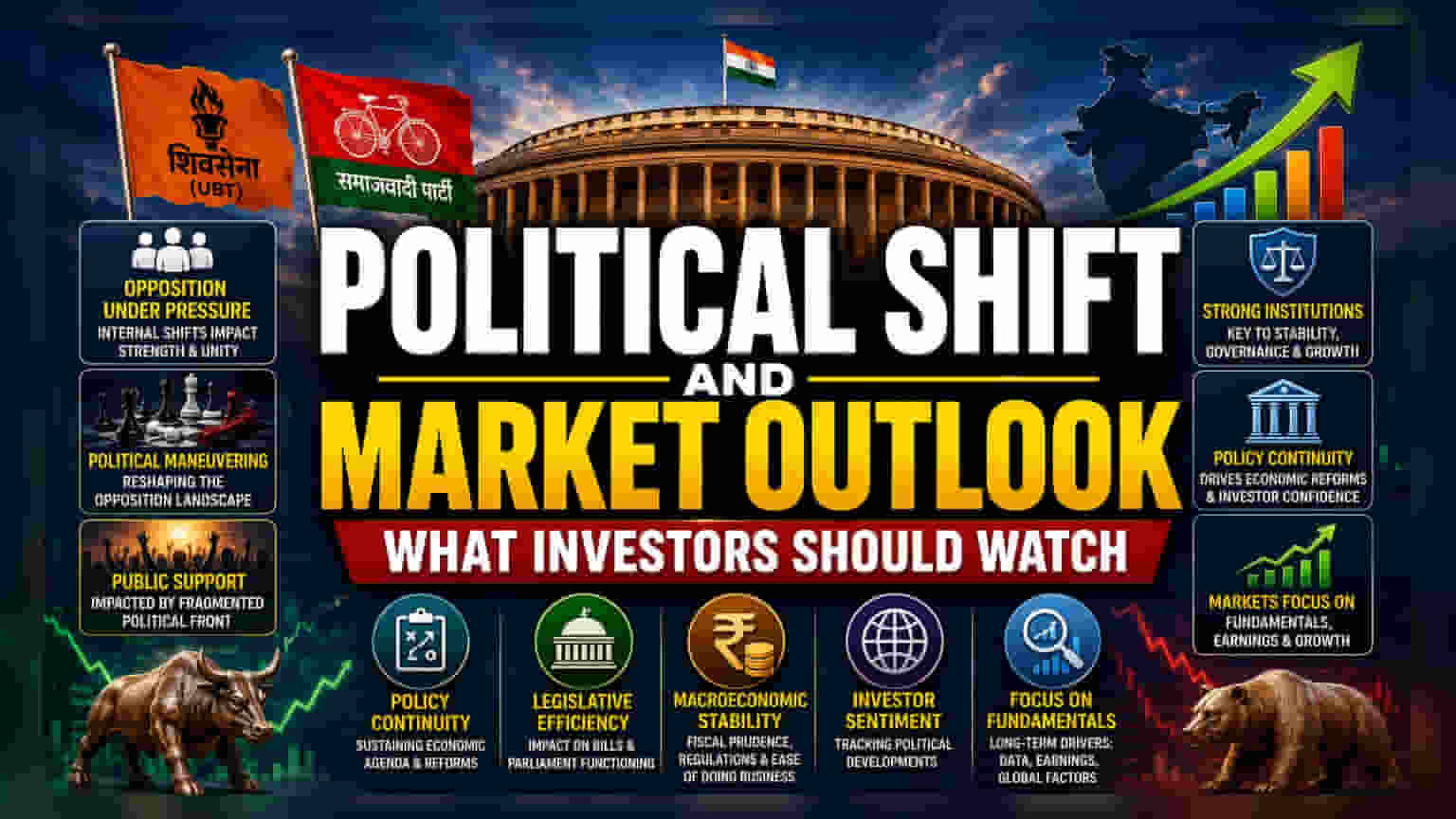
Recent political reports highlight internal challenges within major opposition parties, including the Shiv Sena (UBT) and Samajwadi Party. From an investor perspective, political stability and policy continuity are key monitorables. Markets generally assess how shifting political equations influence the long-term legislative process and the governance environment in India.
What Happened
Recent reports have drawn attention to the evolving political landscape in India, specifically regarding the internal dynamics of key opposition parties. Observations suggest that groups such as the Shiv Sena (UBT) and the Samajwadi Party are currently facing significant internal pressures. These reports highlight a trend of political maneuvering that is reportedly affecting the structural stability of opposition ranks. Analysts have described this as a broader strategic approach that appears to be impacting the opposition's ability to mobilize public support or present a unified political front.
Political Stability and Market Sentiment
For investors and market participants, the political environment is a significant factor in assessing long-term risk and opportunity. Stable governance and policy continuity are generally viewed as favorable for economic growth and business investment. When political dynamics shift or when there are reports of significant changes in the opposition's strength, investors often look to understand the implications for the legislative process.
Markets typically favor an environment where government policy is predictable and legislative agenda can be executed without prolonged obstruction. Whether the current political developments lead to a more consolidated legislative environment or a different dynamic in the democratic process is a subject often monitored by institutional investors and policy observers.
Institutional and Governance Context
Recent commentary has compared the current political situation to historical periods, such as the era surrounding the Emergency, noting differences in institutional strength and leadership structure. While past political movements often coalesced around centralized leadership, the current landscape is characterized by a more fragmented set of regional players and parties. The Indian National Congress continues to maintain a national footprint, but it faces the challenge of navigating state-level contests against various regional entities, creating a complex political matrix.
Furthermore, discussions regarding the strength of institutional mechanisms and media accountability are frequently part of the broader political debate. For the investment community, strong institutions are often associated with better regulatory clarity and rule of law, which are essential for sustained economic confidence.
What Investors Should Monitor
Investors generally focus on the stability of the central government and its ability to push through key economic reforms. The most important monitorables include:
Policy Continuity: The ability of the government to maintain its economic agenda and structural reforms.
Legislative Efficiency: How political changes impact the passing of bills and the functioning of Parliament.
Macroeconomic Stability: Whether political shifts have any bearing on fiscal prudence, regulatory environment, or the ease of doing business.
While political noise is a common feature of a democracy, long-term market trends are typically driven by fundamental economic data, corporate earnings, and global macro factors. Investors may track these political developments primarily to understand how they might influence the legislative roadmap in the coming quarters.

