

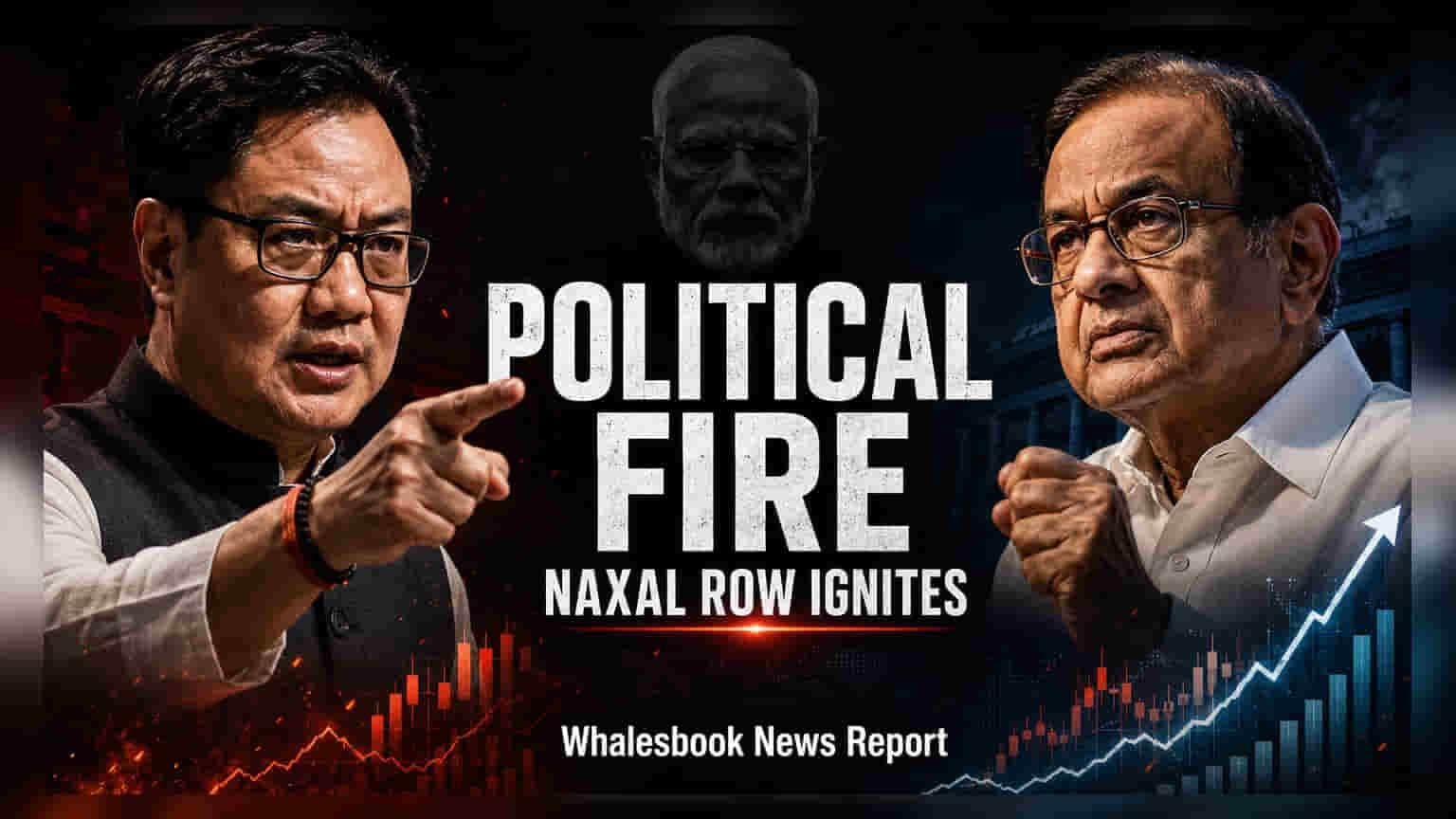
A political standoff has emerged following Prime Minister Narendra Modi’s Independence Day speech, which warned against ideological Naxalism. Senior Congress leader P. Chidambaram publicly embraced the term, leading to a rebuttal from Union Minister Kiren Rijiju. This event is a matter of political discourse and does not have a direct impact on financial markets or listed companies.
Prime Minister Narendra Modi’s address on the 80th Independence Day on August 15, 2026, has triggered a significant political exchange between the ruling Bharatiya Janata Party (BJP) and the Indian National Congress. In his speech from the Red Fort, the Prime Minister noted the success of the government in reducing armed Naxalism but warned against the persistent influence of what he termed 'dimagi naxals.' He described these individuals as those who hold a Maoist mindset and allegedly influence public policy and institutional systems.
Following the address, senior Congress leader P. Chidambaram took to the social media platform X on August 16, 2026, to state that he was 'proud to be a dimagi naxal.' This public assertion prompted an immediate and sharp response from the ruling party, with several BJP leaders criticizing the statement and questioning the alignment of opposition leadership with the nation's security framework and constitutional values.
Union Minister Kiren Rijiju subsequently provided a clarification, asserting that the Prime Minister’s remarks were not directed at opposition leaders as a collective group. Rijiju categorized the individuals referred to by the Prime Minister into three distinct ideological groups: those who support Maoist ideology while rejecting the Indian Constitution, those who are aligned with separatist movements and Article 370, and those who advocate for the separation of the North-East from the rest of India.
From an investor perspective, it is important to note that this development remains a matter of political and ideological debate. It does not carry direct implications for the operations, financial performance, or market valuations of listed Indian companies. While market participants generally track political developments for signs of policy continuity or legislative focus, this specific discourse involves no regulatory changes, economic policy shifts, or financial risks that would materially affect the corporate sector or the broader financial markets.