

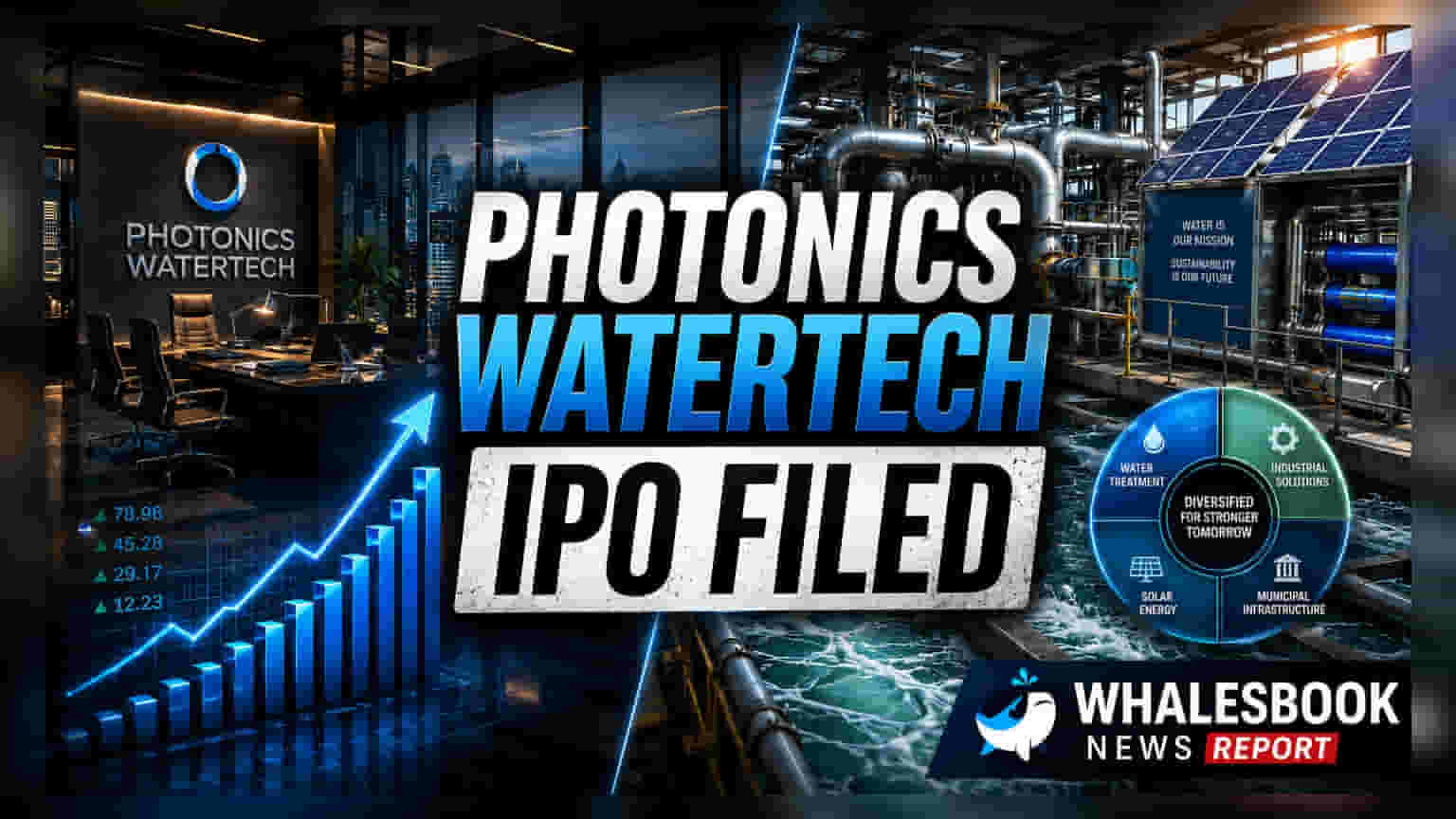
Photonics Watertech Limited has filed a Draft Red Herring Prospectus with the NSE to raise over ₹52 crore through an SME IPO. The Gandhinagar-based company focuses on solar power, LED lighting, and water infrastructure. Investors should note that SME IPOs are known for higher volatility and liquidity constraints compared to mainboard offerings.
What Happened
Gandhinagar-based Photonics Watertech Limited has officially filed its Draft Red Herring Prospectus (DRHP) with the National Stock Exchange (NSE). The company intends to raise more than ₹52 crore through an Initial Public Offering (IPO) on the NSE Emerge platform, which is specifically designed for small and medium-sized enterprises (SMEs).
The IPO includes a mix of a fresh issue of equity shares and an offer for sale (OFS). The company has appointed Goldmine Stocks Pvt Ltd and Valmiki Leela Capital Pvt Ltd as the lead managers for this issue. Legacy Law Offices provided legal counsel for the transaction, which involves selling shareholders including Brajesh Amrutlal Patel, Vasantkumar Narayanbhai Patel, and Jayavik Hasmukhbhai Patel.
Business Overview
Incorporated in 2011, Photonics Watertech operates across four primary business segments: LED-based lighting solutions, Solar EPC (Engineering, Procurement, and Construction), water infrastructure, and automation. The company provides services to both public sector undertakings and private clients. Its offerings range from solar streetlights and high-mast lighting to groundwater management and water automation systems. The company currently operates out of its facility in the Electronic Estate of GIDC, Gandhinagar.
Understanding The SME IPO Context
For investors, it is important to distinguish between a Mainboard IPO and an SME IPO. SME IPOs typically have different eligibility norms and listing requirements on exchanges like NSE Emerge. These companies are often smaller, founder-driven, and at an earlier stage of growth compared to large-cap stocks. While this can offer opportunities to back growing businesses, it also brings a distinct set of risks.
Risks And Investor Considerations
Small and medium-sized enterprise IPOs generally face higher volatility than established large-cap stocks. A key monitorable for investors is liquidity—because trading volumes on SME platforms are often lower, it can be more difficult to buy or sell large quantities of shares quickly. Additionally, investors often face higher minimum investment requirements for SME IPOs, meaning a larger commitment of capital per application is needed compared to mainboard retail quotas.
Historically, SME stocks have been prone to sharper price swings, and the post-listing performance can be influenced by the company’s limited operating track record. Retail investors are encouraged to conduct thorough due diligence, focusing on the company’s cash flow, debt levels, and the specific use of proceeds mentioned in the final prospectus, as these factors significantly influence long-term stability.
What Investors Should Track Next
Investors should keep an eye on the upcoming announcements regarding the issue price band, the official dates for the IPO, and the lot size. The final prospectus will also provide clarity on the exact use of funds, which is critical for evaluating whether the capital will be used for meaningful expansion or debt reduction. Keeping track of the company’s order book and management’s future guidance will be essential after the listing to assess if the business can sustain its growth in the competitive solar and water infrastructure sectors.