

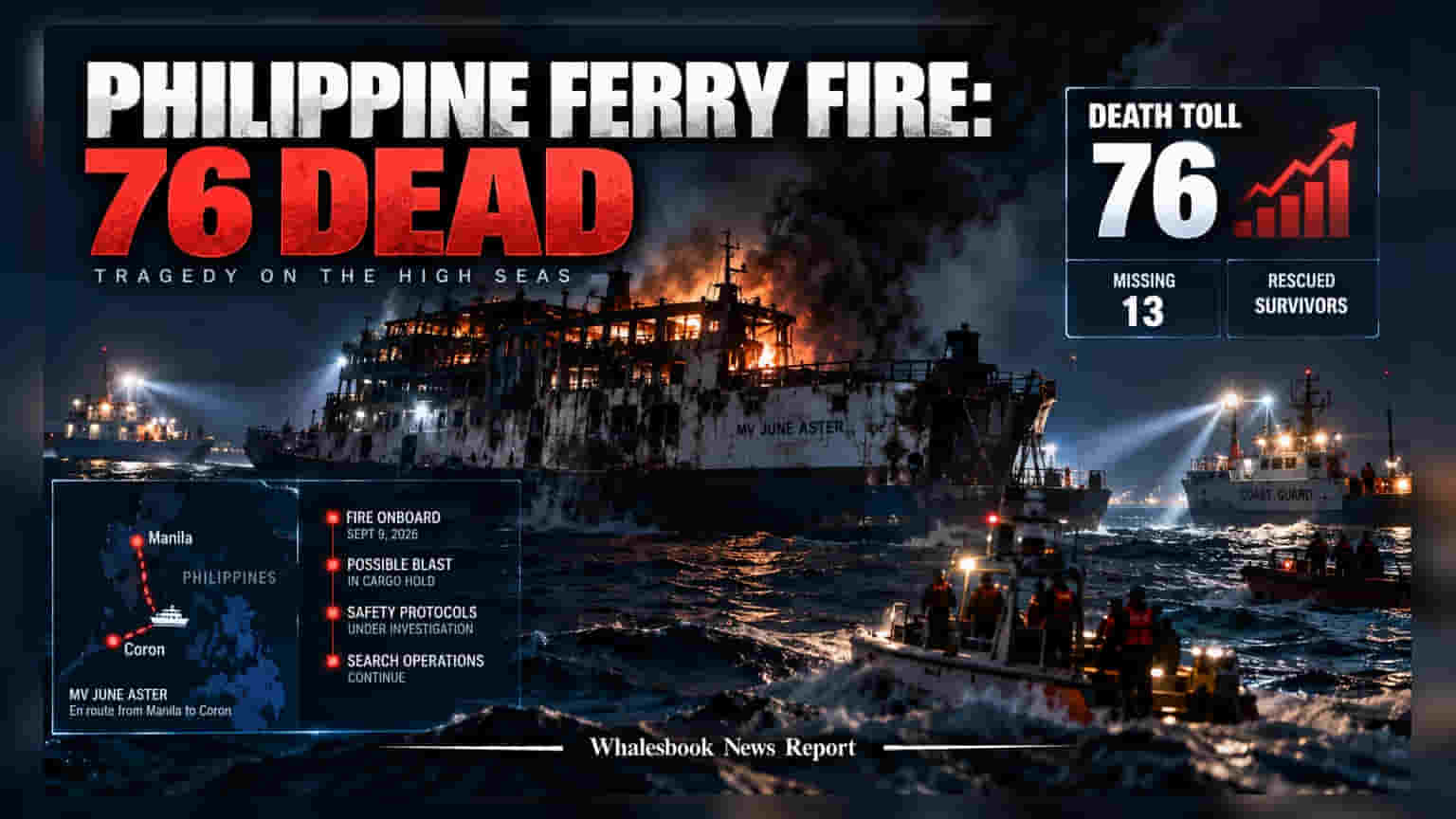
The death toll from the MV June Aster ferry fire in the Philippines has risen to 76, with 13 people still missing. Authorities have launched a criminal investigation to identify if safety lapses or negligence caused the disaster. For investors, the incident highlights the critical importance of operational safety standards in the transport and logistics sector.
The death toll from the devastating fire aboard the ferry MV June Aster has climbed to 76, as rescue teams recover further remains from the vessel. The incident, which occurred on the night of September 9, 2026, while the ship was en route from Manila to Coron, has left families in distress and authorities searching for the 13 individuals still reported missing.
Following the tragedy, a multi-agency maritime safety and criminal investigation is underway to determine the cause of the blaze. Initial reports from survivors indicate that a blast may have occurred in the cargo hold, which then ignited a fire that spread rapidly across the vessel. Investigators are now scrutinizing critical safety protocols, including whether the ship’s crew followed emergency procedures, why the alarm system did not alert passengers effectively, and why many survivors struggled to access life jackets.
Investigating Safety and Operational Standards
The Philippine Coast Guard is leading the probe into whether negligence or failure to follow maritime regulations contributed to the high fatality count. Investigators are specifically looking at reports that tarpaulins used to cover open deck areas may have trapped passengers, obstructing their escape routes during the emergency. The ship's captain and crew are now under investigation to determine if proper maintenance and safety drills were conducted, a standard requirement for all vessels operating in the region.
Operational Risk in the Transport Sector
While the MV June Aster is not a publicly listed entity, this incident serves as a stark reminder for investors regarding operational risks in the transport and logistics sector. In any shipping or logistics business, safety is a fundamental pillar of operations. For companies in this space, safety records are more than just internal procedures; they are direct indicators of management quality and regulatory compliance.
When a transport company faces repeated safety issues or regulatory inquiries, it can lead to severe financial consequences, including heavy fines, loss of operating licenses, and long-term damage to the company’s reputation. Investors often track safety track records and compliance history as part of their due diligence, as these factors significantly influence the long-term sustainability and liability profile of transport businesses. Poor oversight in maintenance or crew training is a major red flag that can lead to sudden, uncontrollable financial hits.
Historical Context of Maritime Safety
The Philippine maritime sector has faced long-standing challenges regarding aging vessels and inconsistent regulatory enforcement. This incident brings back memories of past tragedies in the region, placing pressure on authorities to tighten oversight. The current investigation will serve as a critical test for modern maritime safety standards in the Philippines, as regulators face calls to ensure that transport providers adhere strictly to international safety conventions to prevent such disasters in the future.
As the investigation continues, the next important update for observers will be the findings of the safety probe, which will determine if the ship operator faces penalties or if systemic changes are mandated for the maritime transport industry in the region.