

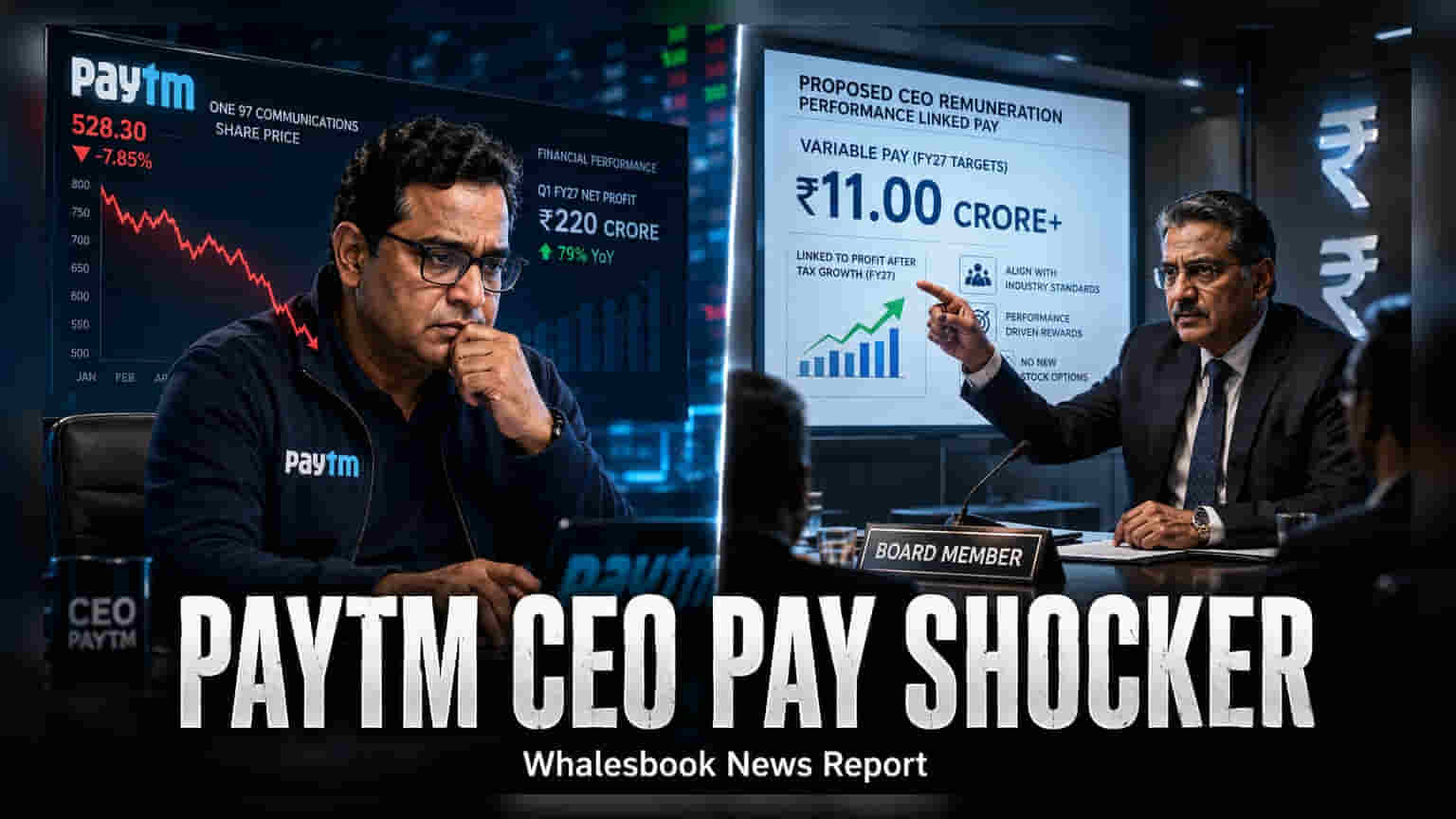
One 97 Communications has proposed a salary revision for CEO Vijay Shekhar Sharma, introducing performance-linked bonuses to align with industry benchmarks. The move follows an independent study that found his compensation significantly lower than peers, even as the fintech firm reported a 79% surge in quarterly profit. Shareholders will now vote on the revised pay structure.
One 97 Communications, the parent company of digital payments firm Paytm, has proposed a change to the remuneration of its founder and CEO, Vijay Shekhar Sharma. The board of directors is looking to introduce a variable, performance-linked pay component to the CEO's compensation package, aiming to align his earnings more closely with industry standards.
This decision follows an independent benchmarking exercise conducted by an external firm. The study indicated that Sharma's current compensation is materially lower than the median pay for executives in similar positions across the Indian fintech and consumer tech industry. Over the past four years, Sharma's base salary has remained unchanged, and he has previously requested to forgo Employee Stock Ownership Plans, also known as stock options.
For the financial year 2026, Sharma received a total remuneration of Rs 4.33 crore, a slight decrease from the Rs 4.5 crore he received in fiscal year 2025. By comparison, industry benchmarks suggest higher compensation figures for peers in the sector. For instance, Falguni Nayar of Nykaa and Vidit Aatrey of Meesho have had reported remuneration figures in the range of Rs 11 crore and Rs 5.42 crore respectively in recent periods, highlighting the gap identified by the board’s assessment.
The proposed structure aims to tie a portion of Sharma's income to clear financial targets, specifically focusing on Profit After Tax growth for the financial year 2027. This shift toward performance-based incentives is intended to directly link executive rewards to the company's financial success. Notably, the proposal does not include any new stock options, focusing instead on cash-based variable pay.
This move comes at a time when Paytm is seeing improved financial performance. In the first quarter of fiscal year 2027, the company reported a net profit of Rs 220 crore, marking a 79% increase compared to the same period the previous year. This follows the company achieving its first full year of profitability in fiscal year 2026, with a total net profit of Rs 552 crore.
For investors, the key monitorable will be the outcome of the shareholder vote at the upcoming Annual General Meeting. While a performance-linked structure is often viewed as a positive alignment of interests between management and shareholders, executive pay proposals in listed companies can sometimes face scrutiny from institutional investors who monitor corporate governance and cost efficiency. Furthermore, as the fintech sector remains sensitive to regulatory updates and market shifts, maintaining profitability will be crucial for the company to meet the targets that will trigger the variable pay component.