

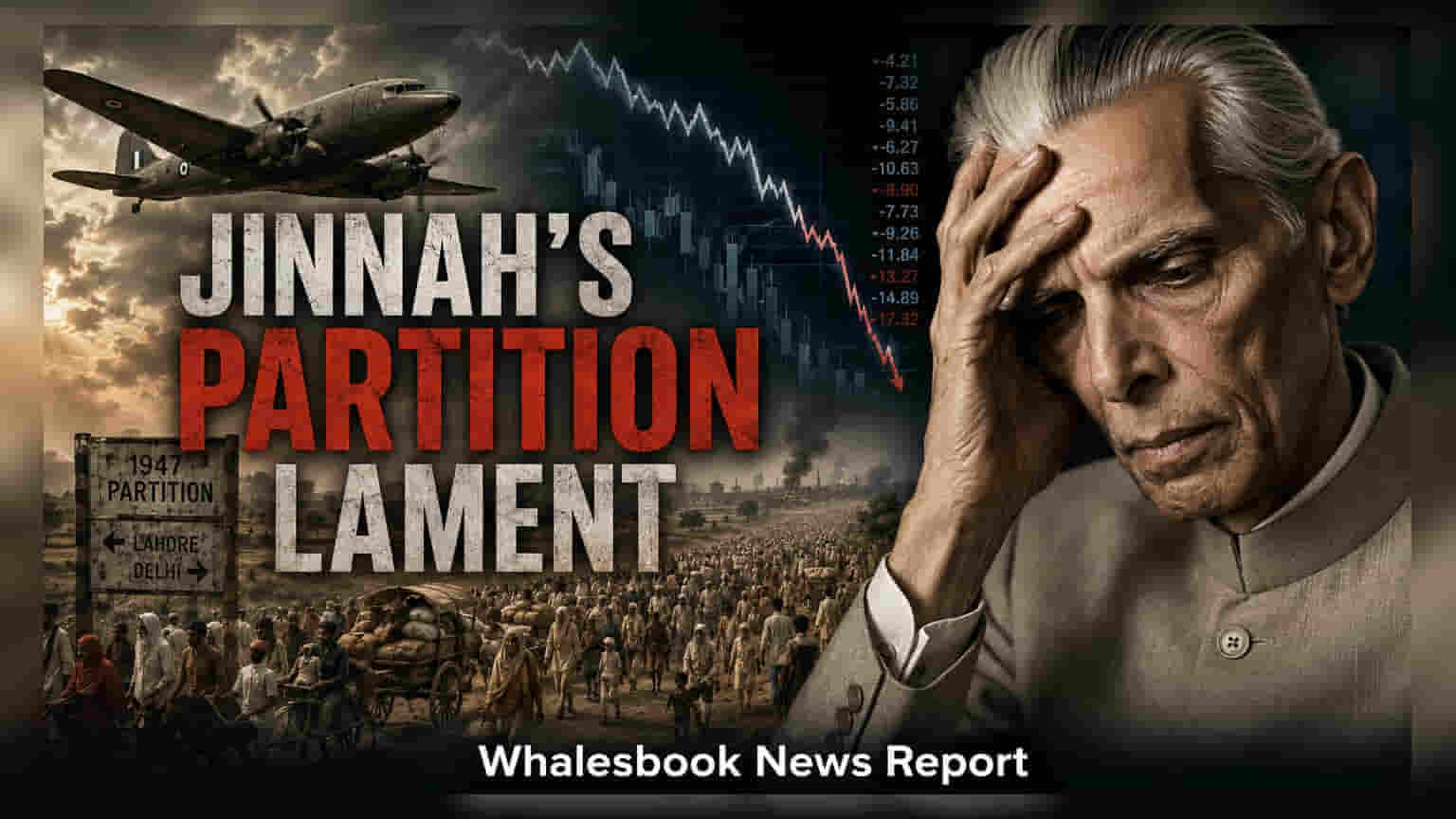
India observes Partition Horrors Remembrance Day on August 14 to honor the millions affected by the 1947 division. This year, historical accounts—including journalist Kuldip Nayar’s retelling of Muhammad Ali Jinnah’s reported despair over the ensuing violence—are being revisited to reflect on the immense human cost of the subcontinent's partition.
August 14 is observed in India as Partition Horrors Remembrance Day, a day dedicated to honoring the lives lost and the millions of people displaced during the 1947 partition of the Indian subcontinent. As the nation reflects on this period, historical accounts and personal narratives from that era continue to surface, offering insight into the scale of the tragedy.
One such account, widely discussed during this year's observances, comes from the autobiography of the late journalist Kuldip Nayar, titled 'Beyond the Lines.' In his memoir, Nayar recounts an anecdote concerning Muhammad Ali Jinnah, the founder of Pakistan. According to Nayar’s writing, Jinnah, while flying over a divided Punjab, witnessed the mass exodus of refugees and the widespread chaos below. Struck by the sight of the immense human suffering, Jinnah reportedly expressed deep despair, exclaiming, "What have I done?"
This account suggests that the reality of the violence and the scale of the displacement caught leadership on both sides by surprise. Initially, many leaders, including those in the Congress and the Muslim League, had hoped that communities could coexist within the newly formed borders. However, the rapid escalation of communal violence and the subsequent, massive population exchange rendered those expectations impossible, leading to one of the largest and most traumatic human migrations in history.
Kuldip Nayar’s own experience serves as a grounded contrast to the aerial perspective attributed to Jinnah. Nayar described his journey from Sialkot to Delhi as a time defined by fear, with roads littered with the evidence of violence and abandoned possessions, illustrating the raw, individual cost of the political decisions made at the time.
While this update is a matter of historical record and carries no financial, corporate, or stock market implications, it remains a significant part of the national discourse on August 14. For observers of history, the day serves as a time to recognize the trauma inflicted on generations and to reflect on the heavy price paid during the subcontinent's division.