

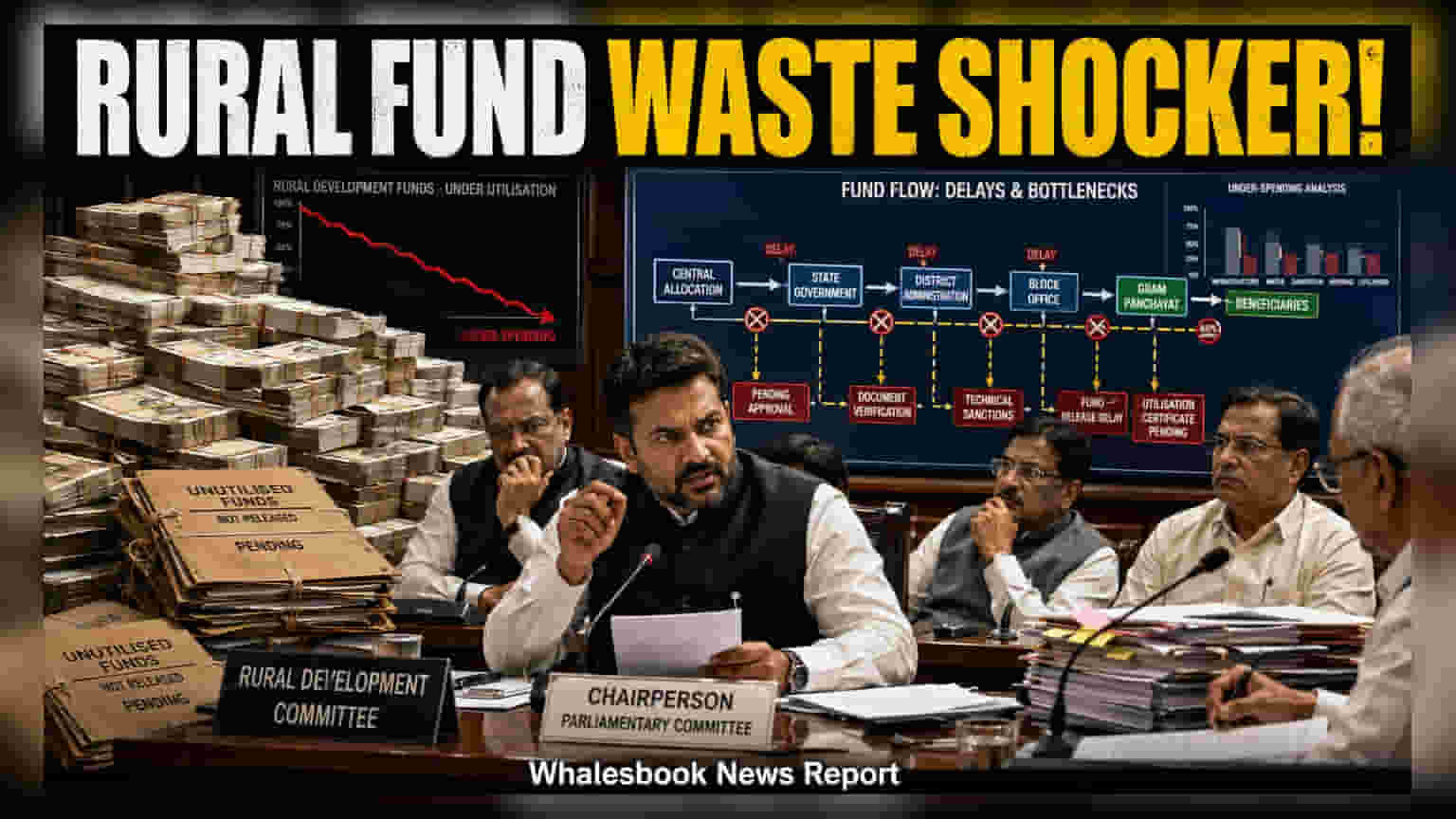
A new report by the Standing Committee on Rural Development highlights significant unspent budgets in key schemes like DDU-GKY and DAY-NRLM. This delay in fund distribution impacts rural livelihood projects and self-employment initiatives. For investors, the efficient execution of these government programs is a key driver for rural consumer demand, which supports sales for sectors like FMCG, automotive, and retail.
A parliamentary standing committee has flagged significant concerns regarding the implementation of major rural development programs, noting that allocated funds are not reaching the ground level effectively. In its 40th Report presented on August 11, 2026, the Standing Committee on Rural Development and Panchayati Raj, led by Chairperson Saptagiri Sankar Ulaka, highlighted that a substantial portion of the government's budget for these initiatives remains unutilized.
The committee specifically reviewed three critical schemes: the Deen Dayal Upadhyaya Grameen Kaushalya Yojana (DDU-GKY), which focuses on training and jobs for rural youth; the Deendayal Antyodaya Yojana-National Rural Livelihoods Mission (DAY-NRLM), which supports women's self-help groups (SHGs); and the Rural Self Employment Training Institutes (RSETIs).
For the Indian economy, these schemes are more than just welfare programs. They act as a steady source of income and credit for millions of households. When these funds are not spent, it can lead to slower growth in rural income and purchasing power.
This delay matters to investors because rural India is a massive market for many listed companies. Consumer goods companies (FMCG), two-wheeler and tractor manufacturers, and microfinance lenders rely heavily on robust rural spending. If government funds intended for employment and skill development are stuck in administrative delays, it directly affects the money in the hands of rural consumers, which can eventually impact sales growth for these companies. The committee pointed out that bottlenecks at state and district levels are preventing the effective flow of capital.
To address these issues, the panel has made several recommendations. It urged for the adoption of Direct Benefit Transfer (DBT) to ensure money reaches beneficiaries faster. It also called for better alignment between budget allocations and the actual spending capacity of states. For the DAY-NRLM program, the committee specifically suggested increasing credit access for self-help groups and raising loan sizes to help rural women achieve the 'Lakhpati Didi' goal of earning at least Rs 1 lakh annually.
For the DDU-GKY scheme, the report emphasized the need for better industry linkages. The committee suggested near 100% placement tracking for youth who complete training, alongside localized recruitment drives and mentorship.
Investors and market analysts often monitor the pace of government spending in rural areas as a proxy for the health of the rural economy. While these schemes do not have direct listed entities, the efficiency of their execution is a vital indicator of government-led support for rural demand. Moving forward, the key factor to watch will be how the Ministry of Rural Development responds to these findings and whether future quarters show a marked improvement in the absorption of these funds at the district level.