

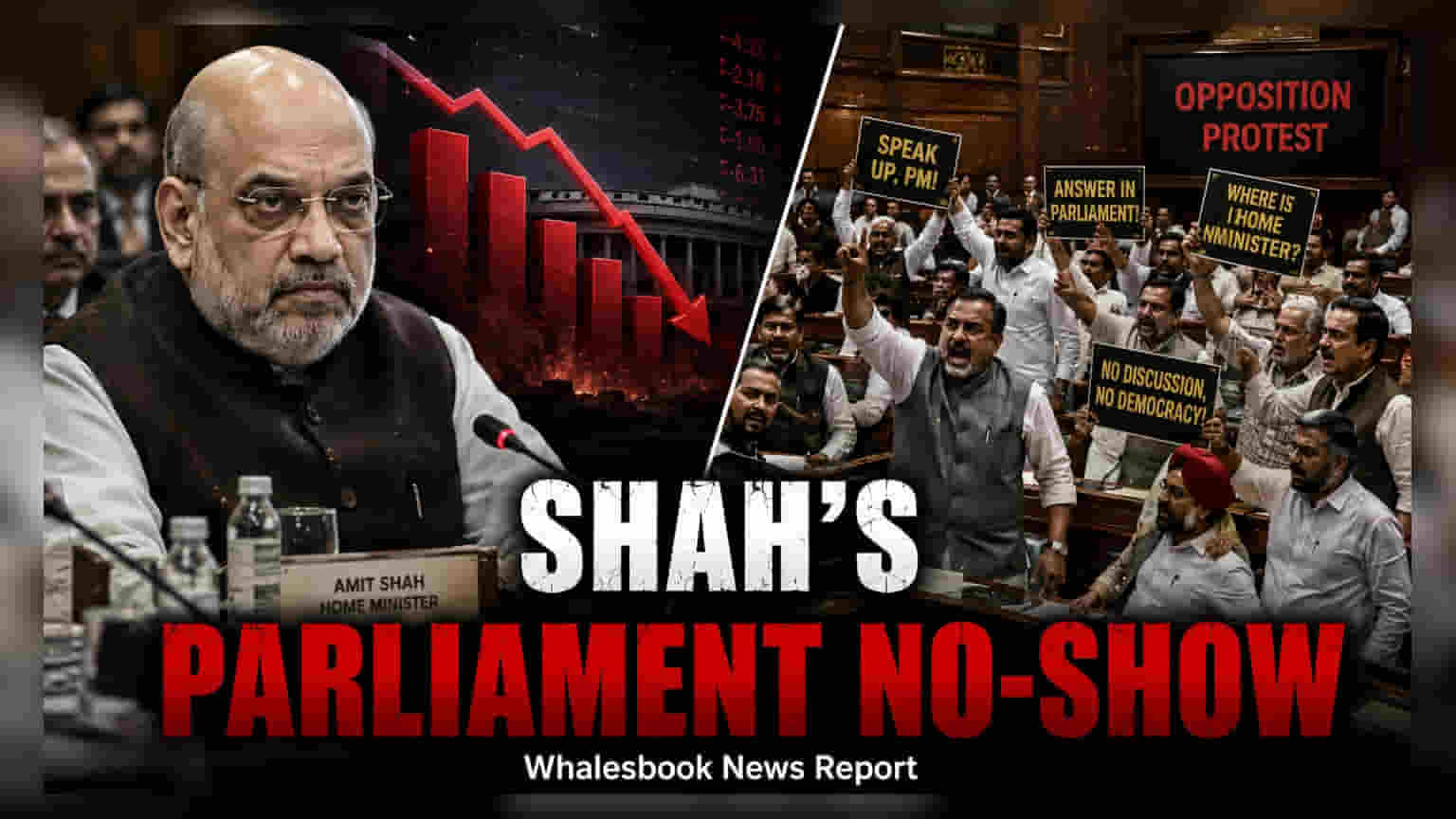
Opposition members in both Houses of Parliament disrupted proceedings today, demanding Home Minister Amit Shah address recent police actions against student protesters. The Home Minister's absence triggered heated debates and adjournments, while the government maintained a firm stance. The situation highlights ongoing political friction impacting legislative agendas.
Parliamentary activity faced significant disruptions today as opposition leaders stalled proceedings in both the Lok Sabha and Rajya Sabha. The primary demand from opposition benches was for Union Home Minister Amit Shah to provide a formal explanation regarding police actions taken against student protesters during recent demonstrations. While the opposition intensified its pressure, the Home Minister remained absent from the House, opting to conduct high-level meetings with cabinet ministers and government officials instead.
Parliamentary Confrontation and Legislative Impact
The tension peaked during the debate on the anti-exam paper leak bill, where the leader of the opposition raised allegations regarding the use of force against students. These claims led to immediate uproar and subsequent adjournments of the House sessions. In response to these developments, government floor managers, including Minister of Parliamentary Affairs Kiren Rijiju, reportedly took a strong position, calling for apologies from opposition leaders regarding the allegations. This standoff has created a volatile legislative environment, which investors and market observers typically monitor, as sustained political gridlock can influence the pace and passage of economic reforms or sector-specific bills.
Regional Political Developments and Administrative Focus
Outside of the national capital, political leaders are managing local crises that draw central government attention. Odisha Chief Minister Mohan Charan Majhi recently concluded a visit to New Delhi, where he met with central ministers, including the Home Minister and the Union Railways Minister. These meetings occurred simultaneously with severe flooding in parts of Odisha, leading to criticism from local political opponents regarding administrative priorities. Following his return, the Chief Minister shifted his focus to conducting aerial assessments of the flood-affected regions.
Meanwhile, in Southern India, the Karnataka government is navigating a contentious water-sharing dispute. The Cauvery Water Management Authority has directed the release of 3,500 cusecs of water daily to Tamil Nadu, a move that has sparked widespread protests from pro-Kannada groups. Deputy Chief Minister D.K. Shivakumar faces the challenge of managing the state's water resources amidst these regulatory mandates. In Assam, Chief Minister Himanta Biswa Sarma has maintained that the central government is providing necessary support to flood-affected areas, despite public discourse regarding the visibility of central leadership in those regions. These multi-state political and administrative challenges reflect the current complex environment, where local resource management and national political friction continue to influence public administration.