

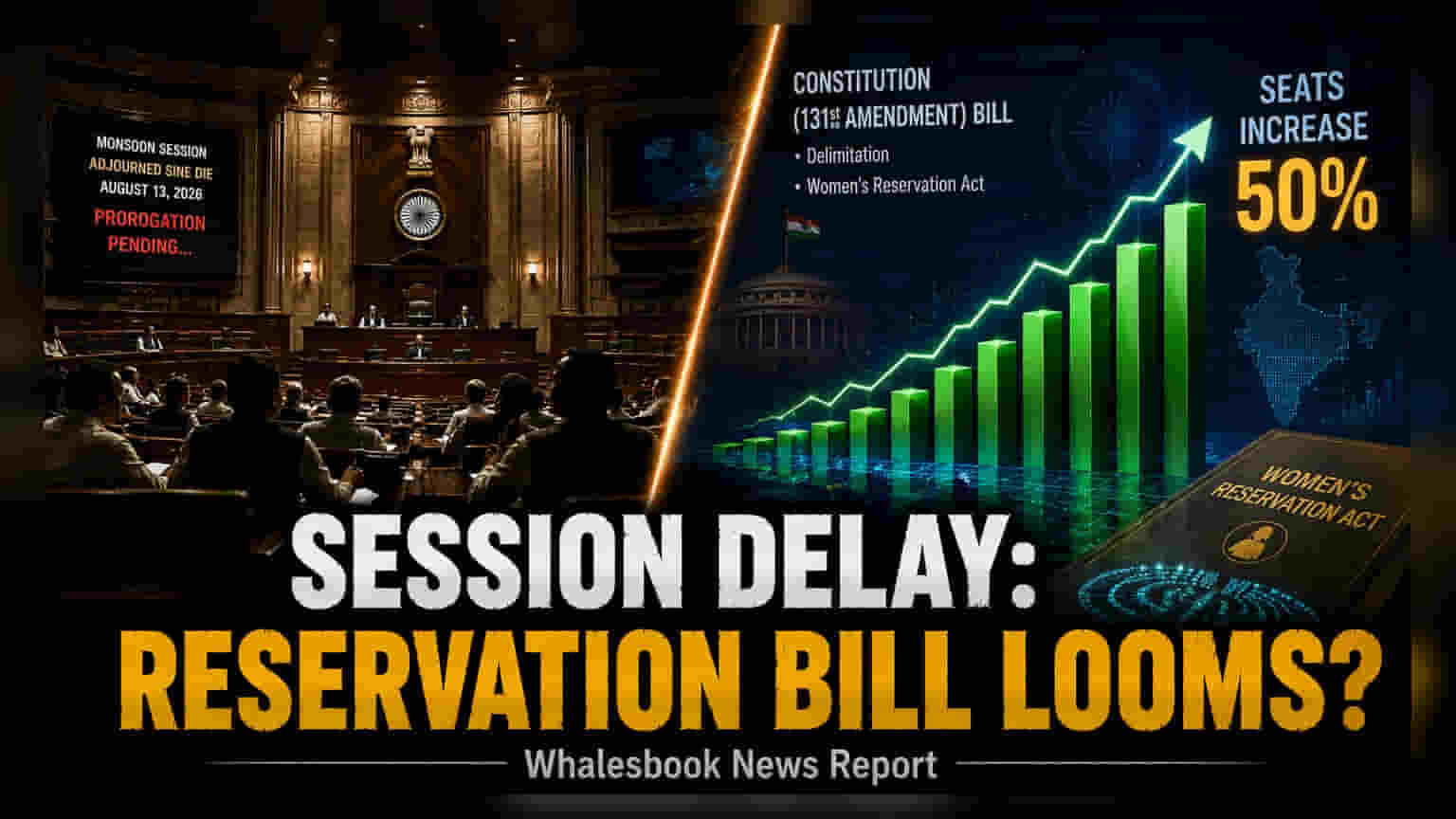
The Monsoon Session of Parliament, adjourned on August 13, 2026, remains open 10 days later without formal prorogation. This unusual delay has triggered speculation about a potential special sitting to reintroduce the Constitution (131st Amendment) Bill regarding delimitation and women's representation. Investors are tracking the situation for potential policy shifts and their impact on federal legislative stability.
The Monsoon Session of the Indian Parliament, which was adjourned sine die on August 13, 2026, has entered its tenth day without a formal prorogation order from the President. In standard parliamentary procedure, prorogation—the official conclusion of a session—typically follows within a few days of adjournment. The absence of this formal notification has fueled political and legislative speculation regarding the government's intent to keep the session technically active.
Background on the Constitution (131st Amendment) Bill
Market and political analysts are paying close attention to this delay due to the high-stakes nature of the legislation under discussion. The government has been working on the Constitution (131st Amendment) Bill, which aims to redraw electoral boundaries through delimitation and implement the Women's Reservation Act. This legislative push faced a significant hurdle on April 17, 2026, when the bill failed to secure the required two-thirds majority in the Lok Sabha. The current delay in proroguing the session has led to suggestions that the government might be considering a special sitting to bring the bill back for a vote, potentially avoiding the procedural requirements of initiating a completely new parliamentary session.
Federal Concerns and Proposed Reforms
The proposed delimitation exercise has created friction between different regions. Political leaders, particularly from southern states, have expressed concerns that a population-based redrawing of electoral seats could reduce their parliamentary representation. This has been a focal point of recent discussions, including at the Southern Zonal Council meeting held on August 21, 2026, where state leaders emphasized the need to protect current representation levels.
To address these federal concerns, the government has proposed a formula to uniformly increase the number of Lok Sabha seats across all states and Union Territories by 50 percent. The objective of this proposed increase is to ensure that no state sees a reduction in its parliamentary representation percentage, even as electoral boundaries are adjusted. Leaders from states like Karnataka and Tamil Nadu have publicly reiterated the importance of maintaining stable representation for the next 25 years.
What Investors Should Monitor
The next important update for stakeholders will be the government's official notification regarding the status of the current Monsoon Session. If the session is prorogued, it would suggest that any further legislative action would require the summoning of a new session. If the session remains unprorogued for an extended period, it may increase the likelihood of a special sitting or a late-session legislative move. Investors and policy watchers will also track any official updates on the government's strategy for securing the necessary support for the 131st Amendment Bill and whether the proposed 50 percent increase in seats succeeds in building a consensus among opposing parties.