

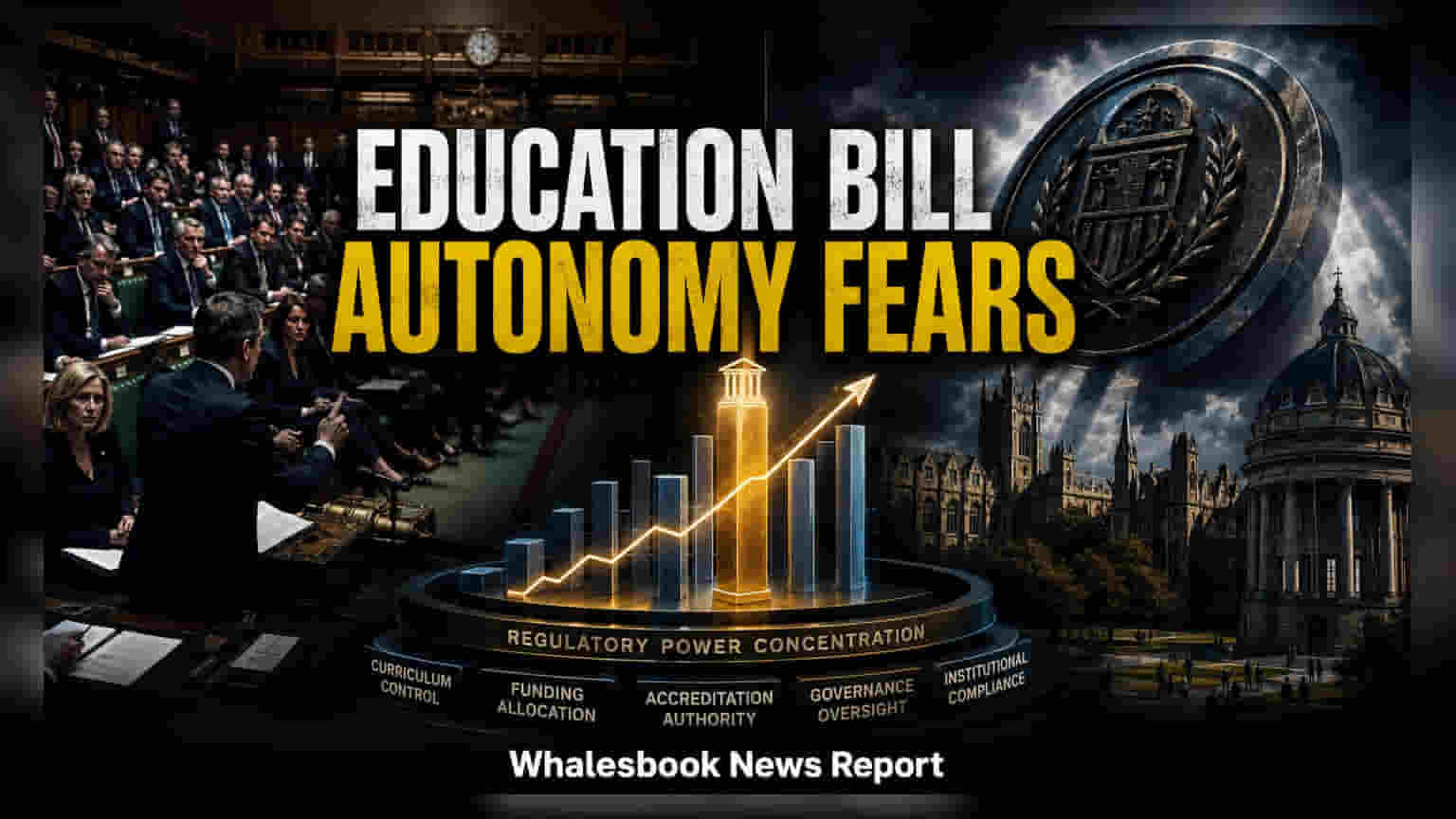
A joint parliamentary committee has cautioned that the proposed Viksit Bharat Shiksha Adhishthan (VBSA) Bill, 2025, may reduce the autonomy of higher education institutions. The report highlights risks regarding centralized regulatory power and calls for safeguards against the arbitrary use of penalties. The bill aims to replace current bodies like the UGC and AICTE with a single unified regulator to streamline education governance.
A joint parliamentary committee has released a draft report expressing significant concerns regarding the Viksit Bharat Shiksha Adhishthan (VBSA) Bill, 2025. This proposed legislation seeks to create a single, unified regulator for higher education in India. The new body is intended to replace the existing University Grants Commission (UGC), the All India Council for Technical Education (AICTE), and the National Council for Teacher Education (NCTE).
Impact on Institutional Autonomy
The central concern raised by the committee is the potential loss of institutional independence. Currently, colleges and universities operate under a framework governed by multiple bodies. The committee fears that consolidating all regulatory authority into one central commission could lead to excessive government control. This shift could impact how institutions manage their internal affairs, curriculum development, and administrative decisions, which are currently protected under the existing decentralized regulatory framework.
Penalty Structure and Accountability
Beyond institutional autonomy, the committee scrutinized the penalty architecture outlined in the VBSA Bill. The proposed legislation includes a graded system of fines and sanctions to ensure compliance among educational institutions. However, the committee warned that these powers must not be used arbitrarily by the new regulatory council. They emphasized that any financial or operational penalty must be directly linked to proven violations rather than discretionary decisions.
Furthermore, the bill introduces stricter accountability measures for those running educational institutions. It effectively removes the legal shield that often protects individual management members, known as the corporate veil, in cases involving fraud. For legitimate institutions, the bill suggests that repeated failure to comply with regulations could lead to the removal of key personnel, placing a higher burden of responsibility on institutional leaders and managers.
Changes to Appointment Procedures
Governance and appointment processes also featured prominently in the committee's review. While the bill currently suggests that the President of India should appoint the council's leadership, the committee has recommended a more flexible approach for certain roles. To prevent potential administrative delays, the panel proposed that the Central Government handle the appointment of non-ex-officio members and the Member Secretary.
For investors and stakeholders in the private education and vocational training sectors, the next major update will be how the government addresses these recommendations in the final version of the bill. Key monitorables include the final wording regarding penalty enforcement and whether the government preserves specific protections for institutional autonomy as requested by the committee.