

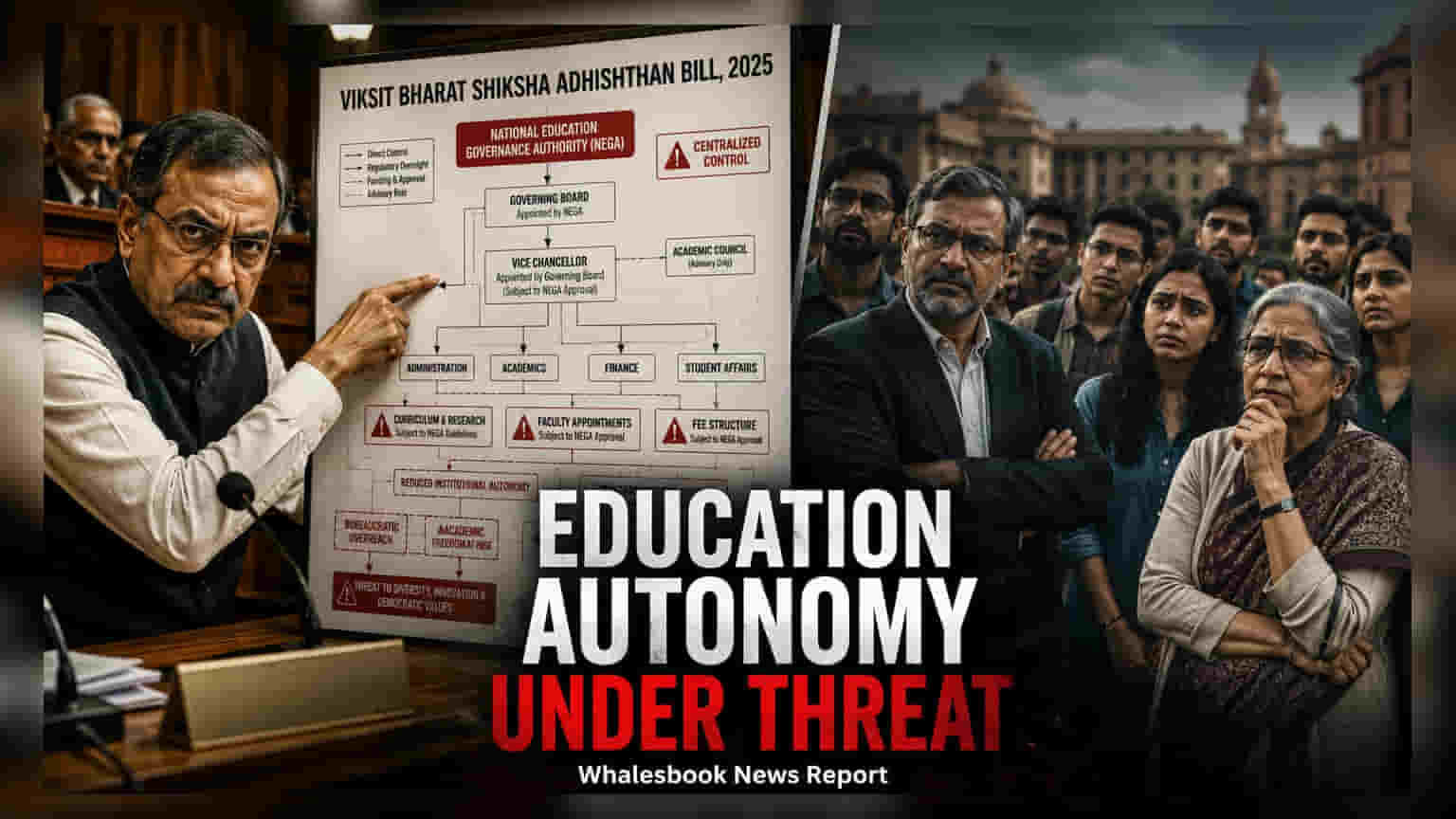
A parliamentary committee has expressed concerns that the proposed Viksit Bharat Shiksha Adhishthan Bill, 2025, could centralize regulatory power. The panel warns that replacing current bodies like UGC and AICTE with a single regulator might impact the autonomy of higher education institutions.
A joint parliamentary committee has reviewed the proposed Viksit Bharat Shiksha Adhishthan Bill, 2025, and highlighted potential risks regarding the governance of higher education in India. The committee's draft report suggests that the move to create a single, unified regulatory commission could concentrate too much authority in one central body. This transition would replace established organizations such as the University Grants Commission, the All India Council for Technical Education, and the National Council for Teacher Education.
The committee expressed concerns that this consolidation might lead to bureaucratic or ideological overreach, which could diminish the independence that colleges and universities currently maintain under the existing UGC framework. For stakeholders and institutions, this change represents a significant shift in how regulatory compliance and operational freedom are managed in the higher education sector.
Penalty System and Institutional Accountability
The committee also closely examined the proposed graded penalty system within the bill. A key recommendation from the panel is that penalties should not be imposed arbitrarily. Instead, the committee emphasized that any punitive measures must be clearly linked to proven violations of established norms. The bill seeks to hold both institutions and individuals accountable, including provisions to bypass corporate protections when dealing with fraudulent entities. For legitimate institutions, the bill proposes that repeated failures to comply could lead to the removal of key personnel, placing a greater burden of responsibility on trustees and leadership teams.
Filling Regulatory Vacancies
Beyond the structure of the new regulator, the panel addressed concerns about administrative efficiency. The report recommends that the Ministry of Education create clear rules to ensure that vacancies within the new council are filled in a timely manner. The committee noted that for predictable retirements, the recruitment process should begin at least six months before the position becomes vacant, with the goal of finalizing appointments within 90 days after the vacancy arises. While the committee agreed with the process for appointing the council's president and full-time members through a search committee, it suggested that the central government handle other appointments to avoid the delays often seen in the current system.
The final passage of the bill now depends on the government's response to these committee recommendations. Investors and stakeholders in the education sector, particularly those involved in private educational institutions or ed-tech services that interact with these regulatory bodies, will be monitoring how the government balances the need for a unified regulator with the committee’s call to protect institutional autonomy.