 Whalesbook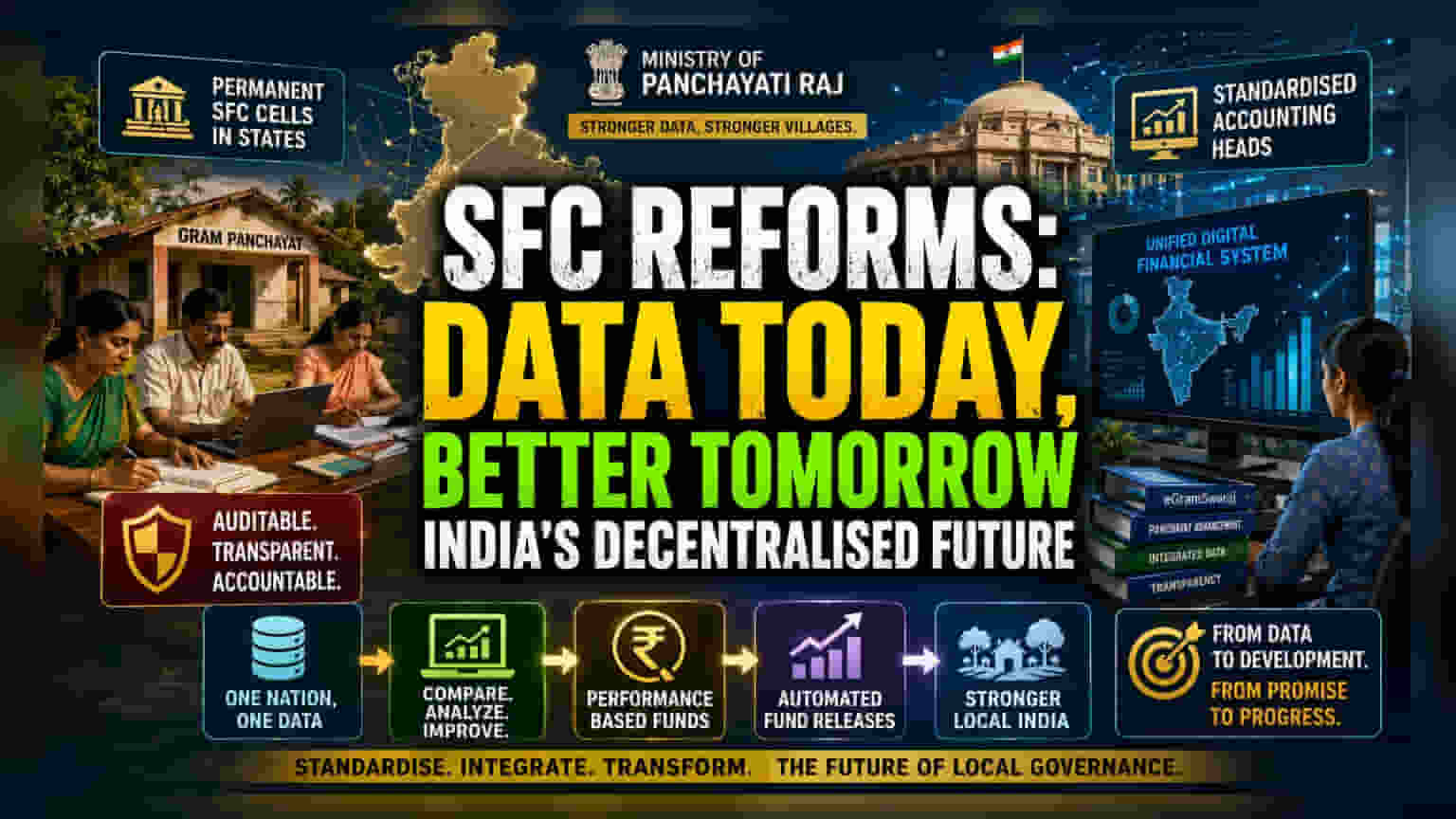


Beyond Bureaucracy: The Fiscal Standardization Drive
The push for permanent SFC cells represents a critical attempt to correct a long-standing structural deficit in India’s decentralized governance. For decades, the efficacy of fiscal devolution has been undermined by inconsistent reporting and the lack of a unified digital trail. By mandating the creation of dedicated units within state finance departments, the Ministry is effectively attempting to force local government accounting into a modern, auditable framework. This is not merely an administrative upgrade but a fundamental requirement to ensure that block grants are tied to measurable performance rather than historical inertia.
The Data Arbitrage Problem
Chief Economic Adviser V. Anantha Nageswaran’s focus on the inability to compare performance across states exposes the core issue: the current system lacks a common language. When state-level financial statements operate on idiosyncratic accounting heads, cross-state benchmarking—a prerequisite for Finance Commission recommendations—becomes an exercise in estimation rather than analysis. The move to standardize these accounting heads across all rural and urban local bodies is designed to create a single, immutable source of truth. Without this, the Finance Commissions remain constrained by the quality of data provided by states, which often lags behind real-time developmental needs.
The Forensic Bear Case: Structural Implementation Risks
While the mandate for standardization is sound in theory, its practical execution faces significant headwinds. First, the dependency on state-level cooperation remains a major friction point. In many regions, local government departments have resisted digital transparency initiatives, preferring the opacity of legacy manual bookkeeping. Second, the reliance on platforms like eGramSwaraj has historically struggled with interoperability issues; forcing these systems to communicate with a new, centralized accounting standard could lead to widespread reporting failures during the transition phase. Finally, there is the risk of capacity exhaustion. Smaller Gram Panchayats often lack the qualified accounting personnel required to handle such rigorous reporting, potentially creating a tiered system where only well-funded, urban-adjacent districts meet these new transparency metrics, effectively sidelining the most backward regions the policy aims to support.
Future Outlook: Towards Automated Transfers
The long-term vision signaled by these reforms is a shift toward a rule-based fiscal distribution model. By establishing a formalized, unified dataset—and potentially moving toward a consolidated Panchayat Advancement Index—the government is laying the groundwork for automated, data-driven fund releases. If successful, this would diminish the influence of political patronage in fund allocation, replacing it with objective, indicator-based disbursals. Future Finance Commissions will likely rely on these integrated datasets to dictate the next decade of rural development spending, making the current push for standardization a critical inflection point for public infrastructure finance.