

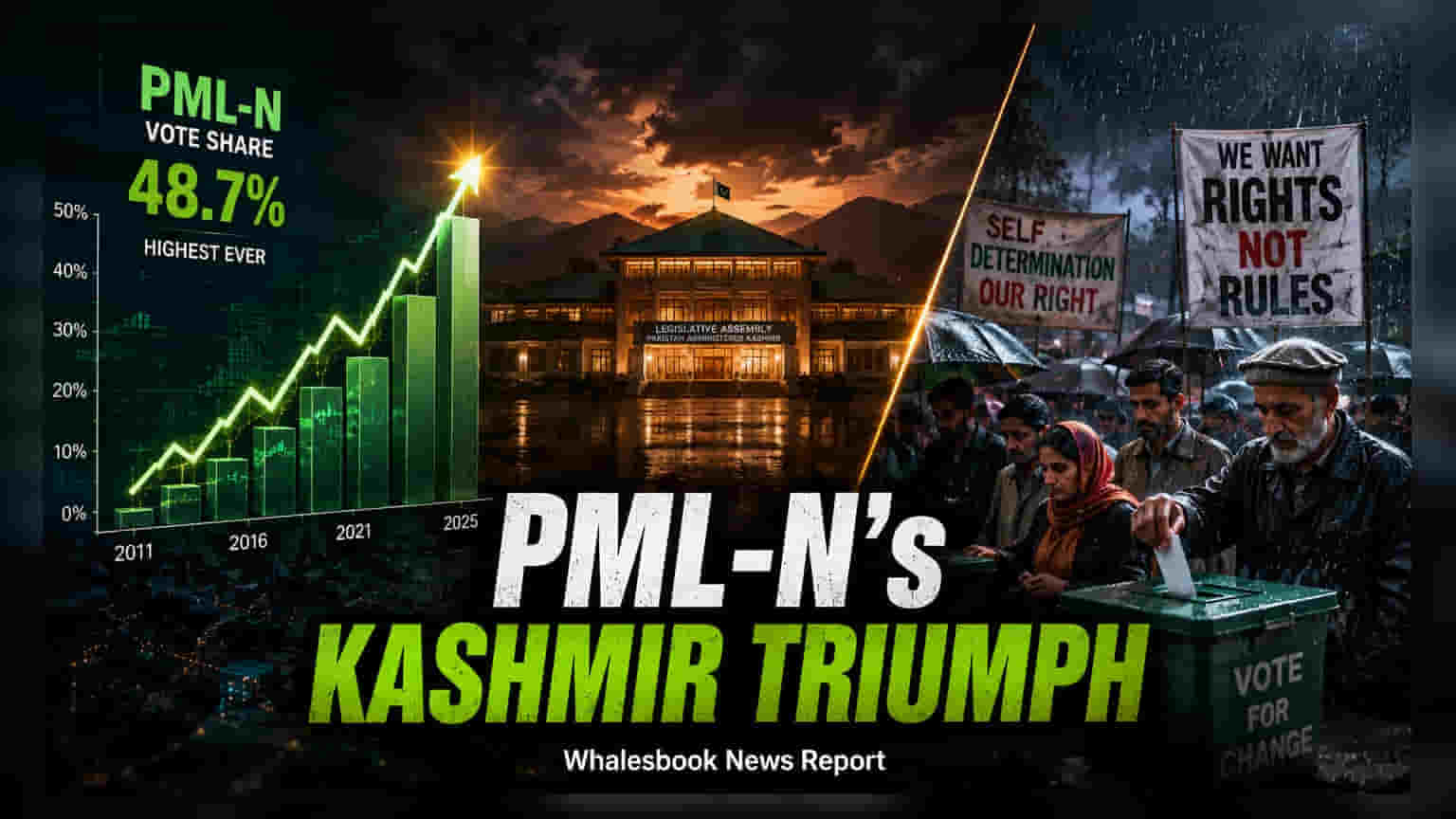
The Pakistan Muslim League-Nawaz (PML-N) has secured 24 of 34 declared seats in the regional legislative elections. The voting process has been heavily impacted by civil unrest, protests from the banned Joint Awami Action Committee, and a boycott by the Pakistan Tehreek-e-Insaf party. While these events involve a political entity rather than a listed company, the ongoing instability remains a key monitorable for investors tracking regional geopolitical risks.
The Pakistan Muslim League-Nawaz (PML-N) has established a significant lead in the ongoing legislative assembly elections in Pakistan-administered Kashmir. According to official reports, the party has secured 24 of the 34 seats decided across the first two phases of the election. This result places the party on a clear trajectory to form the next regional government, marking a return to power in the territory after a ten-year hiatus.
The electoral process is being conducted in three distinct phases, with the final round of voting for the remaining 11 seats scheduled for August 10. Despite the clear lead for the PML-N, the election period has been characterized by high levels of volatility and disruption, complicating the political atmosphere.
Regional Instability and Election Disruptions
The voting process has taken place against a backdrop of intense regional unrest. For several weeks leading up to the polls, the territory saw widespread demonstrations organized by the Joint Awami Action Committee (JAAC). The committee, which has been vocal regarding grievances over local governance, electricity tariffs, and flour prices, issued a formal call for residents to boycott the elections. In response to the escalating protests, the government implemented a ban on the JAAC in June, citing concerns over public order. Further complicating the political landscape, the Pakistan Tehreek-e-Insaf (PTI) party officially declared a boycott of the elections, citing allegations of electoral fraud and rigging.
Implications for Regional Stability
For investors and market observers, developments in this region are primarily viewed through the lens of geopolitical stability. It is important to note that the PML-N is a political organization and is not a publicly traded company on any stock exchange. Therefore, this event does not carry direct financial or stock market implications in the traditional sense. However, prolonged civil unrest, security challenges, and questions regarding the legitimacy of the electoral process can create uncertainty in the broader neighborhood.
Geopolitical tension is often monitored by analysts as it can influence sentiment regarding regional security. Any escalation in the current situation, or a failure of the incoming administration to address the underlying economic and social grievances, could lead to continued instability. The primary focus for observers will be the conclusion of the final phase of voting on August 10 and the subsequent efforts by the new administration to manage the region, given the active opposition and the unresolved demands that fueled the recent protests.